
Leadership is often measured by performance, profitability and results. Yet behind every thriving organization lies something far less discussed: the emotional and human experience of leadership itself.
For Michelle Puffer, leadership is not about carrying every burden alone or sacrificing personal well-being in pursuit of success. After years of leading organizations through complex change, she came to a transformative realization: sustainable leadership begins with joy. Today, through Radiant Leadership, Michelle helps executives, entrepreneurs and organizations build resilient workplace cultures where purpose, trust and people flourish alongside performance.
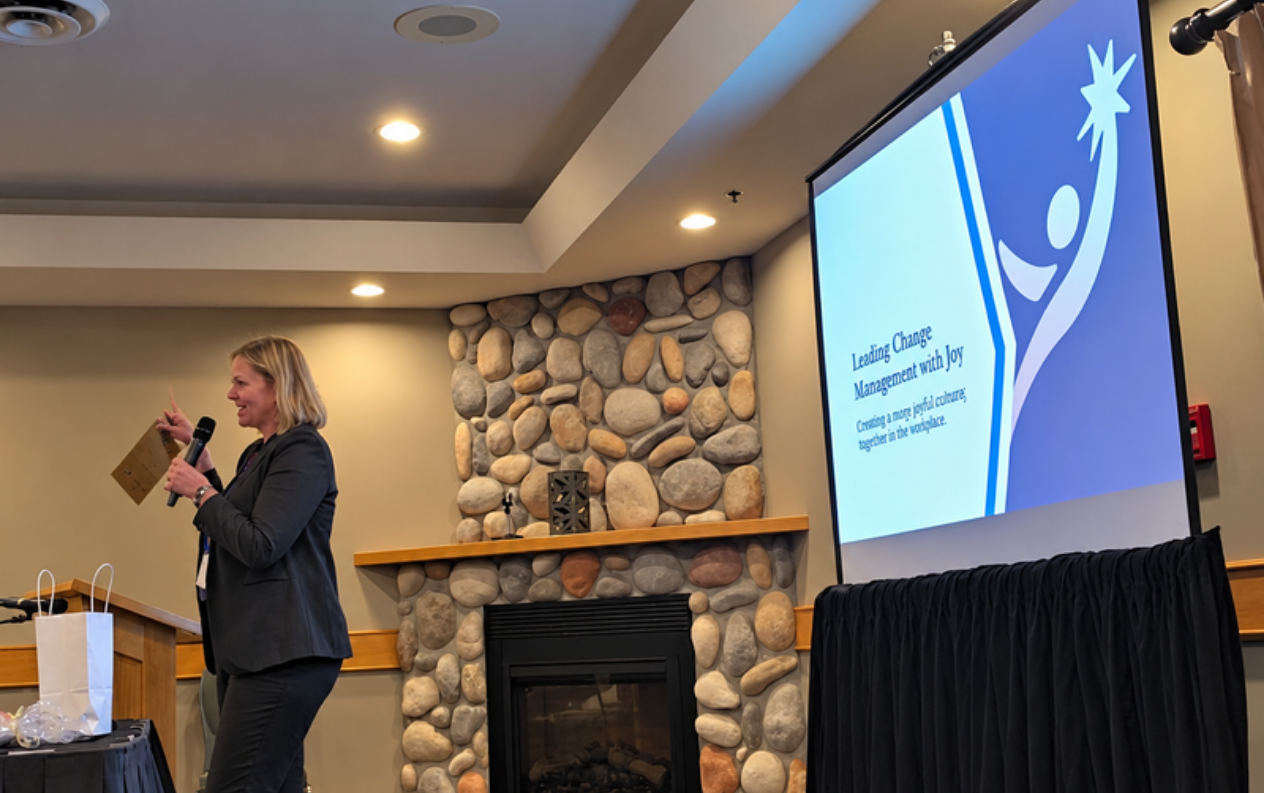
In this exclusive conversation with IKONIK Magazine, Michelle reflects on the leadership lessons earned through experience, why workplace culture can quietly determine organizational success or failure, and how embracing joy can become one of the most powerful strategies for building resilient leaders and high-performing teams.
Rethinking What Makes a Great Leader
Throughout your career, you've led organizations through complex challenges involving people, operations, financial performance and organizational change. Looking back, what has experience taught you about what truly makes a great leader, and which widely accepted leadership beliefs do you think it's time we challenge?
Being a great leader is not a static thing; most don’t just suddenly become great leaders. Great leaders grow and are constantly adapting to the circumstance, while ensuring the needs of stakeholders are being met. When I started out, I wasn’t a great leader. I assumed that what I wanted from a leader was what everyone else wanted too. It took me time to learn that each person on my team needed something different from me.
That doesn’t mean becoming a chameleon and changing who you are for each person. It means understanding the range of needs on your team and learning to communicate in a way that people can actually hear.
Nowhere is that more important than during change. Leading through change is hard, and it’s often when leaders take the most heat. From where staff are standing, a decision can look like it makes no sense, especially when it affects people they care about. As leaders, we sometimes have to make difficult financial and operational decisions that lead to big changes. Part of our job is guiding people to a place where they understand those decisions, or at least trust that they’re being made in the best interests of the organization, even when they can’t see the full picture.
What carries an organization through those moments is purpose. That means hiring people who are aligned with the mission, and helping the people already there reconnect with it. I often encourage teams to ask themselves: Why are you here? Do you understand why this organization exists? Do you still align with its mission, vision and values?
As for beliefs worth challenging, the one I struggled with most early on is the idea that everything rests on the leader’s shoulders. Yes, ultimately the buck stops with us. But leaders aren’t meant to carry it all alone. We have teams around us who can help achieve those goals, and we have to let them.
This is just as true for solo entrepreneurs, who often feel they have to do absolutely everything themselves. Real leadership means recognizing our own limits and bringing in the right people for the right roles, whether they’re employees or contractors. As the saying goes, many hands make light work. No one excels at everything, not even leaders. The more self-aware we are about our own strengths, the more room we create for others to grow into theirs.
The Turning Point That Changed Everything
You've shared that there was a period in your life when you were working exceptionally long hours, navigating significant responsibilities and running on determination rather than fulfillment. What ultimately prompted you to reconsider your relationship with success, and how did that personal turning point transform the way you lead today?
This is a hard one to answer, because there wasn’t one moment or one day when I suddenly changed the way I lead.
I had always tried to lead with purpose, and I invited my staff to do the same, so we could be sure we were all there for the right reasons. For me, the cracks started when I was no longer aligned with the direction of the organization, but I hadn’t realized it yet. Things I used to love became harder. It affected my mental and physical health, but I didn’t connect the dots.
That changed when I was sitting in a women’s retreat and heard a story that had nothing to do with business at all. It was about how a phenomenal woman used joy to work through one of the most challenging things most of us would deal with in a lifetime. It made me realize I was running without joy. Even more than that, the things that had once brought me joy were now doing the opposite. I wanted to tap into what she had that led her through that time in her life (and many others since).
I spent time with that realization, and I came to see that joy is something we all need in our lives, especially at work. Not only aligning purpose, but inspiring joy. I had done a lot of work building positive workplace cultures, but I had never connected joy to the workplace. I had always worked hard and put in long hours, doing my best to hit every goal.

So I started bringing small pieces of joy back into my own life, through my first 100 Days of Joy on Instagram. As I did, I noticed it changed how I showed up in the world. I came to understand that showing up in joy builds resilience through challenging times. It doesn’t take the challenges away, but it changes how you move through them. And as you allow, or teach, others to do the same, aligning purpose becomes easier. That became Radiant Leadership’s tagline: Inspiring Joy. Aligning Purpose.
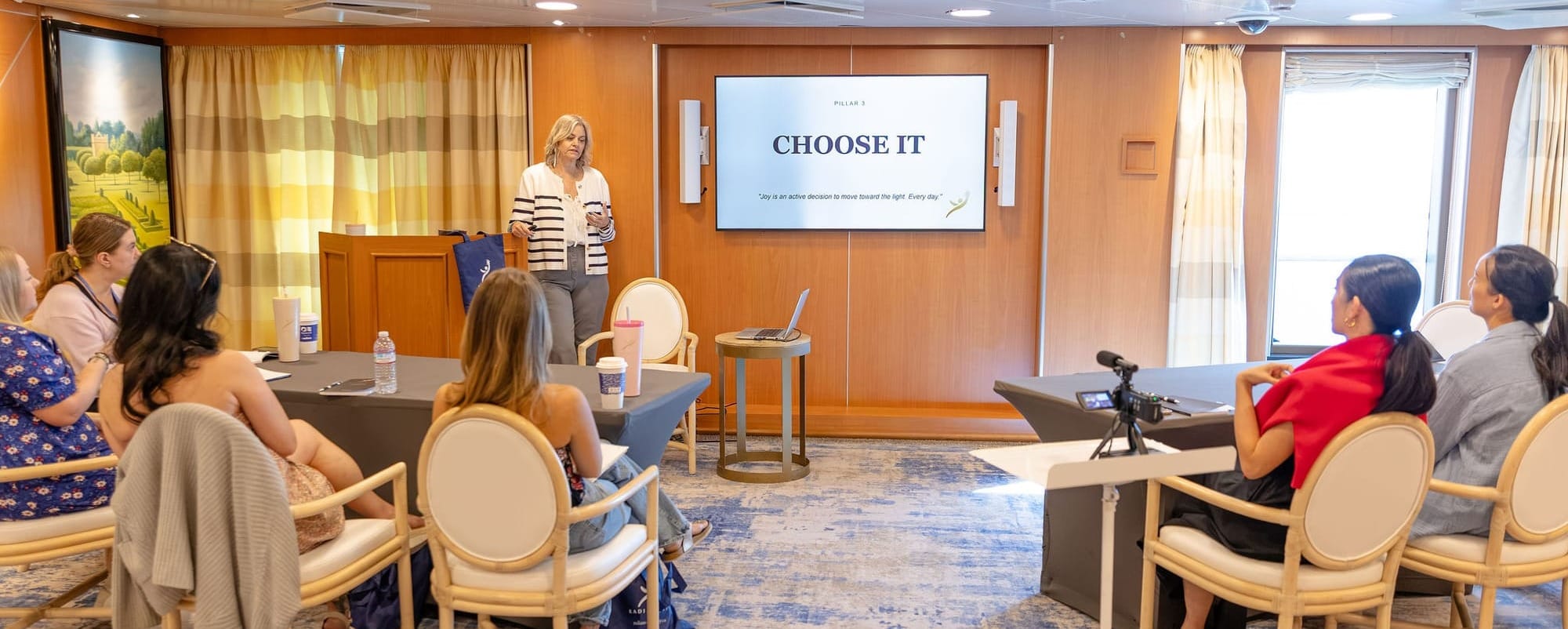
As a regular part of my work, I now share my Five Pillars of Joy with people and organizations. The pillars, Notice It, Name It, Choose It, Protect It and Radiate It, begin with simply paying attention to small moments we might otherwise rush past and moves through to sharing that joy with others. It’s like a spark that lights a fire.
Most of us still have to earn a living. But we can choose to align ourselves with organizations and purposes that bring us joy. That leads to better leaders and more fulfilled staff.
Why Joy Belongs in the Boardroom
In business, joy is rarely discussed with the same seriousness as productivity, profitability or performance. Yet it's central to your leadership philosophy. Why do you believe joy deserves a place in executive decision-making, and how can it contribute to building more resilient, engaged and effective organizations?
When most people hear the word joy in a business setting, they picture team lunches or a fun committee. That’s not what I mean. Joy at work is the sense of energy and meaning that comes from doing work you believe in, with people you trust, in a way that lets you show up as yourself.
I believe it belongs in executive decision-making because leaders set the tone for everyone else. When a leader is running on determination alone, it shows up in their decisions, their patience and how they treat people. I know, because I’ve been there. You get distracted. You stop paying attention to the people and only focus on the outcomes. That can be very discouraging for team members, and before long people go back to showing up just for the paycheque. That’s why most of us work, of course, but it deeply affects how the work gets done.
Joy also builds resilience. It doesn’t remove the hard decisions or the difficult seasons, but it changes how people move through them. A team that still finds meaning in its work can weather change, budget pressure and uncertainty far better than a team that’s simply getting through the day.

In practice, this can be simple. When a leader starts noticing the small things people do to help the organization, or even helps them protect their joy by ensuring they have balance and aren’t overloaded, it changes the whole feel of the workplace. On the other hand, when a Board or Executive team has lost its own sense of joy, you will likely find a negative culture throughout the organization..
When joy and purpose are part of the conversation at the leadership table, people stay longer, engage more and bring better ideas.
The Invisible Costs of Poor Leadership
Some of the most damaging organizational challenges aren't immediately visible on a balance sheet. In your experience, what are the overlooked warning signs that a workplace culture or leadership approach is no longer serving its people or its mission? What can happen when those issues go unaddressed?
One of the biggest warning signs I find in organizations is silos. Where departments don’t communicate with each other, where one group feels superior to another because maybe they are credentialed and the other isn’t.
It can also be where there have been staff there for a long time not because they’re bought into purpose, but because it’s easy. The workplace has become stagnant. People are doing the minimum because no one has ever asked them to do more, to be more. Maybe no one believed in them.Left unaddressed, these things can lead to mismanagement of funds, assets and programs. It isn’t usually intentional. But over time the culture becomes every person for themselves, or every department for itself, and eventually that shows up on the balance sheet. It shows up in clients’ needs going unmet. And it shows up in a workplace where nothing ever changes, and the mission, vision and values have little to do with the work actually being done.
Turning Leadership Philosophy Into Measurable Change
Your work brings together an interesting combination of human-centered leadership and operational excellence. Can you share an example of a leadership or organizational challenge you've helped navigate, the approach you took, and the difference it made? What should business owners and executives understand about the connection between workplace culture and organizational results?
In two separate organizations, very early in my tenure, I had to make major staffing changes that led to terminations of people, programs or both. I wasn’t aware these changes would be needed when I accepted either position, and they came as a real shock to staff. As you can imagine, it didn’t make me a popular person. It’s easy to vilify the person making the change without trying to understand the reasons behind it.
In both cases, I shared as much as I could without revealing confidential information, and I invited anyone who wanted to come and talk with me, to understand my heart. I did this because these decisions can feel dehumanizing. Staff often believe leaders are making choices that affect people’s lives without understanding the consequences, and from the six-foot view, that’s exactly how it can look. Without the 60,000-foot view, it’s hard to see how limited the options are and that decisions still have to be made.
Inviting people in gave them space to share their concerns and to see that I’m a real person. My role meant I was responsible for doing what was best for the organization as a whole, and that’s what I had to do. I would also talk with them about their own roles: what a hard decision might look like in their position, and how it could affect someone else.
A small example of how this worked in one of those organizations was our annual staff party. The first one came only months after a large, difficult change. Apart from the Board, the management team and me, only a few staff came. It was tense and a little disheartening. By the second year, the difference was clear. We had booked a smaller venue, and it ended up bursting at the seams. So many staff came, joined in the games and had a fantastic time. A staff party might not seem like a big deal, but it says a lot about workplace culture. When staff are unhappy, they don’t show up for the extras, even a party. When they’ve started to align with their organization and its leader, they want to be involved, even outside work hours.
This is where workplace culture and organizational results come together. Staff follow leaders who consistently show up as themselves, who build a positive culture by breaking down silos and putting the right people in the right places, and who see potential in people even when they can’t see it in themselves. Over time, staff learn that this leader’s decisions, even the ones they don’t agree with, are made with real thought for what’s best for the organization.
When staff trust their leader and are aligned with the purpose, it shows up everywhere: in finances, in programming, in staff retention and in other key measures. One note on retention, though: it isn’t always a good thing. Sometimes turnover is exactly what’s needed to build a team that’s truly aligned with the purpose.
The Radiant Leadership Difference
Through Radiant Leadership, you challenge organizations to move beyond the familiar mindset of "because we've always done it that way." What inspired you to build the company, what distinguishes your approach, and what kinds of challenges are you most passionate about helping leaders and organizations overcome?
“Because we’ve always done it that way” has long been one of my least favourite phrases in the workplace, especially when it runs through an entire culture. It usually means a team is resistant to change, even when the way they’ve been doing things isn’t working. Change for change’s sake isn’t needed. But in cultures where budgets are bloated, goals aren’t being met or operations are clearly inefficient, change is the only way forward.
I decided to build Radiant Leadership when I realized I don’t like staying in one place for too long. I’m a changemaker. I love coming in to build positive cultures while making sure an organization runs efficiently and effectively. I love helping leaders grow, and helping staff see potential in themselves that others may not have recognized, or that they may not have seen themselves.
When I start working with an organization, I spend time reviewing its mission, vision and values, as well as its operations. I meet with its leaders to understand their direction and figure out how to bring everything into alignment. Who hires me, whether it’s the Board, a funder or the leader, also shapes my approach. Is a change of direction coming? Is there a new goal? Or are there more general issues? In some cases I also meet with staff. From there, I can decide whether they need short-term or long-term support, whether a few workshops will help or we need to dig deeper, and whether I’m coaching a new leader to settle into a workplace or helping an organization work through major issues.

Whatever the issue, I come in as a partner and advisor. I’m there to bring out the best in the organization and its leader, and to help them rediscover joy and align with their purpose, whether that’s the leader, the staff or even the Board. Sometimes I get hands-on and do the practical work myself, if I have a skill set they don’t have available at the time.
My favourite part of the work is assisting leaders and staff build resiliency through joy. To find their own purpose again, to light their spark and see whether that aligns with the organization. While not every problem can be solved by an aligned staff it certainly does make every problem much less difficult to work through. A team divided struggles to achieve results.
Resilience Without Losing Yourself
Many accomplished leaders are praised for their ability to push through adversity, even when the personal cost is significant. How do you distinguish genuine resilience from simply enduring exhaustion, and what practical habits can help leaders maintain their effectiveness without sacrificing their well-being or sense of purpose?
As someone who used to push through at all costs, I really feel this question. I was that person, just keep going, burn the candle at both ends, miss out on time with the family, miss out on rest. For me, as I mentioned earlier, I had to burn completely out before being able to really recognize what I was doing to myself. Having been in it, I now recognize it. Resilience means you’ve built up a filled well of joy that allows you to persevere through challenges. It doesn’t mean that you keep going no matter what. Resilience is also recognizing when your light is dimming, when there isn’t enough oxygen left to keep the flame lit. When you pull your head up and see that you are the only one pushing through, that you’ve turned down the rest of your life to pursue the organization's success. Organizations can’t be successful on the back of exhausted leaders.For me, I finally took a step back and looked at where I was placing my efforts, it made me realize I was missing out on life for work. Yes, we have to work to earn a living and if we’re passionate about our work, that’s amazing. But you can’t lose yourself in it, which I did and many do. I was missing time with my children, my partner and just for myself. I was able to build effectiveness by practicing what I now preach and using my Five Pillars of Joy. This started by me making a point to find a small moment of joy in each day. Once I was able to build up those joy moments, it was like stoking a fire and I wanted more. More joy in my personal life, more joy in work. That’s when I realized that I wasn’t aligned with where I was.
Leaving your job isn’t always the answer. More often, it’s about recalibrating how you define success and how much of your life you’re willing to miss to get it. Does working into the wee hours every night really get you to your goals faster? Does expecting your team to do the same build their resilience, or their resentment? I’m not talking about the occasional push to meet a deadline. I’m talking about when that becomes the norm. You cannot pour from an empty cup. Put your own oxygen mask on first. There are so many cliches about just this, that I think we start to ignore them. But they come from very real places. For me, I think of it as a spark. If you can keep your spark lit, you can light the darkest of rooms. One of the pillars of joy is Protect It, this is what leaders often fail to do, they don’t protect their own boundaries or needs, instead allowing the organization to override those. But if you protect the flame, which grows into the fire to Radiate It, you are able to build something far more powerful and effective in ensuring both personal and organizational goals become possible..
From Personal Discovery to Radiate Joy
What began as your personal exploration of joy has grown into a movement expressed through Radiate Joy and your women's retreat at sea. Following the inaugural retreat in September 2026, what moments or realizations have stayed with you most? What do you believe women, particularly those carrying significant professional and personal responsibilities, need more of today?
What stayed with me most from the retreat was that nearly every guest seemed to be running on empty, putting herself last. Watching them build connections and realize they weren’t the only ones feeling that way seemed to encourage each of them to start down a new path toward resilience through joy. Even the women who already came across as joyful found new ways to dig deeper: to not only Notice It, but to hold on to it.
The group was diverse. There were single women and married women, mothers of young children and mothers of adult children, and ages ranged from 30 to 60. Yet there was no sense of disconnect, because each message landed differently for each person. Some needed time for self-care. Some needed to rediscover joy despite heavy workloads. Some needed permission to hold two truths at once, like knowing that grief and joy can exist side by side.

Women are heavy multi-taskers who often believe they can do everything for everyone, and society often reinforces that. Many women work, are partners, and are caring for children, aging parents or both. They often carry much of the daily load at home: who takes the kids to the doctor, who volunteers in the classroom, who makes sure the bags are packed for the trip, who keeps the family calendar? These may be generalizations, but they’re rooted in truth.
When women run on empty, more and more areas of their lives become hard to manage. Joy doesn’t take those challenges away, but it helps the mind work through them with more clarity and resilience. That’s why I believe women need to Choose It and Protect It. You can’t give what you don’t have.
The Leadership Reset: Where to Begin
Imagine a CEO, entrepreneur or executive reading this interview who recognizes that their organization is performing, but their team is disengaged, their culture feels strained or they've lost touch with their original purpose. What three actions would you encourage them to take over the next 30 days, and how can they recognize whether meaningful progress is happening?
My first suggestion would be to hire me to help! In all seriousness, it often takes an objective set of eyes to see where the real issues lie, so if they can afford it, I’d encourage bringing in a consultant who specializes in this work. The catch is that leaders have to be willing to accept that they may be part of the problem, and that’s often the biggest hurdle.
If a consultant isn’t in the budget, start by looking for the root of the problem. Are staff simply disengaged? Are there silos? Do people feel heard and seen? Is the disengagement affecting the finances or product/service delivery? From there, I’d recommend three actions:
1. Reconnect your team with your purpose. Hold an all-staff meeting and revisit your mission, vision and values together. Share how they resonate with you as a leader and what you hope to achieve together. Follow that with smaller department meetings, where staff can connect more personally with their leaders and talk about what their department contributes and why it matters to the bigger picture. Help staff feel that they truly are part of the team, and that you genuinely care about their contributions.

2. Take an honest look at your team. Are the right people in the right positions? This review has to be thorough, and it’s often the hardest step. No one wants to make a decision that costs someone their job, but sometimes it leads to better things for both that person and the organization. It may also reveal skills that would serve someone better in another role. Many leaders ask staff where they see themselves in two, three or five years, then never revisit the conversation. Are you growing together, or are they stuck?
3. Take an honest look at yourself. Are you part of the problem? Are you leading by barking orders and handing down “thou shalts,” or are you listening to feedback and acting on ideas that could benefit the organization and its people? Maybe you’re worn out and can finally see you’ve been running on empty. If so, you need a way to fill back up. Vacations are great, but we often work harder before and after them. Building resilience through joy is an ongoing practice that helps every day, at work and at home.
Progress won’t always be obvious right away, so check in at 30 days and then monthly to see what’s changed. Do staff feel safe bringing ideas to their leaders? Do they trust those ideas will be considered, even if not always used? Are they participating more? Are you seeing more smiles? Are your hard deliverables improving? Engaged staff who are aligned with purpose accomplish more, and when they do, stakeholders become more engaged too.

The Future of Leadership, and the Legacy You're Building
As you continue expanding Radiant Leadership, your workshops and speaking engagements, and the next chapter of Radiate Joy, what change do you most hope to inspire in the way organizations are led? Looking ahead, what do you hope will become the defining impact of your work, and what excites you most about what's coming next?
At the heart of Radiant Leadership is helping businesses and organizations run more effectively, reach their goals and build healthier workplace cultures, whether that’s through coaching, workshops or speaking engagements.
The change I most hope to inspire is for leaders to stop setting joy aside while they do business, and to start using it as a tool in business. Joy can be harder to spread than negativity, but if you keep your own spark lit, you can light it for others too. People want to work with those who deliver results while radiating joy. We all know that person who draws people in with their warmth. They seem to have it all together, as if everything just goes right for them. That’s rarely the whole story. More often, they’ve built their resilience through joy, and it helps them move through challenges with a little more grace.

As I’ve worked with more and more women in leadership, I’ve seen how much we hold while trying to do it all. Most of us aren’t only leaders at work; we’re leaders at home too. I wanted to help women find their joy and keep it, and that became Radiate Joy: A Women’s Retreat at Sea.
One of my own biggest joys is travel, usually somewhere warm and near the water, and I wanted to share that and keep the retreats growing. I’m excited to share that I’ve opened a new division of Radiant Leadership Ltd. called Radiate Joy Retreats & Travel. It will be home to all of our retreats, and as a contractor with a larger travel network, we’ll be able to book air, hotels and cruises, finding the best options for our retreats, other groups and anyone wanting personal travel. We’re currently planning two more Radiate Joy retreats at sea in 2027: one in the spring and one in late summer or early fall.
In addition, I have another book about radiating joy, that will be less workbook and more guidebook and stories, that I hope will come out next year sometime. I’m also trying to develop partnerships and collaborations with others who have similar visions to me, that understand that building business is not just all long hours and hard work. Iit’s about Inspiring Joy and Aligning Purpose and that fits for all areas of our life.
As organizations continue to navigate uncertainty, rapid change and growing workplace expectations, Michelle Puffer offers a timely reminder that exceptional leadership is ultimately about people.
Her philosophy challenges the traditional belief that resilience requires relentless sacrifice. Instead, she demonstrates that leaders who cultivate purpose, protect their well-being and inspire joy create stronger cultures, healthier teams and more sustainable success.
Whether you're a CEO, entrepreneur, executive or emerging leader, Michelle's insights invite an important question: What kind of workplace are you creating and what kind of leader are you becoming?
Because the most enduring organizations aren't built by exhausted leaders. They're built by leaders who inspire people to thrive.