
Some people create music. Others create moments where people discover their own voice.
For decades, Gregg Schiller has lived at the intersection of creativity, advocacy and community — using music as a bridge to connect people, inspire collaboration and create opportunities.
His journey began at age four with a grand piano in Toronto, leading him to the Royal Conservatory and a lifelong passion for music. But Gregg’s story goes far beyond performance. It is about purpose, inclusion and the belief that everyone deserves to be seen and heard.
From advocating for people with autism to creating platforms where artists can discover their confidence and share their gifts, Gregg has spent his life building spaces where talent and humanity can thrive.
In this exclusive conversation with IKONIK Editor-in-Chief Oyéta Kokoroko, Gregg reflects on the experiences that shaped him, the people who inspired him, and the power of music to connect, uplift and transform lives.
How did you get into music?
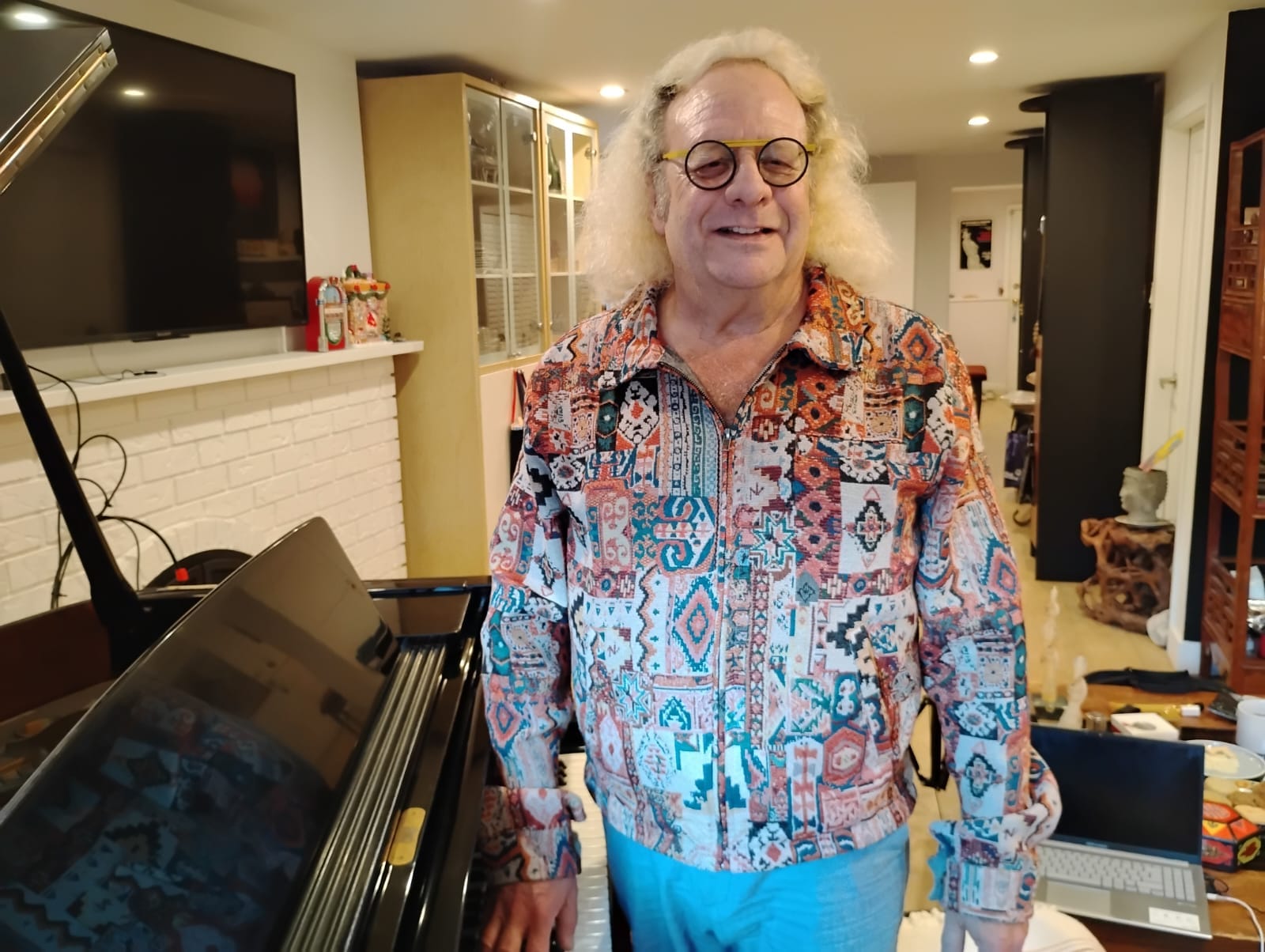
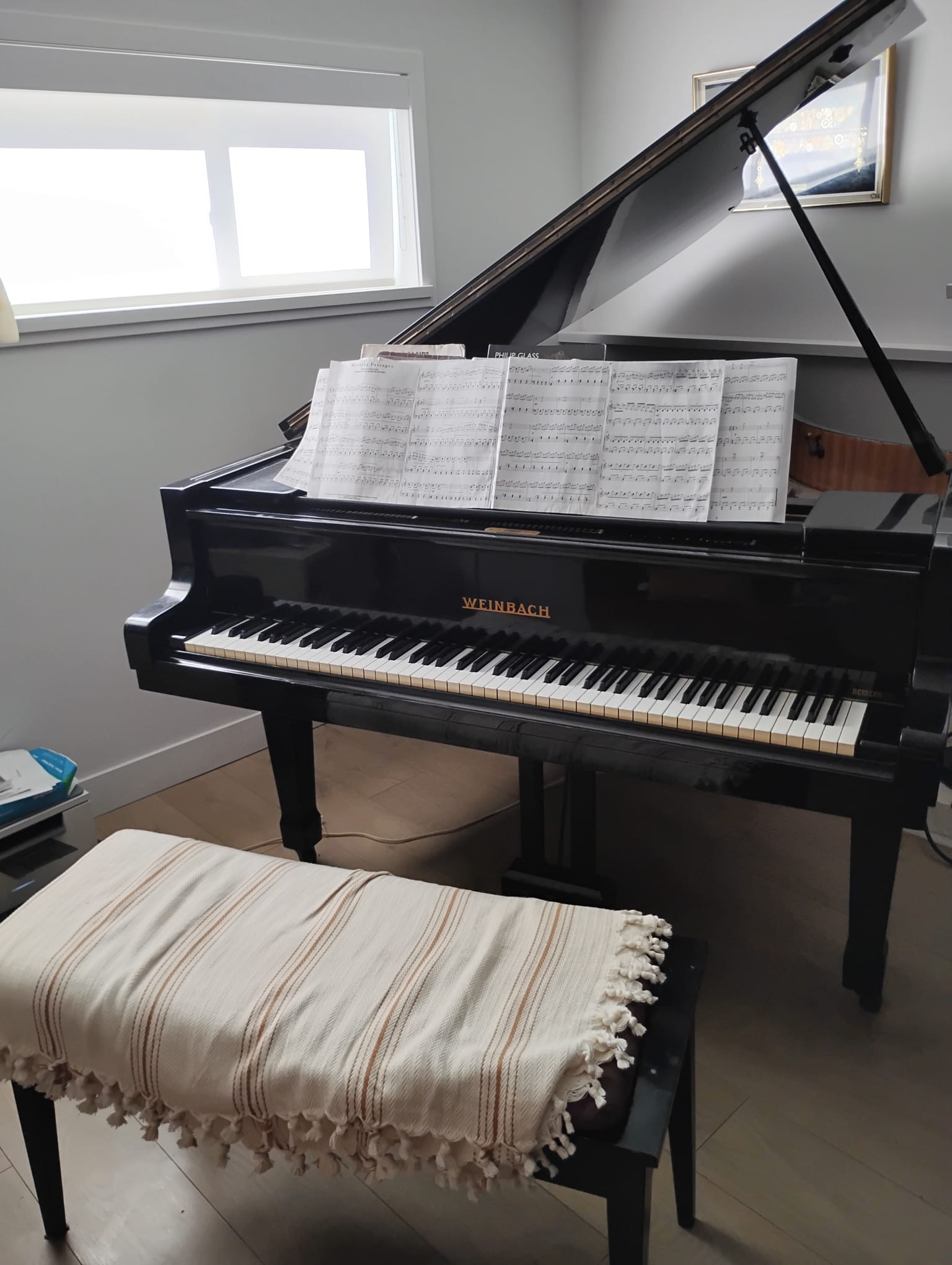
I was four years old, living in Toronto, when a woman moved into the house next door. She had a grand piano like this one being moved into her home.
At the time, I didn't even know what it was.
I just saw it, and I completely fell in love with whatever that thing was. I kept playing on it while they were trying to move it into the house. I was getting in the way, and the lady was understandably a little annoyed.
She went to my mom and said, "I'm a piano teacher. Your son obviously likes my piano, but we need to get it into the house and we can't because he won't move. Get him out of the way, and I'll give him piano lessons."
That's how it all started.
She let me play on her piano every day for about 15 minutes and began teaching me. But at four years old, my parents weren't sure if I was serious about it.
So my mom drew a piano keyboard on a piece of cardboard. It looked just like a real keyboard, and I used it on our kitchen table for an entire year.
There was no sound coming out of it—I was just hearing the music in my head and practising for hours on that cardboard keyboard.
After about a year, everyone started saying, "I think he's serious. You should get him a real piano."
So my parents bought me an old upright piano.
Not long after, my teacher told them, "He's progressing incredibly fast. You should get him into the Royal Conservatory right away."
I was five years old when I entered the Conservatory.
As I continued developing, my teacher kept encouraging my parents to upgrade my instrument. Eventually, I got a much better piano—nothing quite like this one—but one that carried me through my performance studies as I graduated from the Royal Conservatory.
And since then...
I've never stopped.
How do you feel when you play music?
Amazing. I just get transported to another world. I don't think about anything else—just the music. It makes me feel good, and hopefully other people feel that as well.
You first connected with the piano at a very young age, as you just shared. When did music stop being something you simply enjoyed and become part of who you are?
I don't know if it ever changed. Since I was four, it's always been a part of me. I just didn't know what it was. I only knew that I had to be with this thing- the piano
I was naturally drawn to it.
One interesting thing I later discovered about my family history is that, generations before me, my great-granduncle was a pianist in Moscow. He played in theatres during the era of black-and-white silent films.
There would be thousands of people in these old theatres, and he would perform live piano accompaniment for films like Charlie Chaplin movies.
When I found that out, I realised it was probably in my blood. It's part of who I am.
I think that love for music was passed down to me.
So where are you from? Are you from Russia originally?
Well, our family history is crazy.
My family is Russian, but they were born in China. Originally, they lived in Russia. We were what they called the wine barons to the Czar—the Emperor of Russia. Our family produced the wine for the royal court.
So we were aristocrats. From what I've been told, we lived very well. We even had a little castle.
Then the Communists came. After they murdered the Emperor's family, my relatives knew they would be next because they were eliminating the aristocracy. So they escaped to China.
Like many White Russians as they were called, as opposed to the Red Russians, who were the Communists they fled through Harbin, a city in northern China that became the main gateway out of Russia. From there, many of them settled in Shanghai.
That's where my mother was born.
Then, when the Communists took over China, my family had to escape again. Eventually, they came to Canada, and that's how I ended up being born here.I was born in Toronto. That's where my parents met.
What brought you to Vancouver?
My work in another field: advocacy for people with autism.
I moved to Montreal for five years to complete my master's degree, focusing on advocacy and inclusion for people with autism. At the time, many children with autism were separated into segregated schools instead of being educated alongside everyone else.
The way they were treated was heartbreaking.
People used words that should never have been used to describe them, and they were often treated as though they were less than human.
I remember walking into the library of one of those schools and noticing there weren't any books.
I asked, "Why do you call this a library?"
They replied, "Well, they can't read, so why would we have books?"
I remember thinking, Then why call it a library?
None of it made sense to me. I couldn't understand why people should be treated so differently simply because of their abilities.
When I learned about the inclusion movement, I believed in it completely. I began working with children who had been labelled as having the most challenging behaviours, proving they could thrive in regular classrooms alongside everyone else.
What made you care so deeply about autism and inclusion?
It actually started back in Toronto.
One summer, I was looking for work. The job market in Canada was terrible around 1984, so I applied for everything from being a dog catcher to becoming a literacy tutor.
The literacy organization passed my résumé on to a new program called The Integrated School. I had told them I'd take any job. When they found out I played piano, they said, "You can play for the kids. They'll love that."
One of the children I worked with, Chris, had cerebral palsy.
He and I formed an instant connection.
Being around him changed my life. I began to understand why his world was so different, why he had been sent to separate schools and separate summer camps when he could have been included alongside everyone else.
I worked with Chris throughout the summer, and that experience completely changed my perspective.
I remember thinking, This is incredible.
Seeing people come together, regardless of their abilities, wasn't just meaningful for them it was a learning experience for me and for the wider community.
It showed me that people truly can belong together, no matter what challenges they face.
I noticed that you don’t really share those parts of yourself on social media, but your community impact is such an important part of who you are. It humanizes you. I think people should see that side of you.”
Yeah, you’re right. I guess I’ve never really been someone who goes around saying, ‘Look what I did.’ But when I think about it, I’ve actually been part of some pretty meaningful things.
When I was studying at McGill University in Montreal, I heard about a man named Michael who was living in an institution where he was being neglected. The conditions were so terrible that people believed he would eventually die there. One of the students who worked at the institution told us about him and said she was even receiving death threats because she was trying to speak up for him.
I remember thinking, ‘Someone has to do something.’ So I decided to go and see what was happening for myself.
When I met Michael, he was in a heartbreaking condition. His face was swollen and infected, and he had been labeled as one of the most challenging cases in the province because he would hurt himself when he was distressed. But when I approached him, the first thing he said to me was, ‘New home, new home.’
And I thought, ‘It’s clear what this man wants. He wants a better life.’
So I told him, ‘Okay, I’ll try to help you get a new home.’
At the time, I had no idea that promise would lead to a 10-year journey — one that would eventually make me Michael’s legal guardian.
People told me he was at the bottom of the list because he was considered too difficult. But I thought, ‘If nobody leaves because people like Michael are always pushed aside, then he’ll never get his chance.’ I believed he needed to be the first one given that opportunity.
Through advocacy and persistence, Michael became the first person to leave that institution. Today, he lives in the community with a loving family. He’s happy, he’s cared for, and he’s no longer hurting himself.
Seeing him live with dignity, love, and freedom after everything he went through is one of the most meaningful things I’ve ever been part of.”
I’m still there for him today as his legal guardian. Fortunately, I became involved because the government-appointed public guardian was simply approving whatever the psychiatrists at the institutions where he was living recommended. Their attitude was basically, “Do whatever you want with him,” and I couldn’t accept that.
So, I started sharing Michael’s story publicly and bringing attention to what was happening to him. As a result, I began receiving death threats from the institution and some of the staff. They told me, “Don’t tell people about him.” But I said, “I want people to know what you’re doing to this person.”
The public guardian even threatened to have me arrested and sued if I continued speaking publicly about Michael. But I decided I wasn’t going to back down. I got his story featured on the front page of a newspaper, and I told them, “You can put me in jail if you want, but I’m still going to tell people what’s happening. Let’s see what the public thinks.”
Eventually, they backed down because they were afraid of the attention Michael was receiving. They didn’t want to be held responsible if something happened to him. In the end, they said, “Take him.”
You were already teaching piano as a teenager. What did those early years teach you about talent, discipline, and developing a gift?
I don’t know if I fully understood it at the time because I always assumed that what I could do was normal. I started playing piano when I was four, so I thought everyone could do it.
But when I began teaching, I realized that wasn’t the case. Not everyone could do what I was able to do naturally. I’ve always been considered an excellent sight-reader, meaning I can look at a piece of music and play it immediately, almost as if I’ve practiced it for years.
When I gave students a piece of music and said, “Okay, play this,” I would watch them struggle to find one note at a time, and I started to understand that my ability was actually a gift. I had to ask myself, “What do I know that can help them develop this skill?”
I also learned that teaching isn’t about having just one approach. When I worked at a school where I supported children with different learning needs, I discovered that you have to find different ways to connect with people.
For example, I taught piano to a child with autism, and I explained the notes by comparing them to planets. I would say things like, “This one looks like Saturn,” when teaching him about the notes. That approach worked for him.
It taught me to think more critically about how people learn. There isn’t one single way to teach or understand something. You have to find different pathways to help people connect with the knowledge you’re trying to share.
Your life has moved through different areas — music, advocacy, education, and community building. What connects those different chapters for you?
I think music is what ultimately holds everything together. It’s about using music as a way to connect with and reach people.
Music is an international language. You don’t have to speak English, have a certain background, or even have a high level of intelligence to experience it. Everyone can feel music. It’s something universal that connects people.
I’ve used music in different ways, including as a teaching tool and as a way to support people in the community. For example, I organize an annual leadership retreat for people with autism. It’s a weekend conference that I’ve been running for 25 years, and the next one is coming up at the end of this month.
One of the workshops I lead involves playing piano music and asking participants to draw what they feel or what the music inspires in them. They then have the opportunity to share their artwork and talk about their emotions and experiences.
For some people, especially those who don’t usually express themselves verbally, it creates a safe space where they can communicate something about who they are and connect with others.
That’s why I believe music is such a powerful educational tool. It creates opportunities for expression, confidence, and connection in ways that words alone sometimes cannot.
Beyond teaching, music has also become a way for me to build communities. Through the music shows I organize, I work with different artists and create opportunities for musicians to meet, collaborate, and discover new possibilities together.
Often, people from completely different musical backgrounds who may never have crossed paths end up in the same room. They start conversations, share ideas, and sometimes those connections grow into collaborations.
For example, at one of my recent shows, there was an opera singer and an Azerbaijani folk group who connected because they enjoyed each other’s performances. They started talking about working together, and now the opera singer is going to perform with the Azerbaijani folk ensemble at a concert next month.
And you created that opportunity?I think I helped create the environment for it, but the connection happened naturally because they met at my show.
There have been many moments like that. One of the pianists who performed at my event was a blues musician, and through connections made at the show, he became the keyboard player for a local rock band whose members had also performed there. They needed a keyboardist, they met, and now he’s part of the group. They’re even performing tonight at The Roxy for the Battle of the Bands.
Another example is Matty Miller. He usually performs as a guitarist and singer with his band, but he had always wanted to showcase his piano skills. I encouraged him to perform a solo piano piece at my show because I wanted people to see another side of his talent.
I told him, “You’re good at this. Let people see that you can do more than just play guitar in a band.”
He appreciated having that opportunity to step outside his usual role, and since then he has performed at several of my shows and brought members of his band along as well.
For me, that’s the beauty of music; it’s not just about performances. It’s about creating spaces where people can discover new sides of themselves, meet others, and build something together.
You’ve spent years creating opportunities for other people to be seen. Why has helping other artists find a stage become such an important part of your own story?
I think, like with Michael’s story, I’ve always believed that everyone deserves opportunities.
When I go to different shows and performances, I see so much talent. You don’t have to be a Hollywood star or a famous name to prove that you’re exceptional. There are so many incredible actors, musicians, singers, pianists, comedians, and performers right here in the city.
Sometimes I watch people perform and I’m amazed. There are actors in local theatre productions who are so talented they can move you to tears. It reminds me that being good at what you do doesn’t always come with fame or recognition. There are so many gifted people who simply need someone to notice them and give them a platform.
I think people appreciate being recognized. Sometimes all someone needs is for another person to say, “You’re good. You deserve to be seen. You should have an opportunity.”
That’s what happened with Eric, the pianist who is now playing keyboard for the band performing tonight at the Battle of the Bands.
I discovered Eric in a very unexpected way. In my neighbourhood, there’s a public piano in a small park area where people can just sit down and play. One day, I was there having a coffee and relaxing when I heard someone playing.
A woman had been playing before him, and she was good, but then this guy came along and immediately caught my attention. He started playing blues, and I thought, “Wow, this guy is really good.” I sat there listening for about half an hour.
Afterwards, I approached him and said, “You’re really talented. I organize a show, and I’d love for you to perform.”
His response was, “I’m not good enough.”
I told him, “Yes, you are. I want people to hear what you’re doing right now.”
Eventually, he agreed, and that experience gave him more confidence in himself. Now he’s the keyboard player for a band performing tonight.
For me, it’s about encouraging people and helping them see their own value because so many talented people are their own biggest critics. They constantly tell themselves, “I’m not good enough,” or “I’m not ready.”
I remember another example from one of my shows. We had an Azerbaijani ensemble perform, and after the show, their accordion player said, “I don’t think that went very well.”
I looked at him and said, “What are you talking about? You were the only act that received a standing ovation that night. Nobody else got one.”
He said, “Oh, I guess we were okay.”
I told him, “No, you were not just okay. You were great.”
Sometimes people need someone else to remind them of what they are capable of. A little encouragement can completely change how they see themselves.
Piano Jams brings together performers from very different disciplines. What are you really trying to create beyond simply putting on a show?
First of all, we now call it Friday Night Live instead of Piano Jams. Piano Jams was the original name when we were performing at another venue called Beaumont Studios, and that was the name they used there.
After the first few shows, I wanted to rename it Friday Night Live, but at the time, they wanted to keep calling it Piano Jams, so I went along with it.
Later, when I moved to a different venue where I had more creative freedom over the production and direction of the show, I decided to make the change.
The reason was simple: it had grown into something much bigger than just piano performances. The original concept expanded into a broader celebration of different artists, genres, and creative expressions.
What are you trying to create beyond simply putting on a show?
For me, it goes beyond the performance itself. It’s about what happens when artists meet, connect, and collaborate.
Like I mentioned earlier, the most exciting part is seeing the relationships that develop after the show. There’s something almost magical about watching people from completely different backgrounds come together, exchange ideas, and create something new because they were brought into the same space.
The connections that happen behind the scenes and after the performances are just as important as what happens on stage.
I’m sure you’ve received great feedback about the impact these shows have had on both the artists and the people who attend.
Yes, the feedback has been wonderful. It’s funny because now I even get offered free tickets to shows by some of the artists.
They’ll say, “Can I get on your guest list?” and I’ll joke, “No, we’re going to charge you extra.”
Then they laugh and say, “No, we’re kidding. Of course you’re on the guest list.”
It’s a really nice feeling to know that people appreciate what I do.
Your advocacy work has also been an important part of your life. How has that shaped the way you think about inclusion, opportunity, and who deserves a platform?
It’s interesting because I’ve realized how much advocacy is involved, even in creating these shows.
There are so many different people and interests to consider — working with the venue, communicating with the people running the space, making sure the artists are happy, and creating an experience that works for everyone. It’s a constant balancing act.
Sometimes venues have their own rules or assumptions about what will and won’t work. At one venue, I had an idea for a performance, and they immediately said, “No, that won’t work.”
I asked them, “How do you know that? You haven’t even attended one of my shows. How can you say it won’t work?”
Sometimes I just have a feeling about an artist or an idea. I trust my instincts, and I decided to move forward with it anyway. In the end, everyone loved it.
I’ve always seen myself as an advocate for artists — someone who gives them the opportunity to express themselves and share what they can do.
When we lost our previous venue, I was determined to keep the shows going. I searched for another location, spoke with different people, and eventually found the venue we’re currently using because I didn’t want the platform we had built to disappear.
At the time, I thought I would be able to earn something from all the work I was putting in. But I made sure the artists were paid first, and the venue costs were covered first. By the time everything was settled, there was often nothing left for me.
But I realized it wasn’t only about the money. Of course, it would be great to have my time and expenses properly covered, and hopefully that continues to grow, but the most important thing was keeping the shows alive and continuing to create opportunities for artists.
With the new venue, because the rental costs are more manageable, I’ve finally been able to make a little something for myself too. It feels good because it’s a reminder that the work has value.
I’ve always believed that if I can picture something and stay committed to making it happen, eventually it can become a reality.
What does music allow you to express that words sometimes cannot?
I’ve thought about that a lot. There’s a saying that a picture can say a thousand words, and I think music can say ten thousand.
Of course, there are incredible writers — Shakespeare, great novelists, and poets — who can tell beautiful stories through words. But an image can communicate so much without explaining everything. It can capture emotions, ideas, and experiences all at once.
I believe music does the same thing.
People often ask me, “What books do you read?” and I usually say, “I don’t really read books. I read music.”
For example, I’ll buy a Beethoven sonata and play it, and for me, that is a story. As I listen and perform, I see images and emotions in my mind. That is my form of reading.
I believe every piece of music tells a story. It communicates feelings and experiences in a way that words sometimes cannot.
I think music allows me to express things that I sometimes struggle to put into words. I can be a little shy when it comes to talking about myself or explaining how I feel, but through music, I can communicate those emotions naturally.
Music has been my comfort since I was four years old. It has always been the place where I feel most at ease and where I can truly express myself.
When people eventually look back on your work, what do you hope they remember most — the performances, the people you helped, the communities you created, or something else?
I would like to be remembered for all of it, not just one thing.
One thing I’ve realized through this conversation is that I’ve done many things that a lot of people don’t know about. I want people to understand that my story is about more than just playing piano.
Whatever I choose to do, I want to do it well. I’m not interested in doing a hundred things without meaning. I would rather focus on a few important things and make them truly great.
I think it would be interesting for people to see the full picture of everything you’ve done, because there is so much more to your story.
There is one website that captures a small part of that journey. The leadership conference I’ve been organizing for people with autism for the past 25 years actually led to the creation of a website called Self-Advocate Net.
The website was developed from the very first conference, and today it has grown tremendously. It’s now one of the top websites that comes up when people search for “self-advocacy.”
I feel incredibly proud of what it has become because it started from something I created, and now the person with autism who was involved from the beginning is actually the webmaster managing the entire platform. He has taken ownership of it, and it’s doing really well.
The website highlights the conferences we’ve organized over the past 25 years and includes some information about my involvement, but it only tells a small part of the story. There is so much more that I have done and experienced that isn’t captured there.
How can people connect with you?
For now, people can connect with me through my Instagram page. We’ve also created an Instagram page specifically for the show.
I’m currently working with some people to develop a personal website that will finally bring together all the different aspects of my work, my projects, and my journey.
Also, just last week, I finally completed my first recording.
Yes. I’ve always wanted to record music, but I never actually did it. Through one of the musicians connected to my show, I was introduced to someone whose bandmate runs a music studio. He encouraged me to finally make a recording and said they could help me do it at an affordable cost.
I thought, “Why not?” So I decided to go ahead with it.
Hopefully, this will be the first of many recordings.
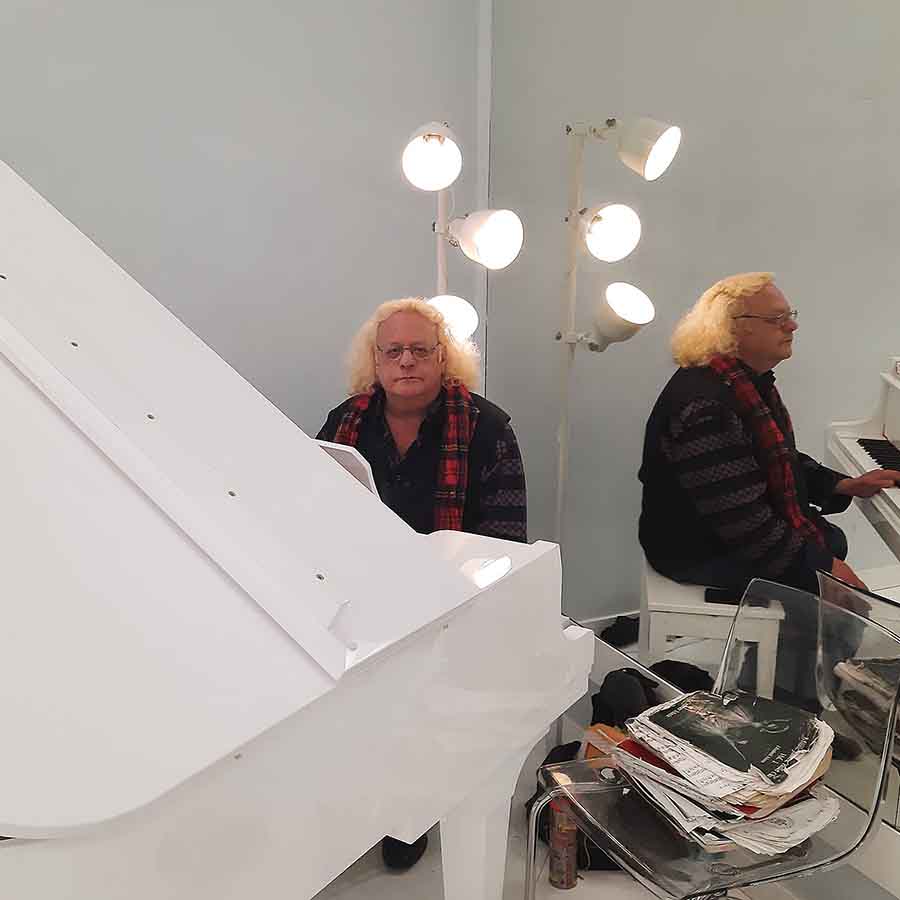
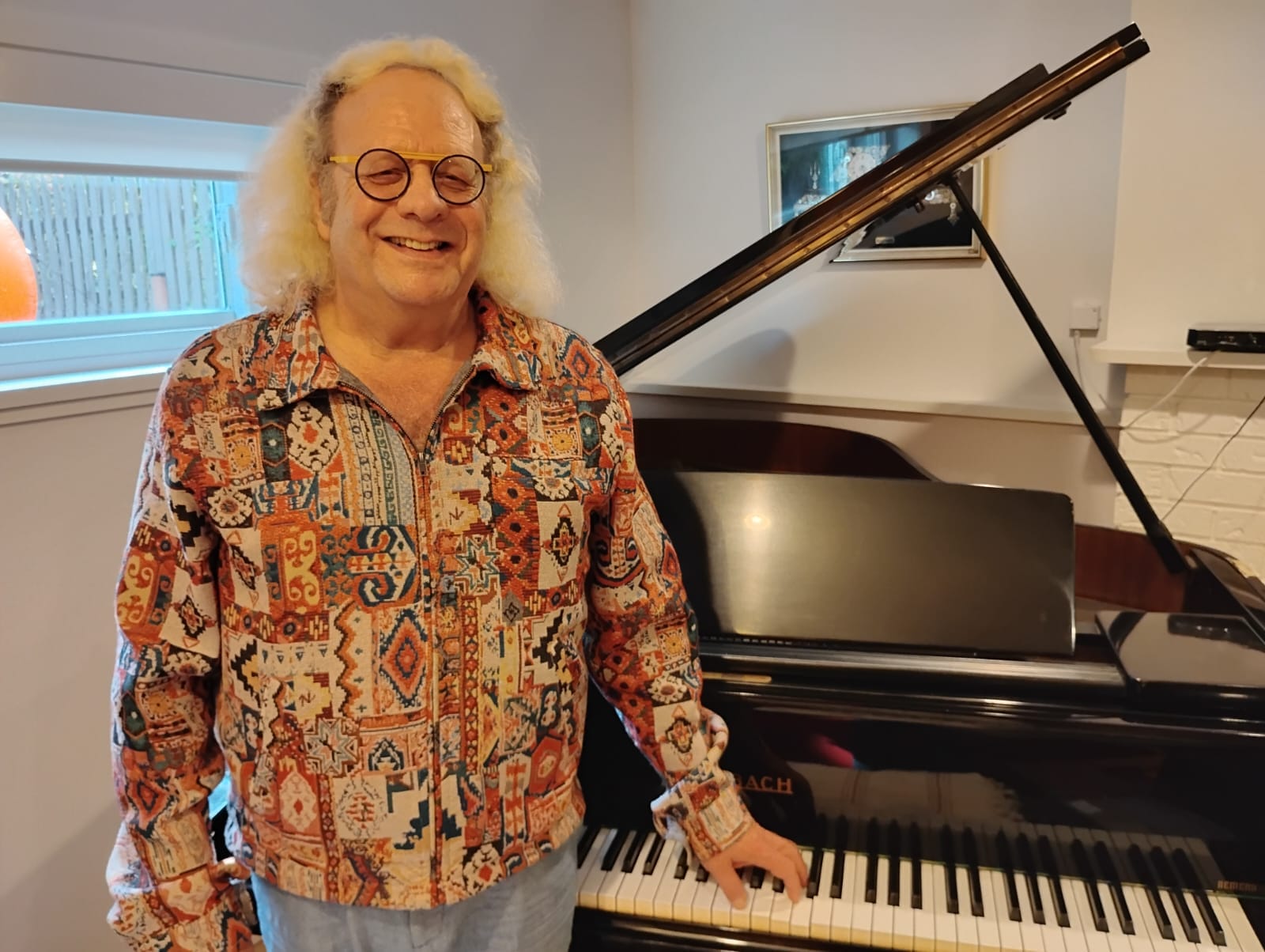
Gregg Schiller playing piano, showcasing his lifelong connection to music, creativity and artistic expression.
The first one is specifically designed for ballet classes, following the structure and requirements of ballet training. But I would also love to create another recording where I simply play the music I feel inspired to express something that reflects me personally as an artist.
What are you building toward now? What should people be paying attention to next with Greg Schiller?
I think I want to do more writing — to put my experiences into words.
I can’t tell.
Gregg Schiller’s story is not defined by a single performance, a single achievement or a single stage.
It is found in the countless moments where he chose to open a door for someone else an artist waiting for recognition, a person with autism seeking dignity, or a community looking for a place to belong.
His piano may have been the first language he discovered, but connection became the message he spent his life sharing.
Through every note played, every artist encouraged and every barrier challenged, Gregg has demonstrated that creativity is not only about expression; it is about impact.
As he looks toward the future recording more music, documenting his experiences through writing and continuing to build spaces where people can connect — one thing remains clear: Gregg Schiller is still composing.
Not just music.
A legacy.
Gregg Schiller is a pianist, advocate and creative visionary dedicated to the power of music, inclusion and human potential. Over decades, he has blended artistry with social impact — championing individuals with autism, mentoring artists and creating platforms that encourage collaboration across diverse creative communities. His journey reflects a powerful belief: when people are given the opportunity to be seen, they can create extraordinary things.