A beautiful website can still be a poor salesperson.
I see this repeatedly when reviewing beauty and skincare brands.
The photography is beautiful. The formulations are compelling. The founder has a meaningful story. There may already be reviews, educational content, samples, quizzes and several strong products.
And yet the website leaves one critical job unfinished:
Helping a first-time visitor decide what to do next.
That distinction matters because customers rarely arrive on a skincare website already knowing everything they need to know to purchase.
They are evaluating.
Is this brand for someone like me?
Can I trust these products?
What makes this different?
Which product is right for my skin?
Where should I start?
Is it worth trying?
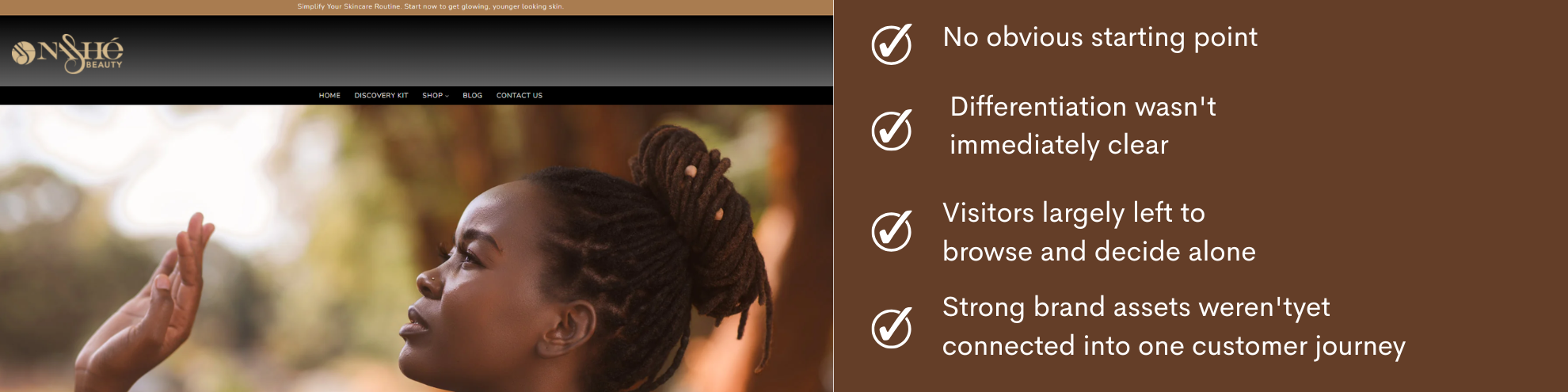
When the website doesn't resolve those questions quickly enough, the customer has to do the work.
And every unanswered question creates another opportunity to leave.
That was one of the central opportunities I identified while advising Nashé Beauty, a Canadian skincare company combining African botanical traditions with modern cosmetic science.
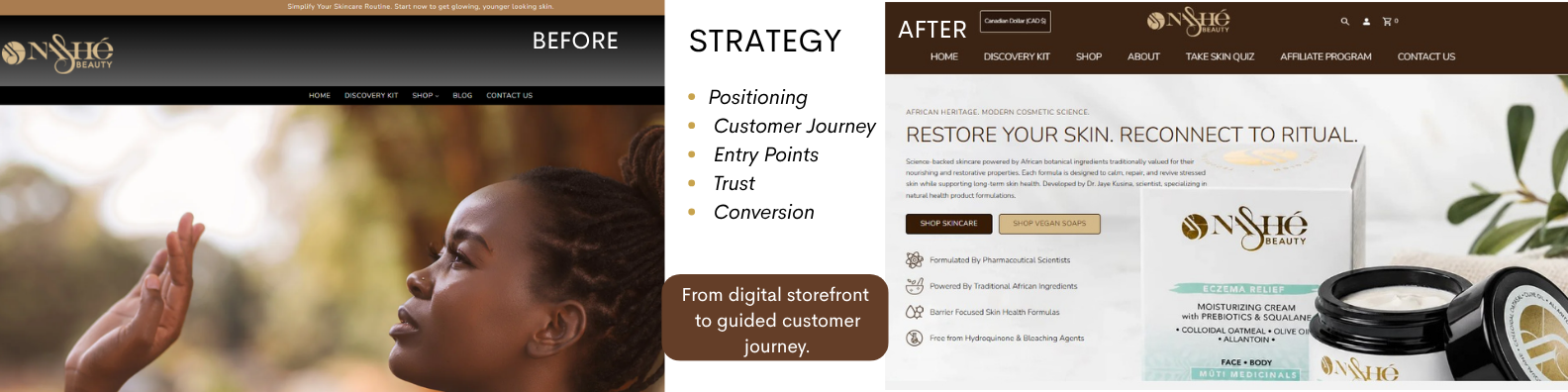
The project ultimately became about much more than improving a homepage.
It became an exercise in redesigning how a customer discovers, understands, trusts and enters the brand.
And it illustrates one of the principles that increasingly guides my work with beauty businesses:
Your website isn't simply a catalogue. It's a decision-making system.
The Problem Wasn't Simply the Website. It Was the Buying Journey.
My perspective on conversion comes from both sides of the table.
I've spent nearly a decade building and selling skincare myself while also working with beauty founders on formulation, positioning, customer experience, e-commerce and growth.
So when I evaluate a beauty website, I'm not looking only at design or conventional CRO best practices.
I'm looking at the entire commercial journey:
Product → positioning → customer need → trust → discovery → decision → purchase → retention.
That distinction became particularly important with Nashé Beauty.
The brand already possessed many of the ingredients required for a compelling customer proposition.
There was a founder with scientific expertise.
There was a distinctive story connecting African botanical heritage with cosmetic science.
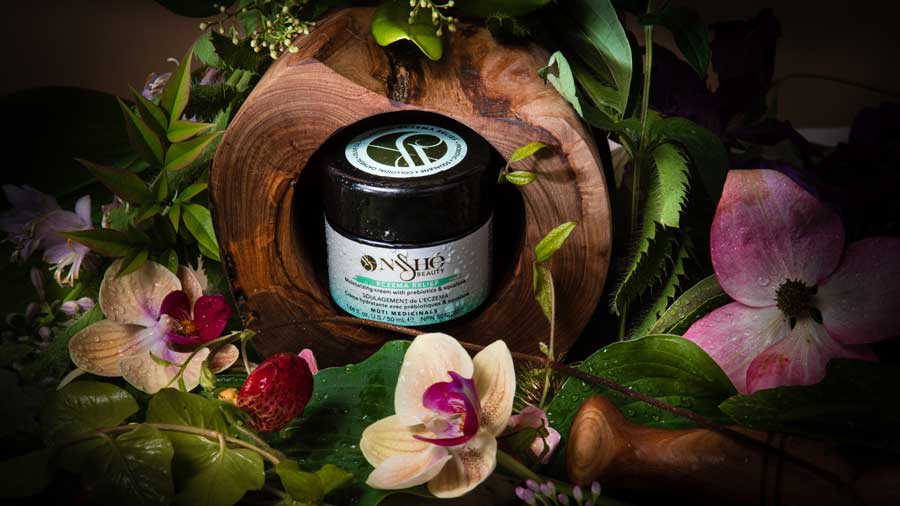
There was an Eczema Relief Cream addressing a specific consumer concern.
There was a Discovery Kit.
There was a skin quiz.
There were existing customers and social proof.
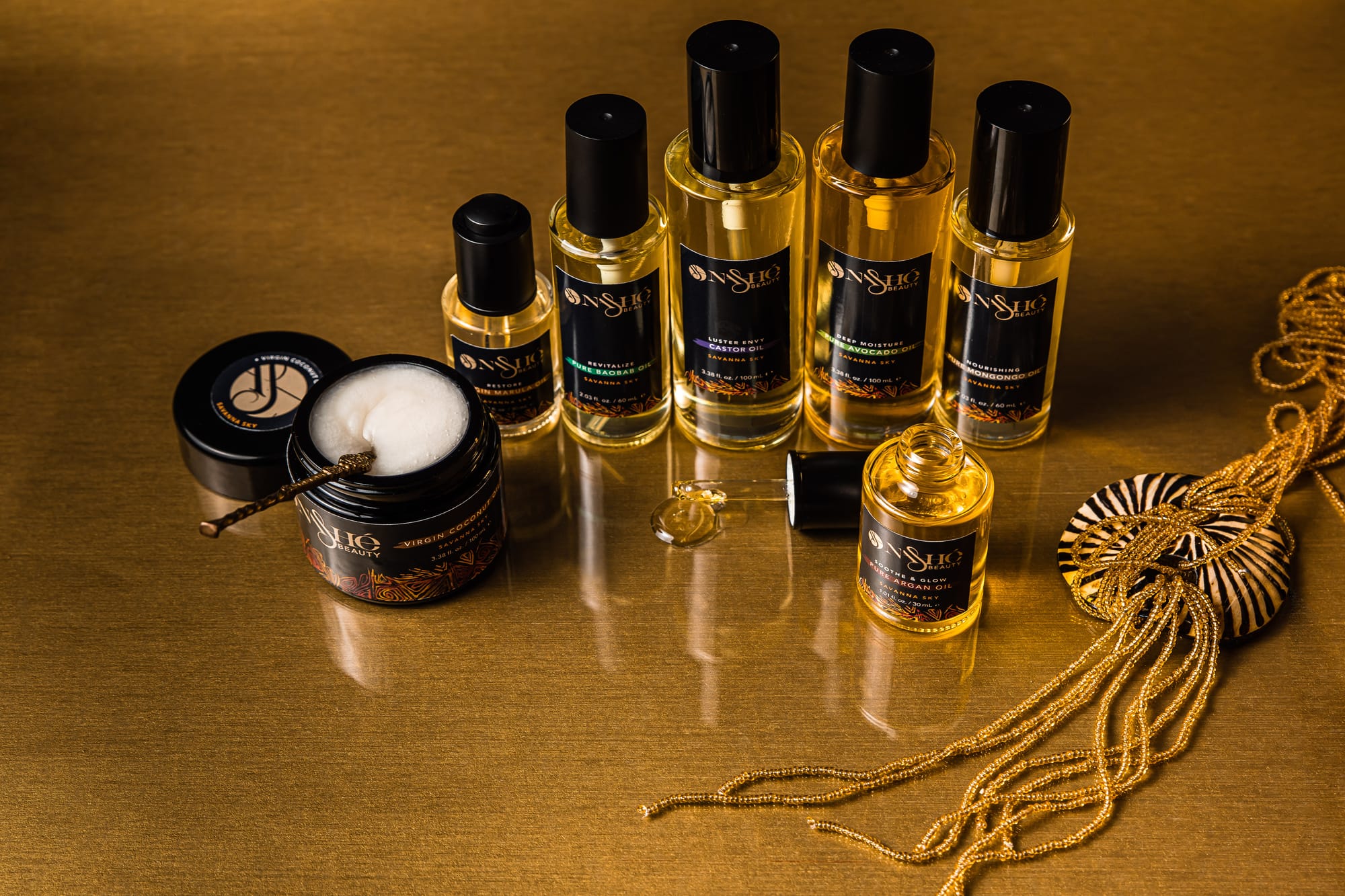
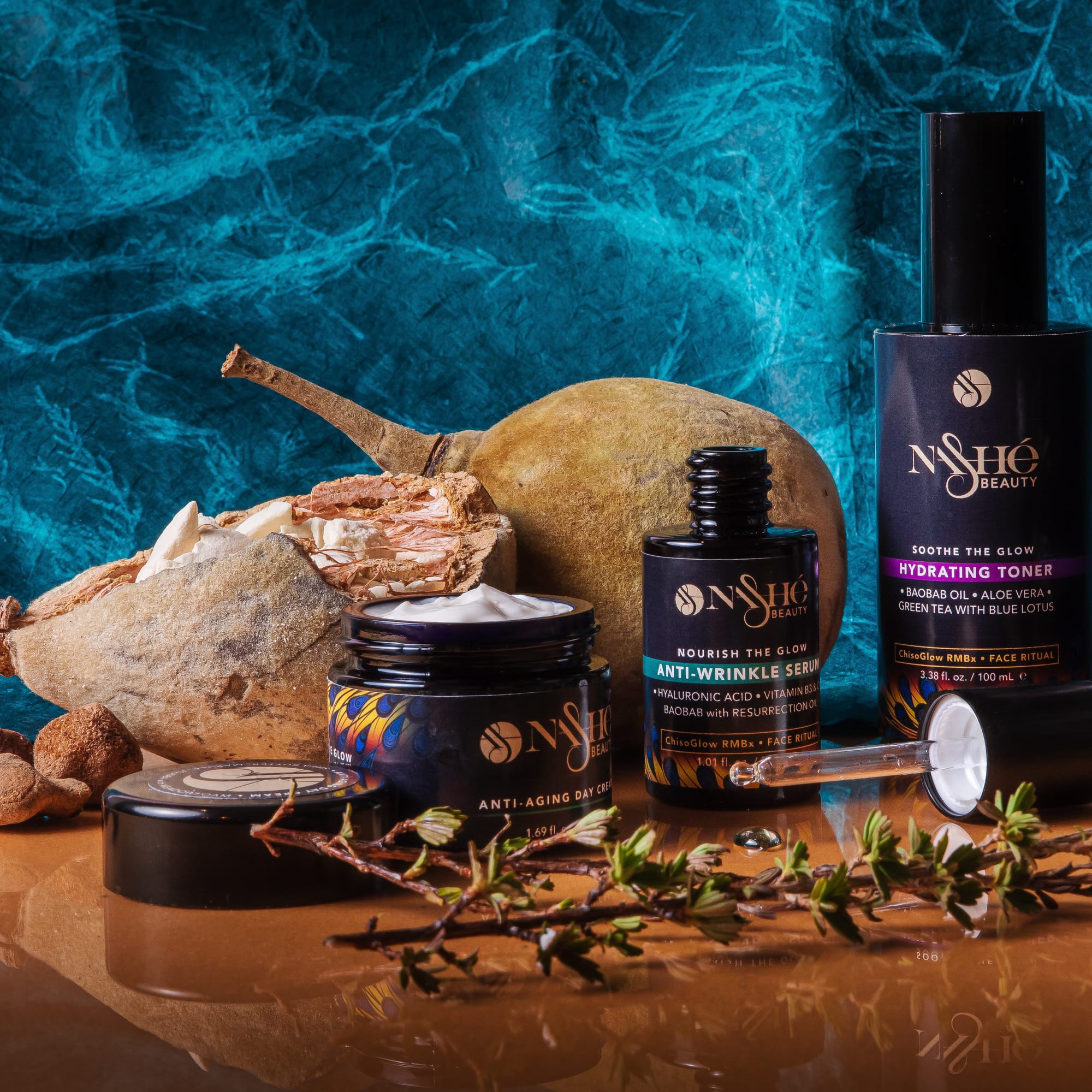
There were multiple skincare products serving different needs.
The opportunity wasn't simply to add more marketing tactics.
It was to organize the assets already inside the business around the way a new customer actually makes a purchasing decision.
I think of this as strategic recombination: identifying commercial value that already exists inside a brand and connecting those assets so they work together rather than independently.
That became the foundation of the project.
What Is Revenue Design?
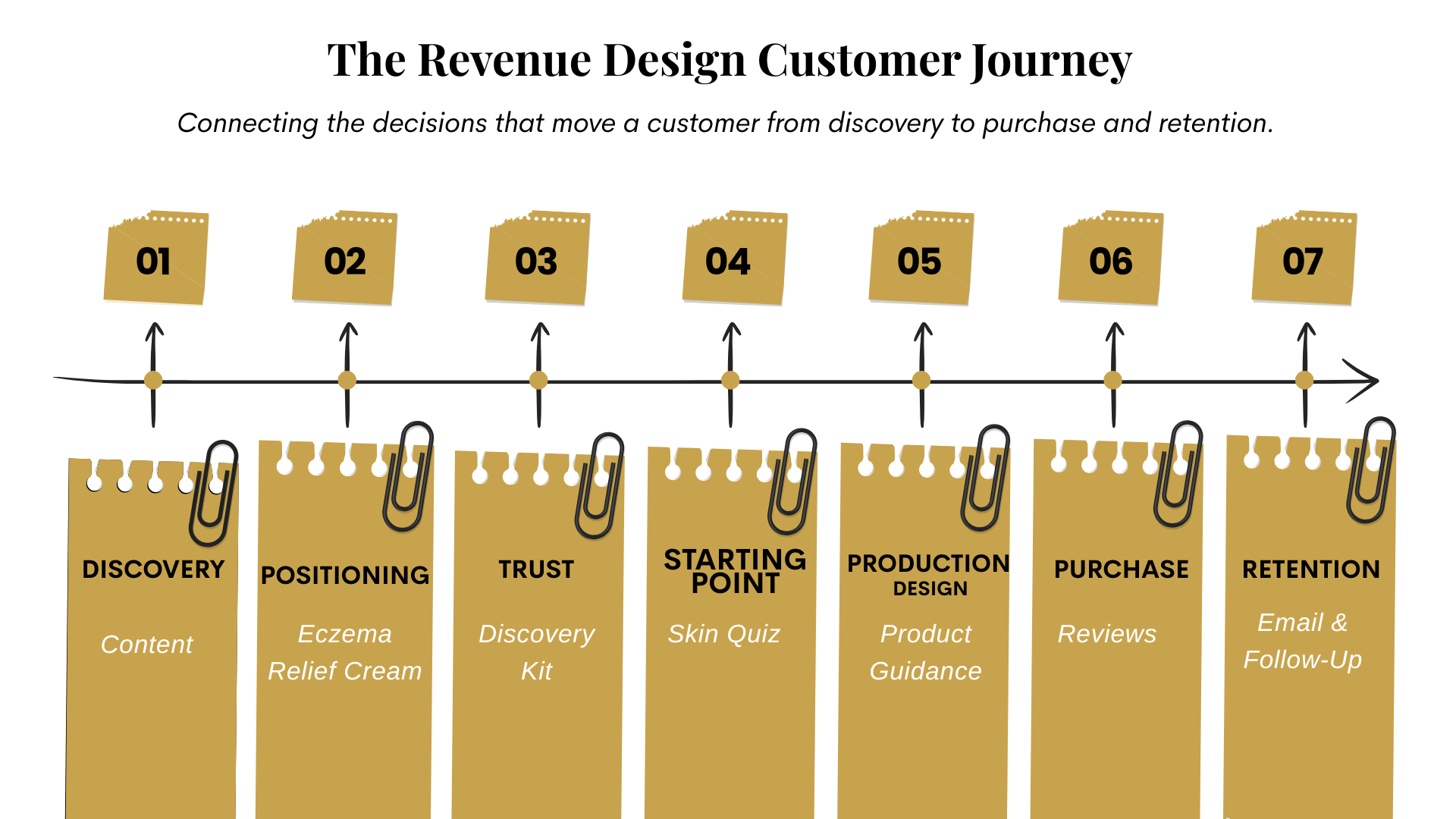
I call the broader approach I use Revenue Design.
Revenue Design is the process of designing the customer journey so positioning, trust, product discovery, conversion, acquisition and retention work as one connected commercial system rather than a collection of disconnected marketing activities.
A brand might have excellent products.
It might also have a quiz, email marketing, Meta ads, reviews, samples and a beautiful Shopify store.
But possessing all those assets doesn't necessarily mean they work together.
Revenue Design asks a different question:
What decisions does the customer need to make before they're ready to buy—and how well is the business helping them make those decisions?
Nashé Beauty gave us a practical opportunity to apply that thinking.
Why Isn't My Skincare Website Converting Visitors Into Customers?
Founders often assume poor website conversion means something needs to look better.
Sometimes it does.
But one of the first things I investigate is decision friction.
Imagine discovering an unfamiliar skincare company.
You're presented with cleansers, oils, serums, creams, kits and treatments.
Which one do you buy?
The founder understands the collection intimately. The customer doesn't.
This creates an important gap:
Brands organize websites around products. Customers make decisions around needs.
A customer may be thinking:
My skin is extremely dry.
I have sensitive skin.
I don't know which routine I need.
I'm nervous about buying several full-size products from a brand I've never tried.
The website therefore needs to translate the brand's product architecture into a decision structure the customer can understand.
For Nashé, that meant creating clearer pathways instead of expecting visitors to browse until something caught their attention.
Revenue Design Principle #1:
Don't make customers solve your product architecture.
Guide them.
Step 1: Strengthening the Positioning Before Asking for the Sale
One of Nashé Beauty's strongest assets wasn't a product.
It was expertise.
The brand's founder brings a scientific background to formulation, while the brand itself sits at an interesting intersection between African botanical heritage and modern cosmetic science.
That is meaningful differentiation.
But differentiation only has commercial value when the customer can recognize it.
So the revised homepage brought that proposition much further forward.
Instead of leaving visitors to piece together what Nashé represented, the experience began communicating the positioning immediately:
African heritage. Modern cosmetic science. Skin-barrier-focused care.
We also made the scientific foundation of the brand more visible.
Why?
Because positioning isn't simply branding language.
Good positioning reduces the amount of uncertainty a customer must resolve before buying.
When a new visitor understands who the brand is for, what it believes, what makes it different and why its products deserve consideration, purchasing becomes easier to evaluate.
This is particularly important in skincare, where consumers are applying products directly to their skin and may already have concerns about sensitivity, irritation or product compatibility.
Revenue Design Principle #2:
Reduce uncertainty before increasing persuasion.
Sometimes the problem isn't that you haven't persuaded the customer enough.
It's that you haven't given them enough reason to feel confident.
Step 2: Choosing a High-Intent Entry Product
Another important strategic decision was determining what should lead customer acquisition.
A common mistake is assuming every product deserves equal marketing attention.
It doesn't.
Different products can perform different commercial roles inside the same portfolio.
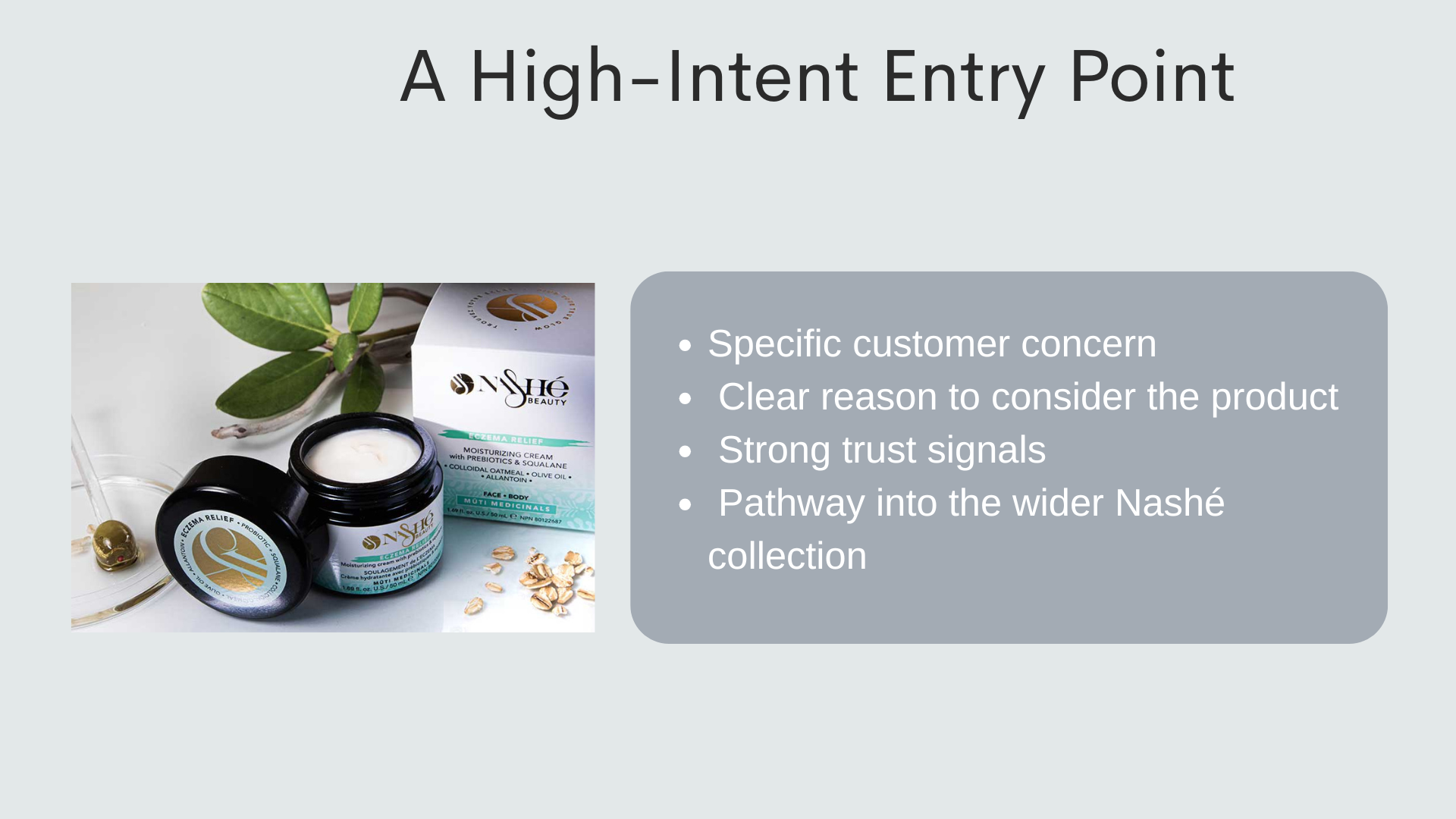
For Nashé Beauty, I saw particular potential in the Eczema Relief Cream.
The reasoning wasn't simply, “Let's advertise this product.”
It was based on the type of demand surrounding it.
There is an important difference between category-led demand and problem-led demand.
Someone browsing beautiful botanical skincare may be interested in discovering something new.
Someone actively looking for support for a recurring skin concern has a much clearer job they are trying to accomplish.
That changes the buying context.
The Eczema Relief Cream also carries another valuable trust signal: it is a Health Canada-authorized Natural Health Product with an NPN.
From a strategic perspective, that gives us a combination of:
specific customer concern + identifiable need + regulatory trust signal + educational content potential + product differentiation + pathway into the wider collection.
That makes the product strategically interesting as a potential customer-acquisition vehicle.
A customer may discover Nashé because of one specific concern.
If the first experience creates trust, that relationship can extend into other products.
This is why product strategy and acquisition strategy should not be separated.
Revenue Design Principle #3:
Your hero product isn't necessarily the product you're proudest of. It may be the product that gives the right customer the clearest reason to enter your brand.
How Should Skincare Brands Choose a Hero Product?
A useful hero or acquisition product typically has several characteristics.
It addresses an identifiable customer need. Its value proposition is easy to understand. The customer can recognize why they might need it. The brand has credible reasons to win in that category. And the product can naturally introduce the customer to the rest of the portfolio.
That doesn't mean every skincare company should choose its most problem-focused product.
It means founders should stop asking only:
“What do we want to sell?”
and also ask:
“What is the most compelling reason for a new customer to begin a relationship with us?”
Those aren't always the same answer.
Step 3: Turning the Discovery Kit Into a Customer-Acquisition Tool
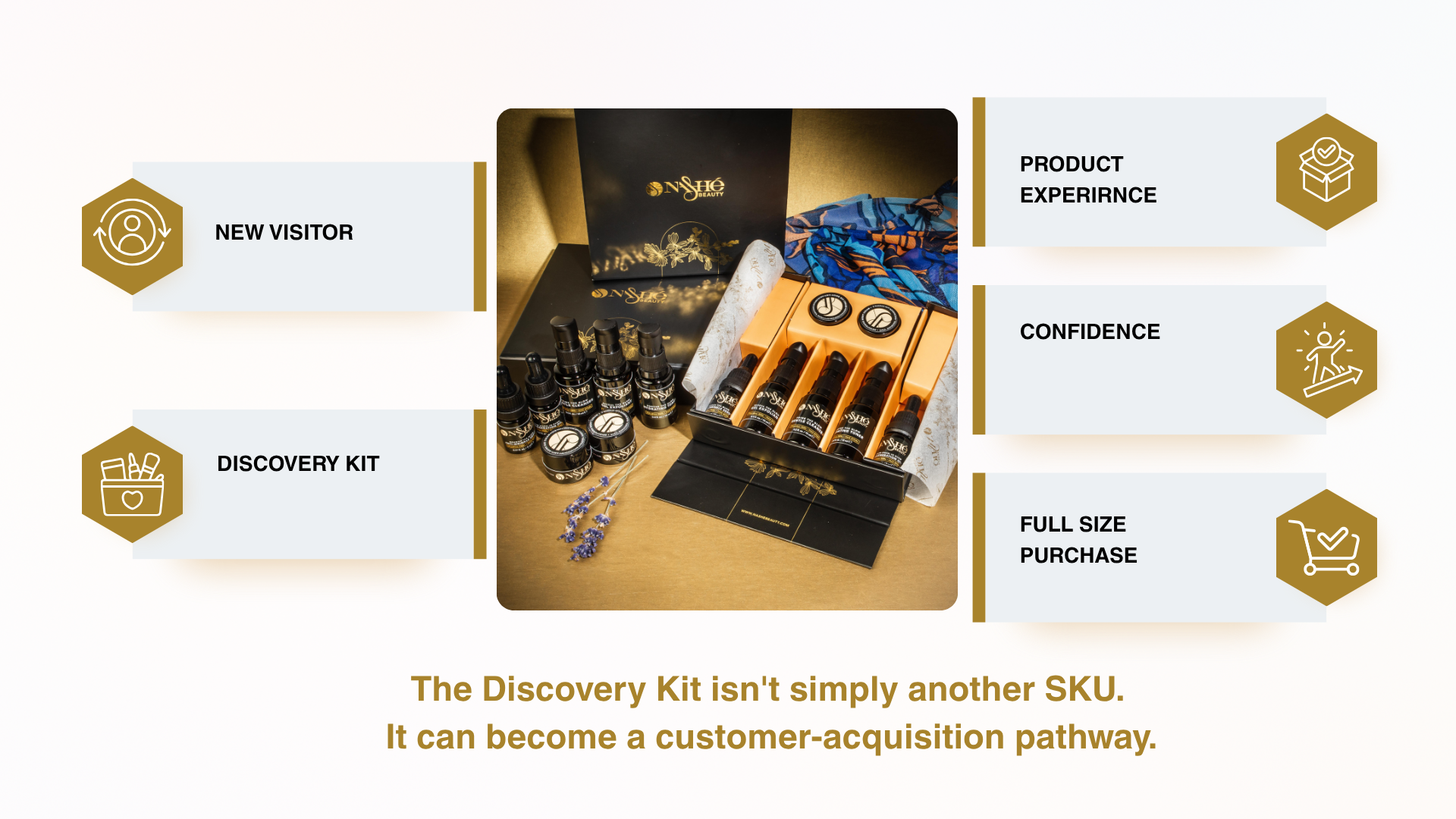
Nashé already had a Discovery Kit.
What interested me was not simply the product itself, but the commercial role it could play.
Many founders view samples or Discovery Kits primarily as inexpensive versions of their products.
I see them differently.
For an unfamiliar skincare brand, the customer's hesitation is often not:
“I don't want this.”
It is:
“I'm not certain enough yet.”
A Discovery Kit changes the psychological commitment.
Instead of:
Should I commit to several full-size products from this brand?
the decision becomes:
Let me experience the products first.
That's a much smaller leap.
And commercially, a well-designed Discovery Kit can perform several jobs at once:
lower first-purchase resistance → create product trial → expose customers to multiple SKUs → capture first-party customer data → enable follow-up → create a pathway toward full-size conversion.
That means a Discovery Kit shouldn't sit quietly in the navigation as another SKU.
It can become part of the brand's customer-acquisition system.
The next question is equally important:
What happens after the sample?
If someone purchases a Discovery Kit and the relationship ends there, the brand has captured only a fraction of its potential value.
The real system should consider:
What does the customer receive next?
How do we help them identify their favourite product?
When do we invite them to purchase full size?
What incentive makes that transition easier?
What content reinforces their decision?
Now we're not simply optimizing an order.
We're designing a customer lifecycle.
Revenue Design Principle #4:
Your first-purchase strategy deserves deliberate design.
Step 4: Giving Customers Multiple Ways to Find Their Starting Point
Not every customer enters a brand in the same way.
One visitor may arrive because of eczema.
Another may be curious about African botanical ingredients.
Another may want an entire routine.
Another knows their skin type but has no idea which Nashé product fits it.
So rather than relying on one path, we strengthened several.
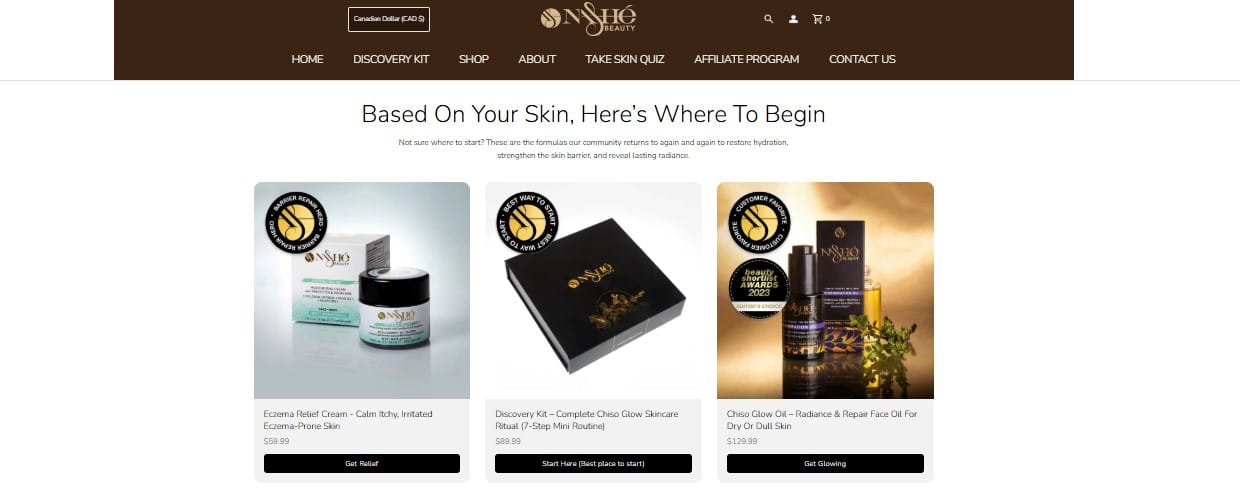
The revised customer journey included clearer product guidance, a more prominent Discovery Kit, strategic emphasis on the Eczema Relief Cream, skin-type guidance and the existing skin quiz.
The important part isn't any single feature.
It's what they collectively accomplish:
They reduce the amount of figuring-out the customer has to do alone.
The skin quiz, for example, isn't valuable simply because quizzes are interactive.
Its strategic role is to help transform uncertainty into a recommendation.
It can also create another opportunity for lead capture and subsequent email nurturing.
That means the quiz sits at the intersection of customer experience, conversion and acquisition.
How Can Beauty Brands Reduce Customer Decision Fatigue?
Adding more options isn't always the answer.
Sometimes the better conversion strategy is to make the existing options easier to understand.
For beauty businesses, that can mean organizing navigation around concerns, identifying a clear “Start Here” pathway, highlighting a Discovery Kit, providing skin-type guidance, using a quiz, identifying hero products, improving comparison information, or recommending simple routines.
The objective is not necessarily to reduce the number of products.
It's to reduce the cognitive work required to choose among them.
This distinction is important.
Customers don't necessarily want fewer choices. They want more confidence in the choice they're making.
Step 5: Rebuilding the Homepage as a Decision-Making System
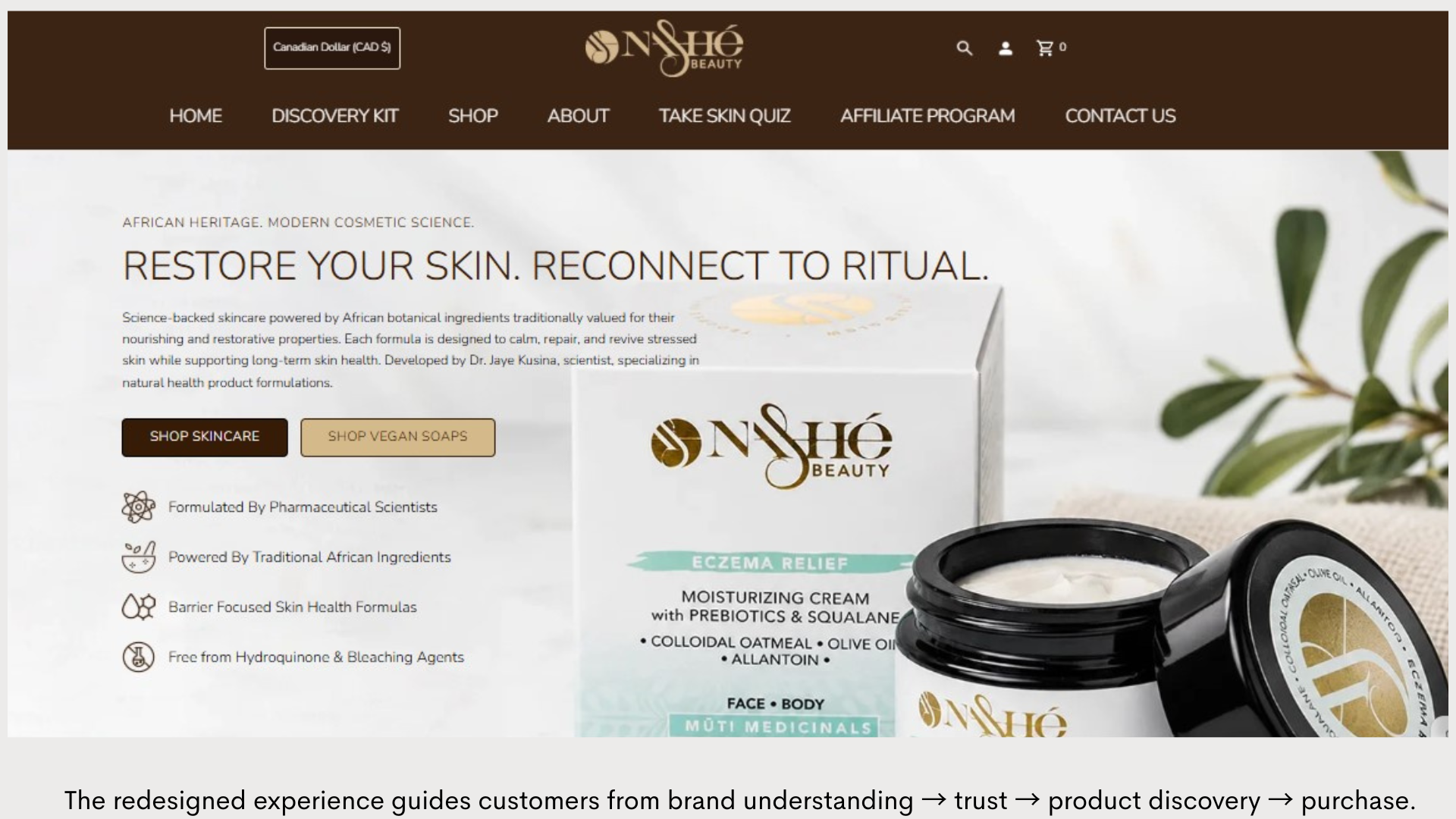
Once we understood the journey, the homepage had a different job.
It wasn't simply there to introduce Nashé Beauty.
It needed to progressively answer the customer's questions.
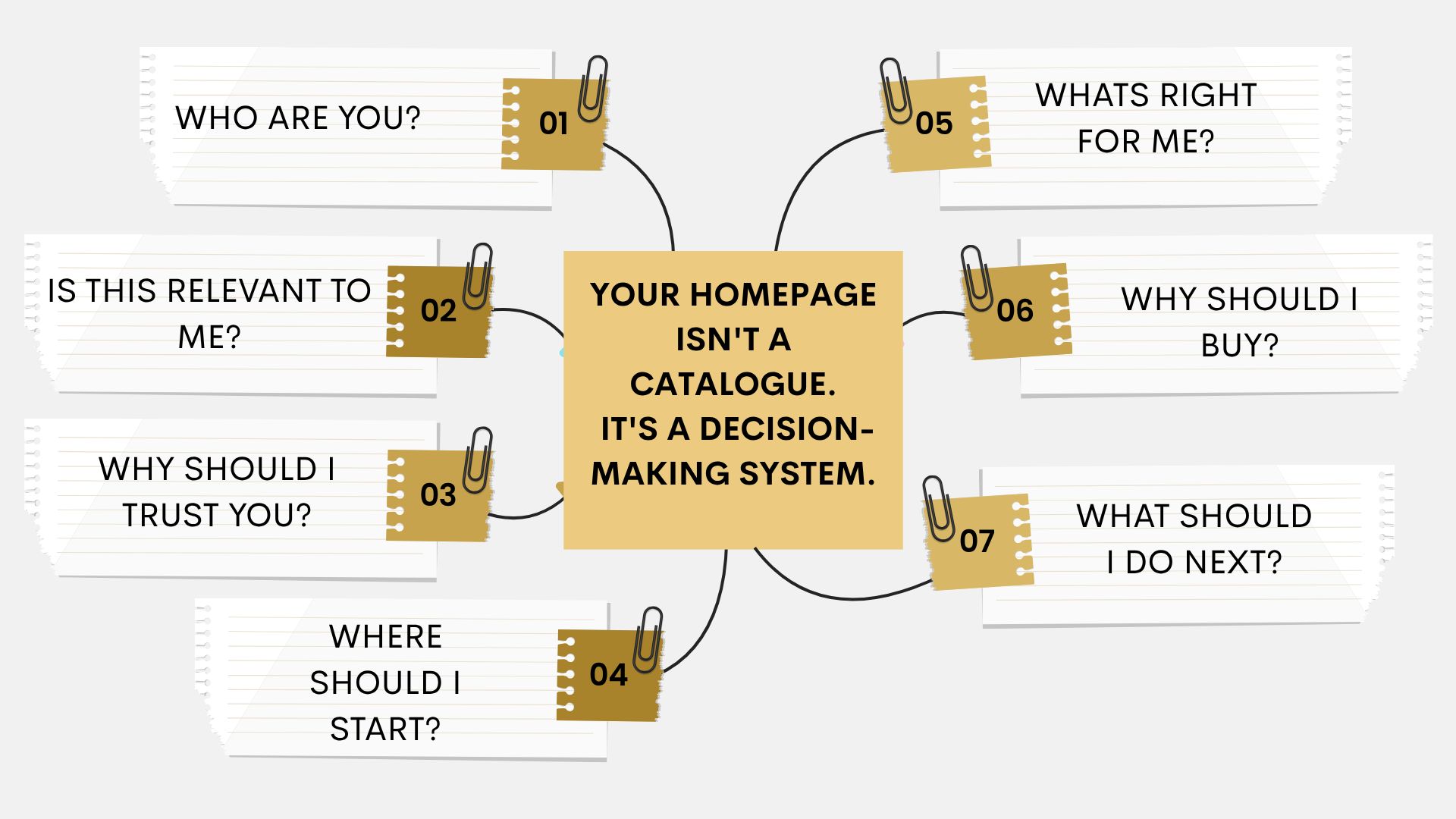
The revised experience was structured around several decision layers:
Who are you?
Clearer positioning around African heritage, cosmetic science and skin-barrier health.
↓
Why should I trust you?
Founder expertise, formulation philosophy, brand credibility and social proof.
↓
Where should I begin?
Hero-product pathways, Discovery Kit, skin quiz and clearer product guidance.
↓
Which solution is relevant to me?
Skin-type and concern-based guidance.
↓
What are other customers experiencing?
Testimonials and customer content.
↓
What makes the formulations different?
Ingredient philosophy and educational content.
↓
Who is behind the company?
Founder story and expertise.
↓
What should I do next?
Clear calls to action throughout the journey.
That is fundamentally different from treating the homepage as a collection of attractive sections.
Every section should earn its place by helping move the customer toward a decision.
Your homepage isn't a catalogue. It's a decision-making system.
Step 6: Removing Friction Closer to Purchase
Customer journey optimization doesn't stop once someone reaches a product page.
At that stage, the questions simply become more specific.
What does this do?
Is it suitable for me?
How do I use it?
Why should I trust it?
Do I want this enough to buy now?
Product pages were therefore refined for greater clarity and a stronger purchase flow.
Skin-type guidance was added.
A sticky Add to Cart function made the purchasing action easier to access.
Chat functionality created a way for visitors to ask questions before purchasing.
Mobile usability and navigation were also refined.
None of these changes is revolutionary in isolation.
That's the point.
Conversion strategy is often not about discovering one magical tactic.
It is about finding multiple small points of hesitation and systematically removing them.
Revenue Design Principle #5:
Trust assets should appear where doubt occurs, and conversion mechanisms should appear where intent occurs.
Step 7: Connecting Website Conversion With Email Acquisition
Not every qualified visitor is ready to purchase during their first session.
That doesn't make the visit worthless.
It means the business needs another way to continue the relationship.
So email capture became another part of the conversion architecture.
Rather than thinking only about:
visitor → purchase
we also considered:
visitor → subscriber → nurture → purchase.
This is particularly important for emerging beauty brands because skincare often requires trust, education and repeated exposure.
The strategy therefore included strengthening the signup incentive and designing a welcome journey capable of doing more than sending a coupon.
A useful welcome sequence should help answer:
Why this brand?
Why these products?
Why should I trust them?
Where should I start?
Why should I act now?
That creates continuity between the website and inbox instead of treating email as a separate marketing channel.
Step 8: Building Trust Across the Entire Journey
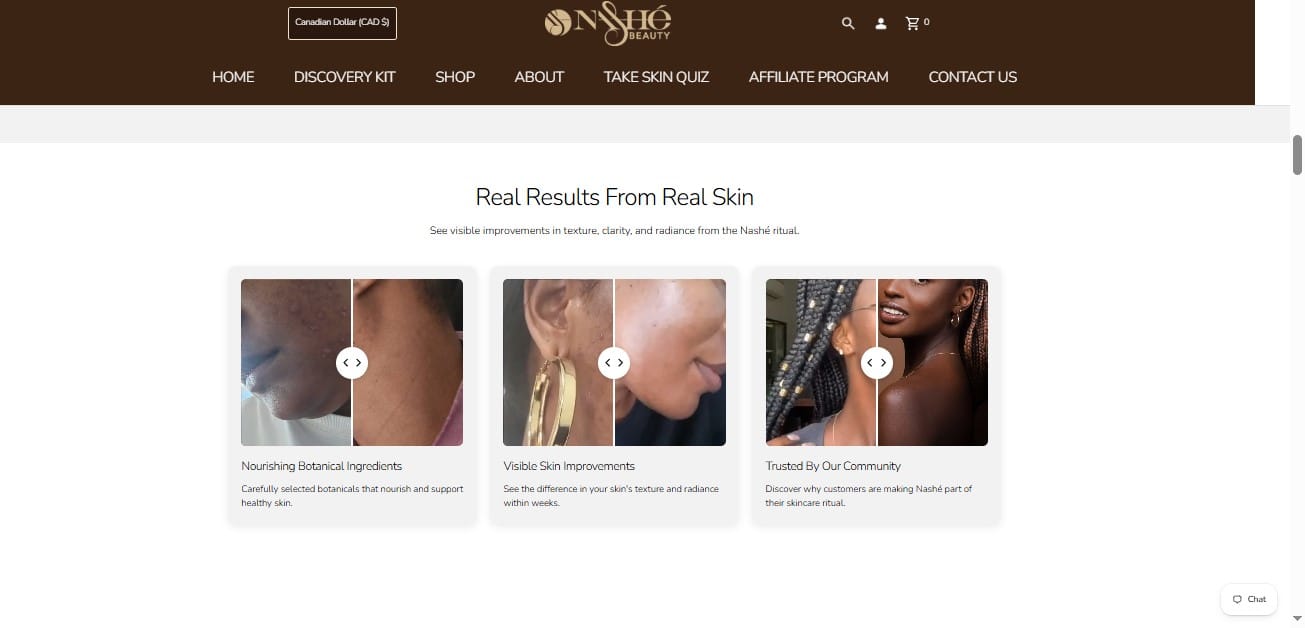
Trust isn't one testimonial carousel.
It is cumulative.
For Nashé Beauty, potential trust signals included the founder's scientific expertise, formulation story, African botanical heritage, regulatory credentials where applicable, customer testimonials, customer-generated content, educational guidance and consistent messaging across touchpoints.
One signal may not close the sale.
Together, they reduce perceived risk.
This is particularly important for smaller beauty companies competing against brands with greater name recognition.
A large established company can borrow trust from familiarity.
An emerging brand often has to build trust intentionally.
And that trust architecture should extend beyond the website.
Social content, ads, email, editorial coverage and the website should reinforce rather than contradict one another.
Why We Didn't Simply Start by Pouring More Money Into Ads
When a brand needs sales, increasing traffic can feel like the obvious answer.
More traffic means more potential customers.
But there is an important caveat:
Acquisition amplifies the customer journey already in place.
If the underlying journey contains confusion or uncertainty, increasing traffic simply sends more people into that same friction.
That's why my preferred sequence is:
Conversion foundation
↓
Acquisition
↓
Measurement
↓
Iteration
This doesn't mean a website must be “perfect” before advertising.
It never will be.
It means there should be enough clarity, trust, guidance and measurement infrastructure in place that paid traffic has a reasonable environment in which to convert.
This is also why traffic and conversion shouldn't be treated as separate disciplines.
A Meta ad creates an expectation.
The landing experience must continue it.
The product page must support it.
The offer must reinforce it.
The checkout must make action easy.
The follow-up must continue the relationship.
The customer experiences one brand. They don't experience your marketing departments.
Should Beauty Brands Optimize Their Website Before Running Meta Ads?
Generally, brands should address obvious conversion barriers before significantly scaling paid acquisition.
That means checking whether the positioning is understandable, the landing experience matches the ad, product benefits are clear, trust signals are present, mobile purchasing works properly, the offer is compelling, tracking functions correctly and customers have an obvious next step.
Otherwise, a traffic problem can easily be mistaken for a conversion problem—or vice versa.
The objective isn't to delay acquisition indefinitely.
It is to make paid traffic more commercially useful.
Step 9: Building Organic Discovery Alongside Paid Acquisition
Paid traffic can create immediate reach.
Organic visibility compounds differently.
As part of Nashé Beauty's broader digital strategy, a blog was added to support educational content and search discovery.
We also created editorial content through IKONIK Magazine around the brand, founder and relevant skincare topics.
The strategic objective is broader than publishing articles for the sake of content.
A skincare company possesses expertise and product knowledge that can answer questions customers are already searching for.
When that expertise is translated into useful, search-oriented content, the brand creates additional discovery pathways beyond paid advertising.
Someone may first encounter Nashé through an ad.
Another person may encounter an educational article.
Another may discover the founder.
Another may enter through the Eczema Relief Cream.
Another may begin with the Discovery Kit.
Strong customer acquisition isn't always about finding one perfect funnel. It's about designing multiple coherent entry points into the same brand.
What Changed in the Nashé Beauty Customer Journey?
The work ultimately touched multiple parts of the commercial experience:
Positioning — sharpening the intersection of African botanical heritage, modern cosmetic science and skin-barrier-focused care.
Homepage architecture — moving from product presentation toward guided decision-making.
Hero-product strategy — identifying the Eczema Relief Cream as a strategically valuable problem-led acquisition opportunity.
Discovery Kit strategy — repositioning trial as a lower-risk entry into the brand.
Product guidance — helping customers understand where to begin based on their needs.
Skin quiz — using guided recommendation to reduce uncertainty and support lead generation.
Product pages — strengthening clarity and purchase flow.
Conversion functionality — including sticky Add to Cart, chat and mobile experience improvements.
Trust architecture — surfacing founder expertise, social proof and meaningful credibility signals.
Email capture — creating another pathway for interested visitors who aren't ready to purchase immediately.
Welcome journey — connecting subscriber acquisition with education, trust and first-purchase conversion.
Re-engagement — creating opportunities to bring existing audiences back into the customer journey.
Content and search visibility — building educational and editorial pathways for discovery.
Paid acquisition strategy — creating a stronger foundation from which campaigns can be tested, measured and refined.
Notice what isn't on that list:
“Make the website prettier.”
Visual presentation matters enormously in beauty.
But aesthetics weren't the strategic objective.
Decision clarity was.
From the Founder
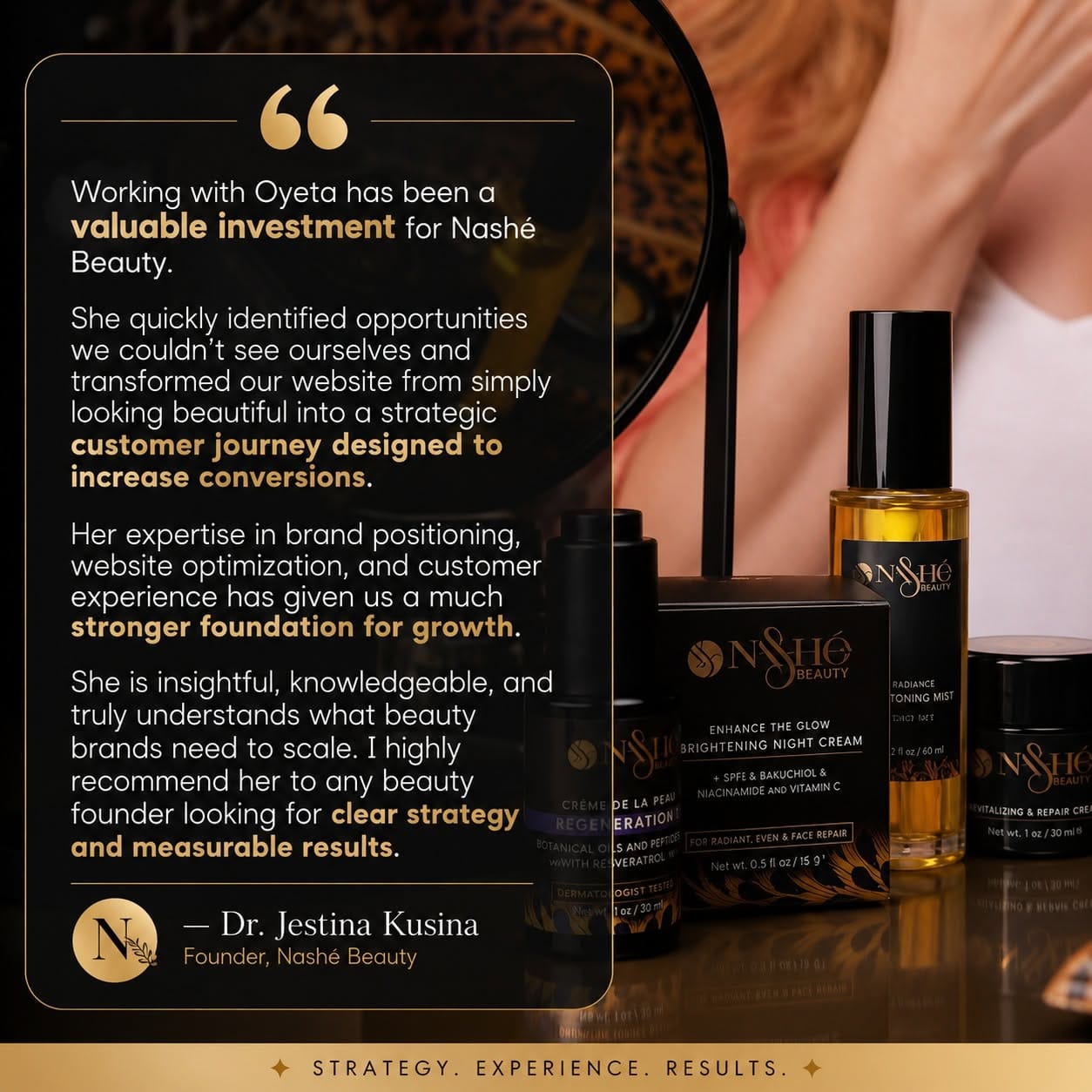
“[Jaye's testimonial here.]” link to her testimonial: Oyeta Kokoroko - Founder & Brand Strategist - Google Search
— Dr. Jaye Kusina Founder, Nashé Beauty
What Is Beauty E-Commerce Conversion Optimization?
Beauty e-commerce conversion optimization is the process of reducing the friction, uncertainty and hesitation that prevent shoppers from moving from product discovery to confident purchase.
For skincare businesses, that can include positioning, trust signals, product guidance, product-page clarity, mobile usability, first-purchase strategy, offers, email capture, customer journey design and acquisition alignment.
My view is that the strongest conversion strategies don't optimize isolated pages.
They optimize decisions.
That is why I describe a high-performing beauty website as a decision-making system rather than simply a digital storefront.
What Makes a High-Converting Beauty Brand Website?
There isn't one universal layout.
But the strongest beauty e-commerce experiences tend to answer several questions exceptionally well:
What is this brand?
Is it relevant to me?
Why should I believe it?
Which product should I choose?
Where should I start?
What makes the purchase feel worthwhile now?
What happens if I'm not ready yet?
If the customer has to search extensively for those answers, there is likely conversion friction.
A conversion-focused website makes the answers progressively easier to find.
The Bigger Lesson: Conversion Is Decision Design
The most important lesson from this project isn't that Nashé Beauty needed a better homepage.
It is that good products still need a deliberately designed buying journey.
Founders naturally spend enormous energy developing products.
They think about ingredients.
Packaging.
Photography.
Brand identity.
Formulation.
Pricing.
But once the customer arrives, another discipline begins:
decision design.
How does someone move from:
“I've never heard of this brand.”
to:
“This looks relevant to me.”
to:
“I understand why it's different.”
to:
“I trust this.”
to:
“I know where to start.”
to:
“I'm ready to buy.”
That progression is where conversion lives.
And it is why I increasingly think about beauty e-commerce through the lens of Revenue Design.
Not:
website + email + ads + quiz + content
as separate tactics.
But:
one customer journey, supported by multiple systems.
What Comes Next for Nashé Beauty
The rebuilt customer journey creates a stronger foundation for the next phase: acquisition, testing and iteration.
That distinction matters.
At this stage, I would not claim that these changes have produced a specific conversion-rate or revenue increase without sufficient before-and-after performance data.
The work was designed to reduce friction, strengthen purchase confidence, clarify positioning and create stronger infrastructure for customer acquisition and conversion.
The next step is measurement.
Which acquisition message produces the highest-quality traffic?
Which creative attracts the right customer?
Which entry product generates purchases?
How does the Discovery Kit influence full-size conversion?
How effectively does the quiz capture and convert leads?
Which email messages move subscribers toward purchase?
Where are customers still dropping off?
That data then informs the next iteration.
Because conversion optimization isn't a one-time redesign.
It's an operating discipline.
Five Revenue Design Principles Beauty Founders Can Apply Now
If you're reviewing your own skincare or beauty website, start here:
- Reduce uncertainty before increasing persuasion. Before adding more promotional language, ask what the customer still doesn't understand or trust.
- Don't make customers solve your product architecture. Give first-time visitors a clear way to begin.
- Design your first purchase deliberately. A hero product, Discovery Kit, starter routine or consultation can become an intentional acquisition mechanism.
- Place trust where doubt occurs. Reviews, expertise, demonstrations, credentials and education are most powerful when they answer a specific hesitation.
- Remember that acquisition amplifies the journey already in place. More traffic isn't automatically the answer. Make sure the journey deserves more traffic.
These principles apply far beyond Nashé Beauty.
They're questions I regularly consider when evaluating beauty businesses because conversion rarely comes down to one button, headline or tactic.
It comes down to how effectively the entire commercial experience helps a customer make a confident decision.
Wondering What I Would See in Your Beauty Website?
If you're reading this and recognizing some of the same issues in your own business—traffic that isn't converting, unclear positioning, customers who don't know where to begin, too many products competing for attention, or a website that doesn't fully communicate the quality of what you've built—those are exactly the kinds of problems I help founders diagnose.

Is your beauty website helping customers buy—or making them figure everything out themselves?
Beauty Brand Conversion Review with Oyéta Kokoroko
Positioning • Customer Journey • Conversion • Revenue Design
My work combines nearly a decade of experience building and selling skincare with cosmetic formulation knowledge, beauty positioning, DTC e-commerce, customer psychology and conversion strategy—allowing me to evaluate the business beyond the website alone. That multidisciplinary founder-operator perspective is a core part of the positioning we identified for this case study.
Start with a Beauty Brand Conversion Review.
We'll examine your business through the same strategic lens used in this case study:
Positioning. Customer hesitation. Trust. Product discovery. Entry-point strategy. Product pages. Customer journey. Conversion friction. Revenue opportunities.
The objective isn't to give you another list of generic e-commerce best practices.
It's to identify where your particular business may be losing opportunities—and what I would prioritize next.
Book Your Beauty Brand Conversion Review →
Oyéta Kokoroko is a beauty entrepreneur, cosmetic formulator, e-commerce strategist and advisor to emerging beauty founders. She is the Founder of OKOKO Cosmétiques and Editor-in-Chief of IKONIK Magazine.
Her approach to beauty business strategy draws on nearly a decade of firsthand experience building and selling skincare, alongside expertise in cosmetic formulation, luxury beauty positioning, digital marketing, DTC e-commerce and customer experience.
Through her advisory work, she helps beauty founders identify and address the strategic gaps between having strong products and building a commercial system capable of attracting, converting and retaining customers.
She calls this approach Revenue Design: connecting positioning, product strategy, customer psychology, conversion, acquisition and retention into one coherent customer journey.
Building a strong beauty brand but know your website and customer journey could be converting more effectively?
Oyéta works with beauty founders to identify the strategic gaps between strong products and stronger commercial performance—from positioning and customer journey to conversion, acquisition and retention.
Request a Beauty Brand Conversion Review →