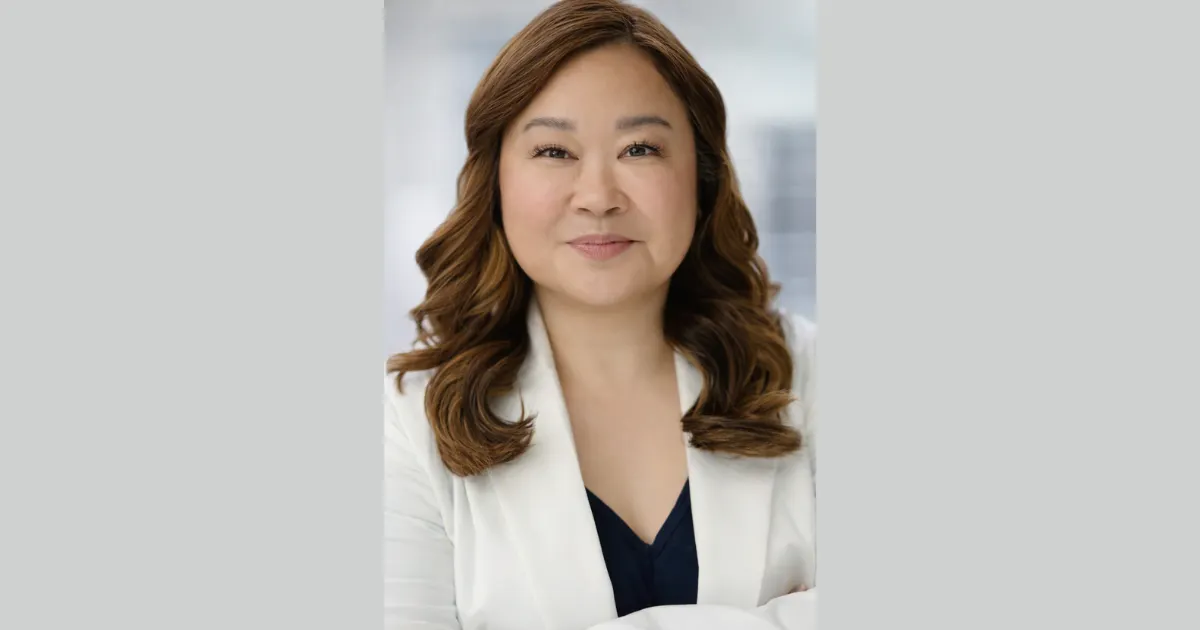
In a world obsessed with appearances, Anne Mok is changing the conversation.
Through Purpose in View, she is proving that the most transformative stories are not always the ones we see—they are the ones that challenge us to think, to feel, and to understand differently. Blind storyteller, voice actor, author, speaker, and disability advocate, Anne has built a platform that doesn't ask for sympathy or perform inclusion. Instead, it demands something far more meaningful: perspective.
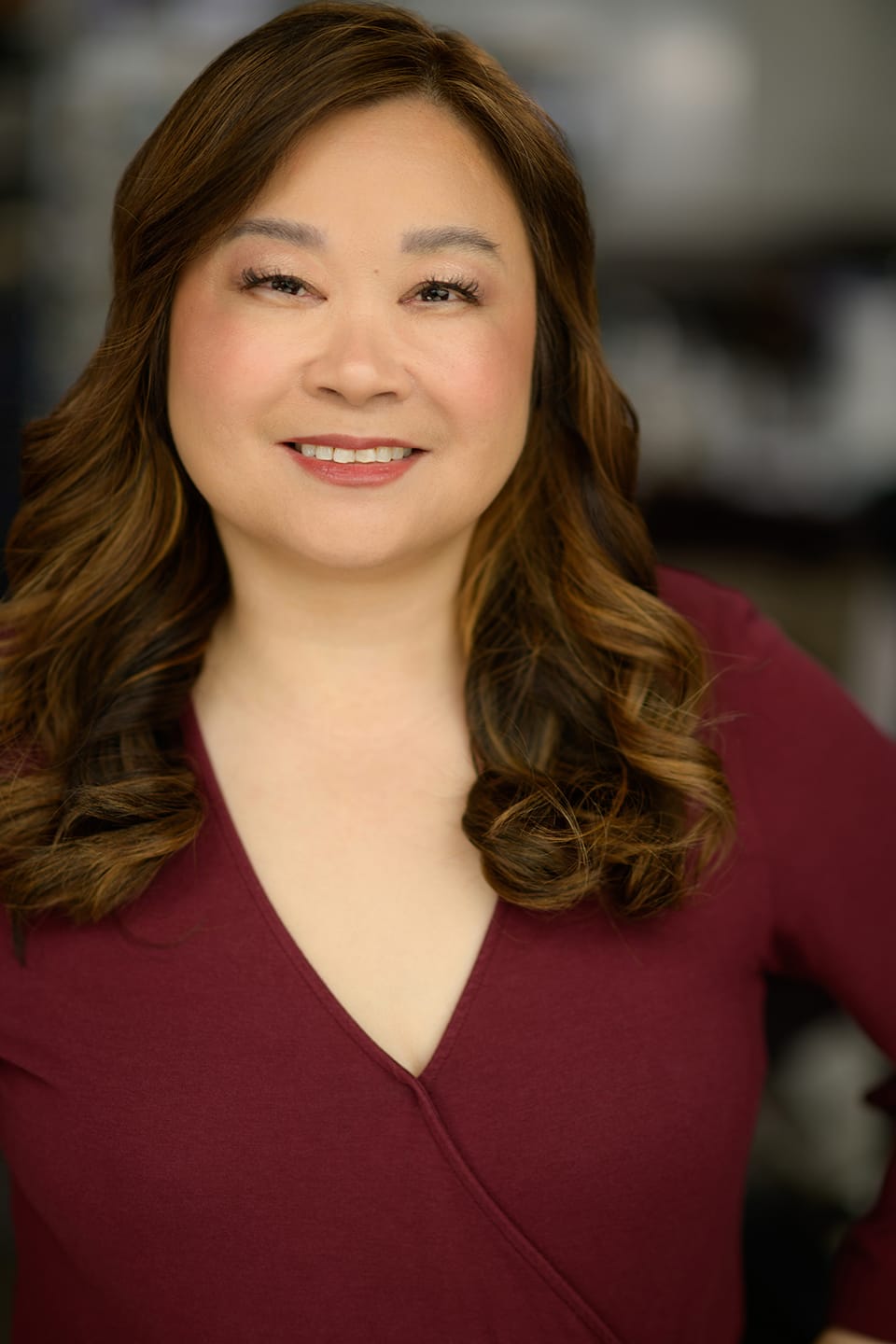
This is not simply the story of a woman who lost her sight.
It is the story of a creative who discovered a deeper way of seeing.
It is the story of someone who transformed lived experience into leadership, vulnerability into influence, and purpose into a movement that is reshaping how brands, media, and the creative industry think about accessibility, representation, and human connection.
At a time when many organizations are still trying to understand what authentic inclusion looks like, Anne reminds us that true innovation begins by inviting different perspectives into the room—not as an afterthought, but as an essential part of creating work that reflects humanity.
For IKONIK Magazine, authority has never been measured by visibility alone. Authority belongs to those whose ideas shift industries, challenge assumptions, and leave people thinking differently long after the conversation ends.
Anne Mok is one of those voices.
Through this conversation, she invites us beyond the limits of sight and into something infinitely more powerful: a world where empathy becomes innovation, accessibility becomes creativity, and every person is recognized not for the assumptions attached to them, but for the value they bring.
Because the future doesn't belong to those who simply attract attention.
It belongs to those who expand the way we see the world.
You describe yourself as a blind storyteller whose work helps people “see beyond sight.” What does seeing beyond sight mean to you today?
“Seeing beyond sight” has evolved for me over the years. When I first began losing my vision, I thought so much about what I could no longer see. I grieved the life that I thought I no longer could have. Today, I think much more about everything I’ve learned to see differently.
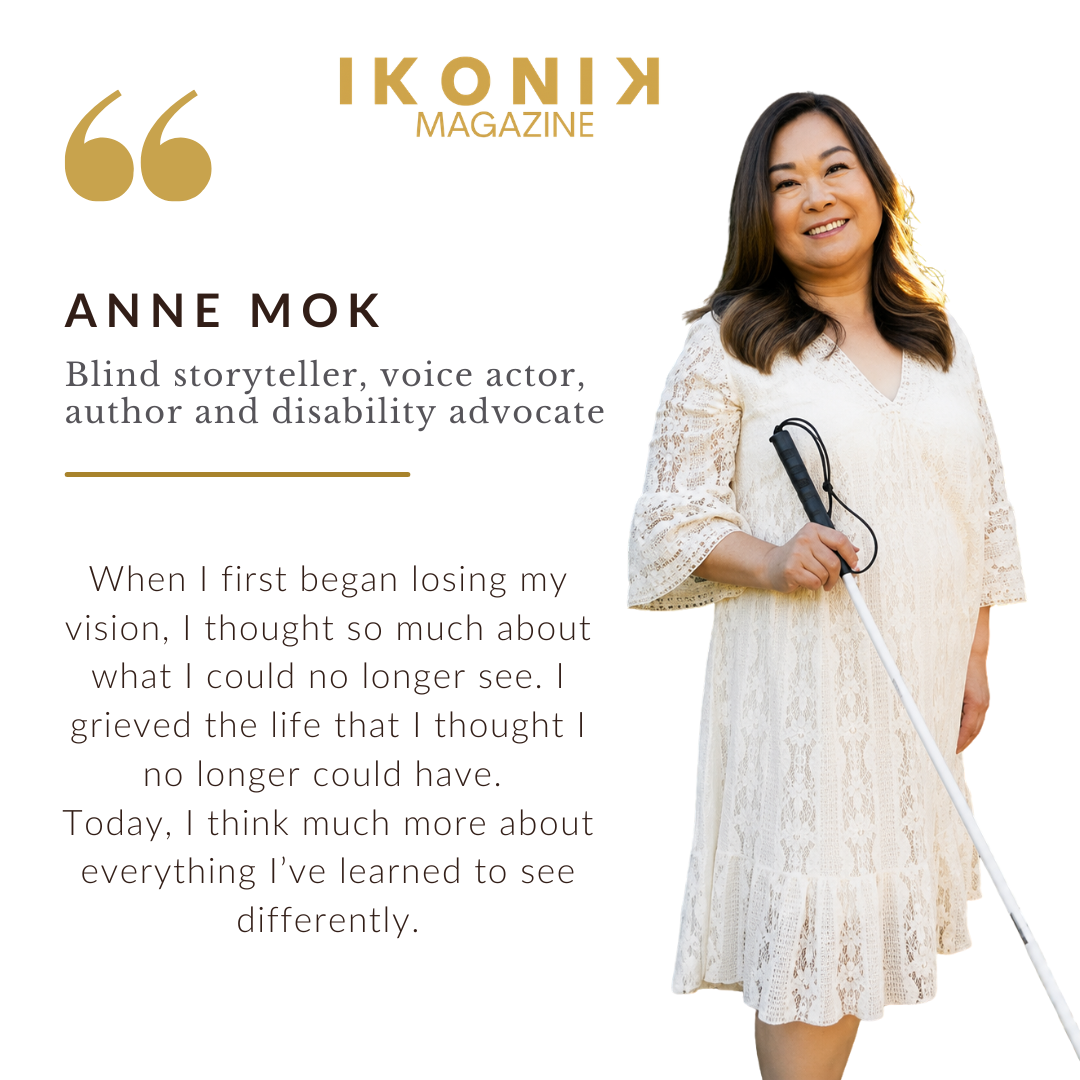
For me, seeing beyond sight is about perspective. It’s recognizing that there is so much more to a person than what we notice at first glance. It’s listening to someone’s story, understanding their lived experience and being willing to challenge the assumptions we may carry about what they can or cannot do.
Blindness has taught me that seeing and understanding are not the same thing.
I’ve always been a very heart-centred person, but as I’ve lost more of my sight, I’ve found myself becoming much more heart-led. I lead with my heart. I listen with my heart. I connect with people through how they speak, how they make me feel and what they choose to share with me. There are so many things we can understand about another person that have nothing to do with what our eyes can see.
I experience the world differently now. I pay attention to voices, sounds, textures, energy and words. I notice things I might once have overlooked. In many ways, losing my sight has expanded my perspective rather than narrowed it.
That has become such an important part of my storytelling. When I share my experiences, I’m not trying to show people how a blind person overcomes blindness. I want people to see the whole person beyond the disability, while also understanding that disability is an important part of who I am and how I experience the world.
“Seeing beyond sight” is really an invitation to look beyond what we think we know about one another. Because sometimes the greatest barriers aren’t created by what someone can or cannot see. They’re created by what society assumes about them.
If my work can shift even one of those assumptions and help someone see another person with more understanding, curiosity and possibility, then that is what seeing beyond sight means to me today.
There is an interesting relationship between blindness and visibility in your work. What does it mean to you to be truly seen, rather than simply represented?
To me, being represented and being truly seen are very different things.
Representation matters. I know what it feels like to grow up and not see people like me reflected in the stories around me, particularly as an Asian woman and now as a blind woman. So having diverse faces, bodies, disabilities and experiences represented absolutely matters. But I also think we have to ask what happens after someone is invited into the room.
Are we being listened to? Are our perspectives valued? Are we part of the conversation and the decision-making? Or are we simply there so someone can say we were included?
Being truly seen means you see all of me. Yes, I am blind, and blindness has shaped so much of how I experience the world. But I am also a storyteller, a voice actor, an author, a wife, a mother, a friend and a creative person. I have ideas, expertise, lived experience and a perspective that has value beyond simply representing disability.
I think that is something I have become much more aware of in the creative world. I don’t just want blind and disabled people to appear in campaigns, on screens or in stories. I want our lived experience to be part of how those stories are created. I want us behind the microphone, in the writers’ room, at the table with brands and creatives, and involved in the conversations that shape how disability is portrayed.
Because there is a difference between someone telling a story about you and someone creating space for you to help tell that story.
For me, being truly seen also means not having to prove that I belong in those spaces despite my blindness. I want my blindness to be understood as part of the perspective I bring into the room, not something that takes away from what I can contribute.
That is where I think representation becomes something deeper. It becomes belonging. It becomes having a voice. It becomes knowing that you weren’t invited simply to be visible, but because your perspective is valued and the room would actually be missing something without it.
Your work spans voice acting, audio description, authorship, public speaking, advocacy and content creation. How did you discover your voice, and when did you begin recognizing your lived experience as part of your creative and professional value?
I think I discovered my voice gradually, because growing up, I was extremely shy. I wasn’t someone who ever imagined speaking on stages, sharing my life publicly or using my voice professionally. I really didn’t feel that my voice mattered.
I think some of that came from experiences I had growing up as an Asian girl and the racism I faced as a child. There were times when being different made me want to become smaller rather than stand out. I learned, in some ways, to stay quiet and not draw attention to myself. Somewhere along the way, I think I started believing that maybe I wasn’t someone people wanted to hear from, or that what I had to say wasn’t particularly valuable.
For a long time, being seen and heard felt uncomfortable to me.
That started to change when I began sharing pieces of my story. At first, I didn’t know where any of it would lead. I was simply talking about my experiences with blindness, accessibility and learning to navigate life differently. But people started responding. They would tell me that something I shared made them feel understood, helped them feel less alone or gave them a different perspective.
Slowly, I began building a community on social media, and I started to realize that what I was sharing mattered.
I think that was when I began understanding the value of lived experience too. These were things I had once thought of simply as experiences I had gone through. I didn’t recognize them as knowledge or as something that could have creative and professional value. But I began to see that our lived experiences give us perspectives that cannot always be learned from the outside.
And my lived experience is layered. I am an Asian woman. I am blind. I am a wife and a mother. I have experienced being very shy and afraid to take up space, and I know what it feels like to question whether your voice belongs in the conversation. All of those experiences have shaped the way I see the world and the way I connect with other people.
I also started recognizing strengths in myself that I think had always been there. I just never had the confidence to see them. Every time I stepped outside of my comfort zone, spoke up or shared something vulnerable, that confidence grew a little more.
And part of what kept pushing me forward was thinking about other people who might also feel that they didn’t have a voice. I wanted them to know that their voice matters and their story matters. We need these conversations because when people share their lived experiences, they can create understanding in ways that facts and statistics alone sometimes cannot. They can shift perspectives.
That realization eventually opened an entirely new path for me through public speaking, authorship, content creation, voice acting and now audio description.
Audio description feels especially meaningful because I can use my voice to give back to the blind and visually impaired community that I am part of. There is something very full circle about that for me. The girl who once didn’t believe her voice mattered is now using that same voice to help make storytelling more accessible.
And being a blind voice actor working in this industry also allows me to challenge perceptions of what blind and visually impaired people can do. I want both the blind and visually impaired community and the sighted community to see that there is so much potential here. We belong behind the microphone. We belong in creative spaces. We belong in this industry, not only as the audience being served, but as the people creating the work.
I think that is what discovering my voice has ultimately taught me. My lived experience is not the only thing that defines me, but it has shaped the way I listen, create, connect and tell stories.
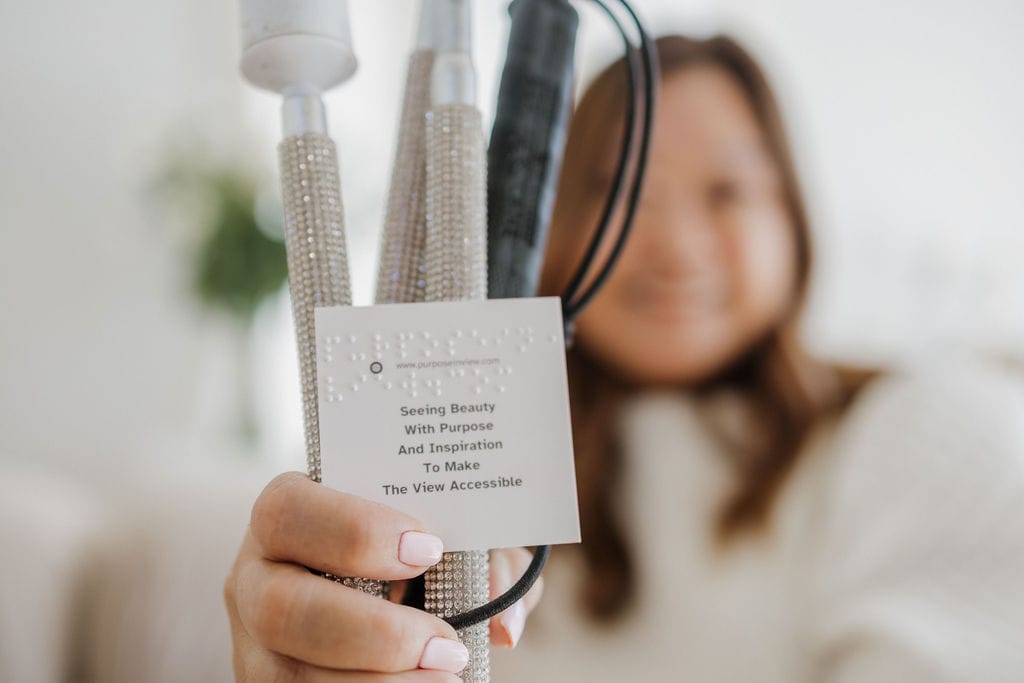
There is something I find very powerful when I think about the girl I used to be. I spent so much of my childhood trying not to be noticed and wondering whether anyone would want to hear what I had to say. Today, my voice is quite literally part of my work.
I once wondered whether my voice mattered. Now I know that it does, and I want other people to recognize that theirs does too.
Representation, accessibility and belonging are often discussed together, but they aren't necessarily the same thing. What does meaningful inclusion actually look like to you?
To me, meaningful inclusion begins when people are considered from the very start, rather than being added into something after it has already been created.
Representation, accessibility and belonging are all connected, but they each give us something different. You can have representation without accessibility. You can technically make something accessible and still have someone feel like they don’t belong. Meaningful inclusion happens when all of those pieces come together.
This is why I strongly believe in universal design. When we design spaces, experiences, products, content and communities with a wide range of people in mind from the beginning, accessibility becomes part of the foundation rather than something we have to add later.
And universal design benefits so many more people than we sometimes realize. Something may be designed with disability in mind, but ultimately make an experience easier, more intuitive or more welcoming for everyone.
I also believe meaningful inclusion requires collaboration. There is so much value in bringing people with lived experience into the process early, asking questions, being open to feedback and then being willing to act on what you hear. I never expect someone without my lived experience to know exactly what I need or how I experience something. I would much rather someone ask me than make an assumption.
Some of the most meaningful experiences I’ve had have been when I’ve been invited into a conversation while something is still being shaped. There is an openness in those spaces. We can ask questions, share perspectives, learn from one another and sometimes arrive at solutions that none of us would have reached on our own.
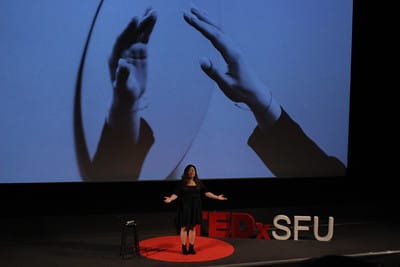
That, to me, is what meaningful collaboration looks like. It isn’t about one person having all the answers. It is about recognizing that different perspectives make what we are creating stronger.
As a blind person, there have been many times when I have had to advocate for what I need, and I will always advocate for myself. But there is a very different feeling when I enter a space and accessibility has already been considered. It tells me that someone thought about people like me before I arrived.
And that is where accessibility begins to become belonging.
Belonging is being able to enter a space as yourself and knowing that your presence, perspective and contribution are genuinely valued. It is being able to participate in a way that works for you without feeling that doing something differently makes you less capable.
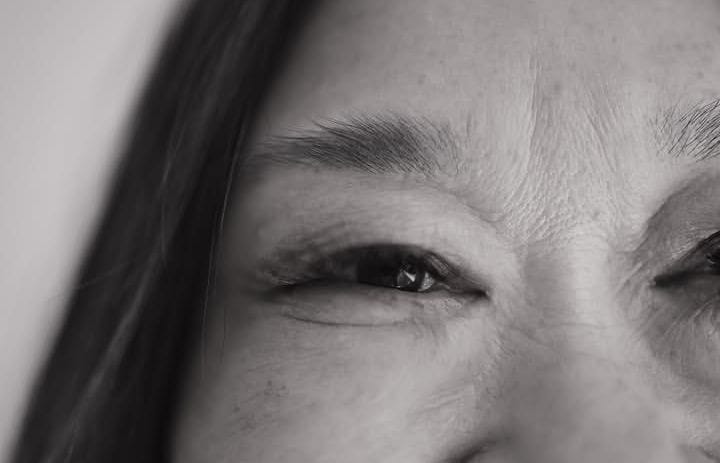
Ultimately, meaningful inclusion is about creating with people, not simply for people. When we include different lived experiences from the beginning, stay curious and remain open to learning from one another, we create spaces where more people have the opportunity to participate, contribute and truly belong.
What do brands, media companies, casting teams and other creative organizations still misunderstand about working with blind and disabled talent, and what could they be doing differently?
I think one of the biggest misunderstandings is that disability is sometimes seen before the talent, creativity or potential of the person.
There can be assumptions about what a blind or disabled person will be able to do, what accommodations might be needed or whether working with us will somehow make a production more complicated. Often those assumptions happen before anyone has simply asked, “What do you need to do your best work?”
I think that question can change so much.
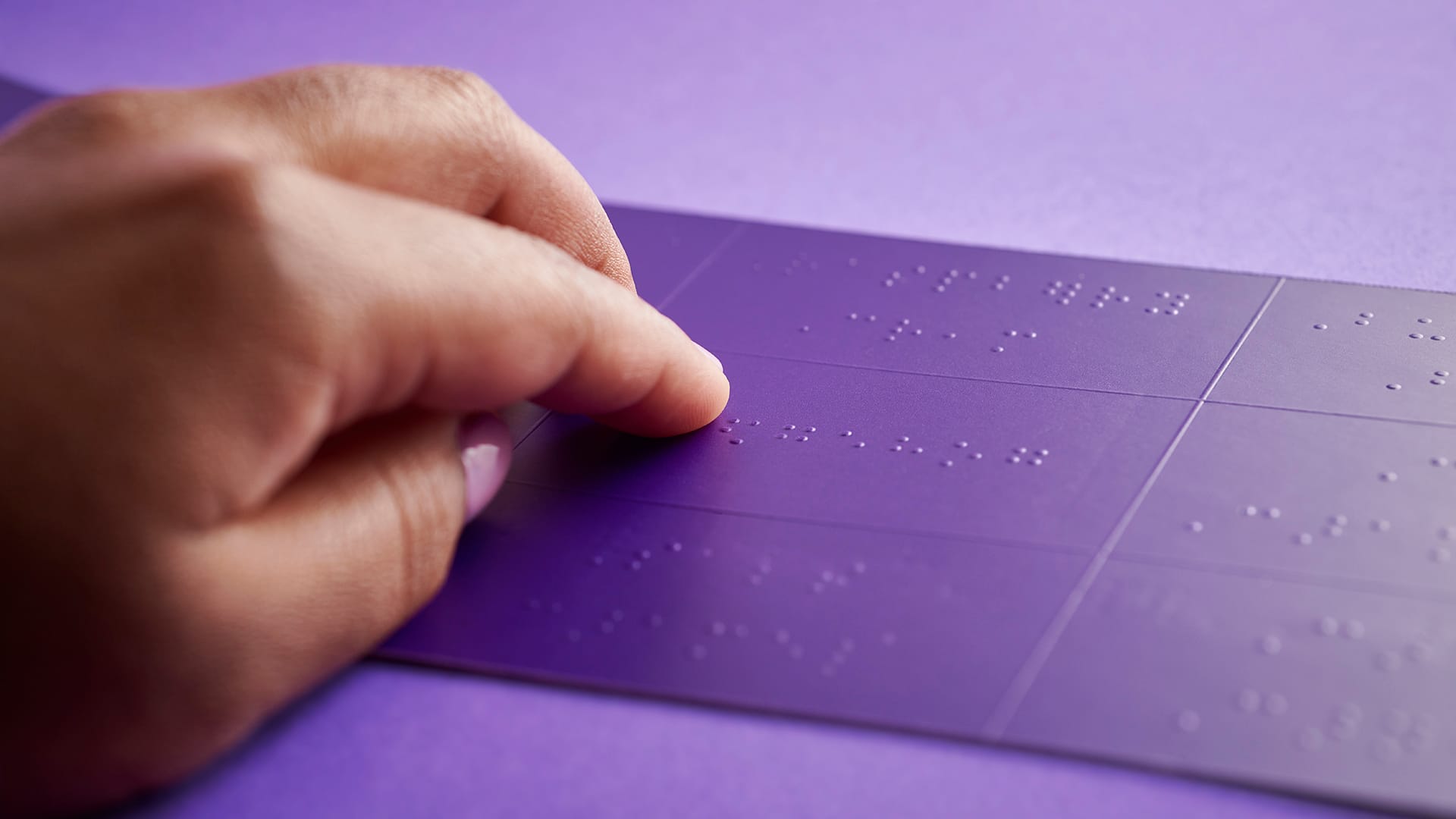
Accessibility doesn’t mean lowering expectations or professional standards. Sometimes it simply means giving someone another way to access the same information or complete the same work.
I’ve experienced this in voice acting. I may access a script differently from a sighted voice actor, but once I have an accessible way to work with that script, I can step behind the microphone and do my job. The professional expectation is still there. The talent, preparation and performance are still there. The pathway to getting there might just look different.
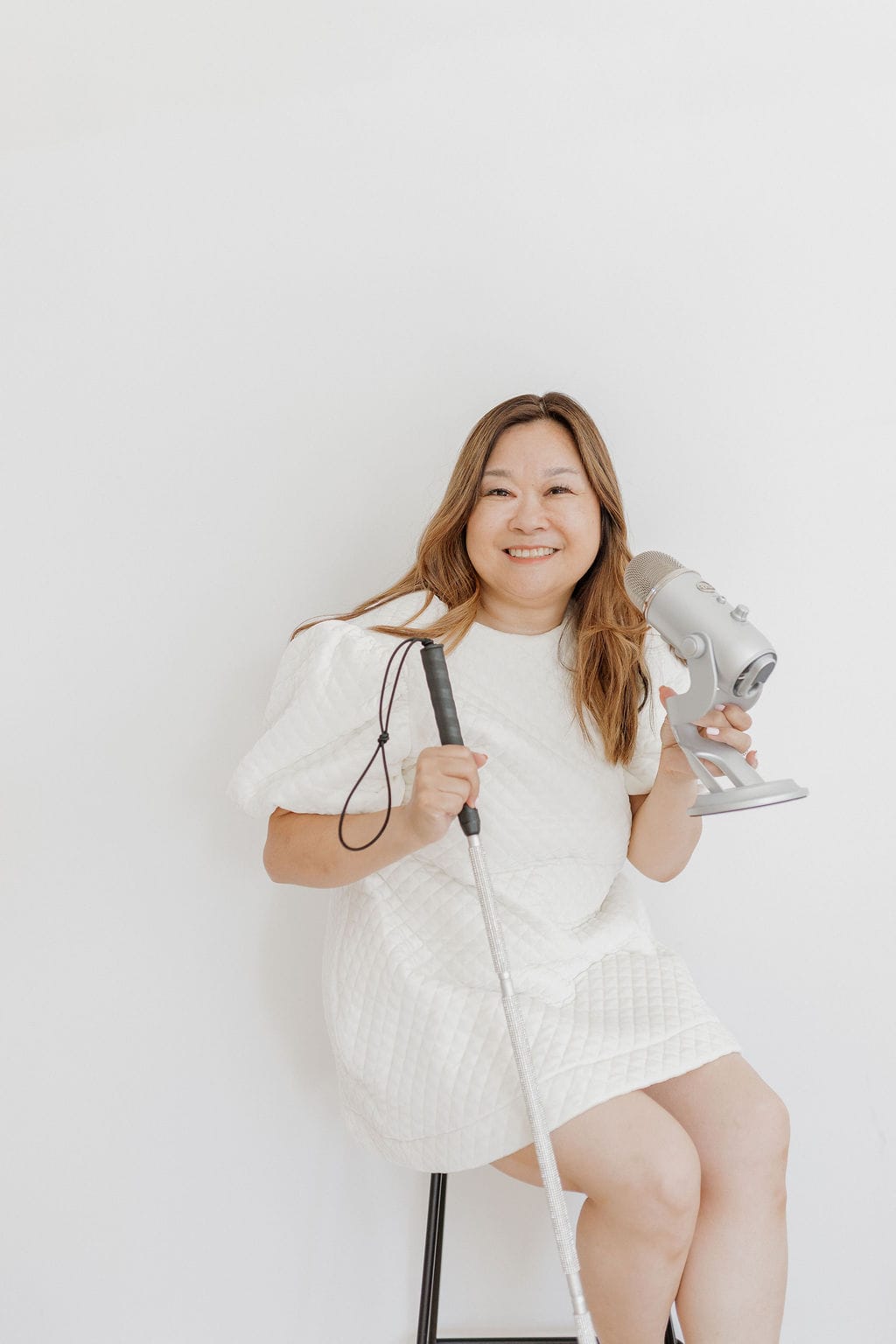
I would love to see more brands, casting teams, media companies and creative organizations approach disability with curiosity rather than assumption. Ask questions. Be open to learning. Have conversations with the person rather than deciding for them what they may or may not be capable of.
I also think we need to move beyond only considering disabled talent when disability is part of the story.
Disability is part of the human fabric. It has always been part of our communities, our families and our everyday lives. And yet we still don’t always see that reflected naturally in the stories being told or the campaigns being created.
I am blind, but I don’t only have to be cast as “the blind woman.” Disabled people buy skincare, travel, fall in love, raise families, build careers, wear beautiful clothes, laugh, celebrate and live full lives. We are consumers. We are creatives. We are part of every community.
That is where I think there is such an exciting opportunity for brands and media. Include disabled talent in everyday storytelling, not only when the campaign or storyline is specifically about disability. Let us simply exist in stories in the same natural way that we exist in the world.
And when disability is part of the story, bring lived experience into the creative process. There is tremendous value in having people who understand that experience from the inside involved in shaping how it is represented.
I don’t think organizations need to have all the answers before they begin. What matters is being willing to start the conversation, listen, collaborate and sometimes do things differently.
When you remove the barrier, you often discover that the potential was there all along.
How has experiencing the world without sight shaped the way you notice voice, language, sound, texture, emotion and atmosphere? How does that perspective influence the stories you tell?
As I’ve lost more of my sight, I think I’ve become much more intentional about how I pay attention to the world around me.
People sometimes assume that when you lose your sight, your other senses suddenly become stronger. I don’t necessarily think my senses became stronger. I think I learned to listen differently and to notice differently.
Voice has become incredibly important to me. I notice tone, pauses, emotion and the feeling behind someone’s words. Sometimes what isn’t being said can tell you just as much as what is being said. I’ve always been a heart-centred person, but I think I have become much more heart-led. I lead with my heart and I listen with my heart.
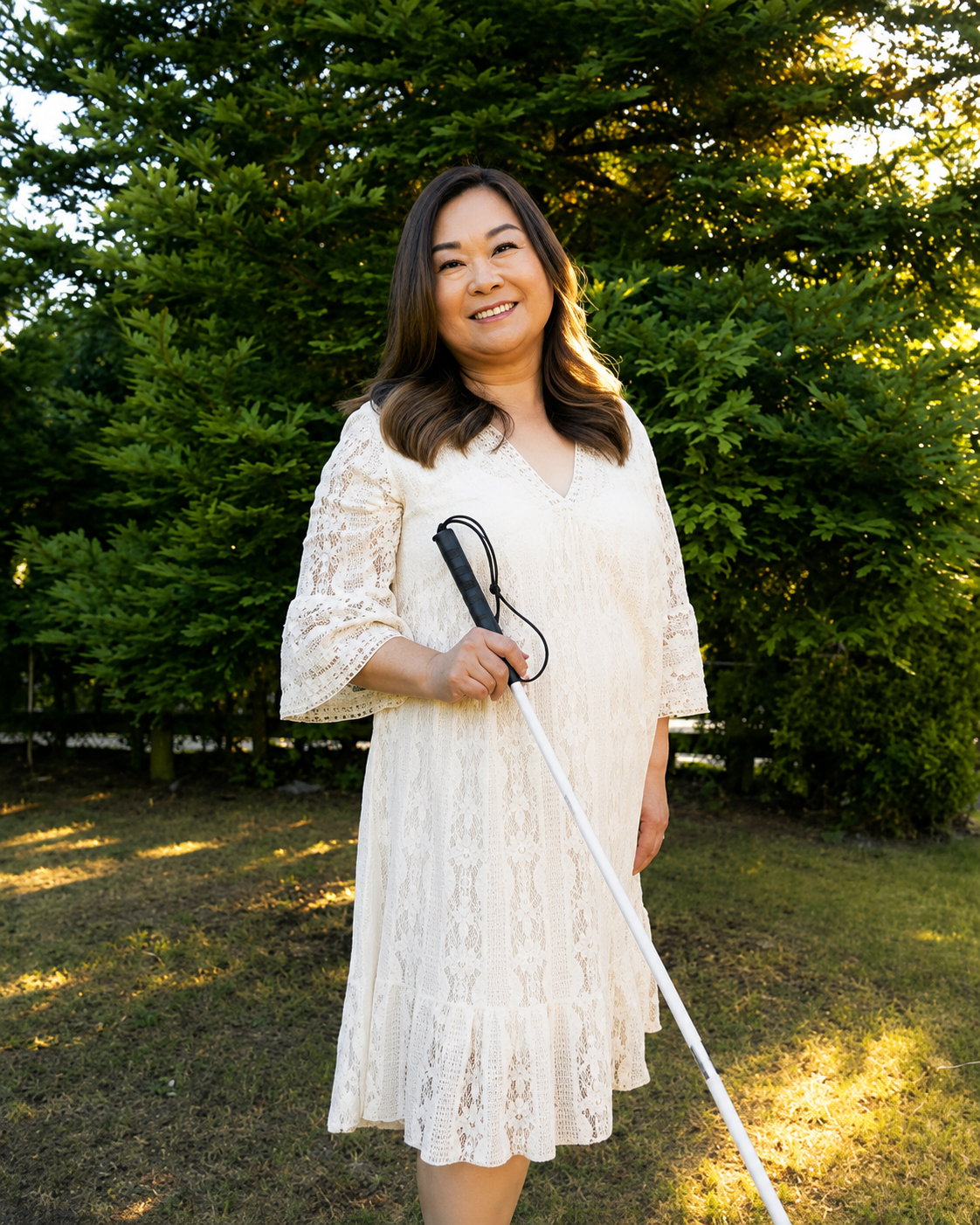
Sound also gives me a sense of place. The movement of people around me, conversations in the background, music, traffic, birds, the sound of water or even the acoustics of a room can tell me something about the environment I’m in.
And then there is touch and texture. The feeling of something in my hands, the texture of a product on my skin, the warmth of sunlight, a breeze, scent, temperature—all of those details become part of how I experience and remember a moment.
I think emotion and atmosphere are especially important to me. I may not always be able to see someone’s facial expression across a room, but I can feel when the energy of a conversation changes. I notice how someone speaks to me, how they describe something, whether there is warmth in an interaction and how I feel when I am in a particular space.
All of that influences the way I tell stories.
When I create content or write or speak, I naturally think about how something feels, sounds and connects emotionally. I want to bring people into an experience rather than simply tell them what happened.
It has also made me think differently about visual language. We live in such a visually driven world, and so much of our storytelling begins with “look at this.” But there are so many other ways to invite someone into a story.
That is something I want to continue exploring in my work: how do we tell stories that allow more people to experience them? How can description, sound, language, texture and emotion create connection between someone who sees the world and someone who experiences it differently?
Maybe that is another part of what “seeing beyond sight” means to me. Sight is one way of experiencing the world, but it isn’t the only way. When we make room for different ways of noticing and experiencing, our stories can become richer, more human and more connected.
Much of media, advertising and social content is built around the visual. What perspectives or creative strengths do you think blind and disabled creatives bring that organizations may still be overlooking?
I think one of the greatest things blind and disabled creatives bring is another way of experiencing the world, and therefore another way of imagining what a story can be.
So much of media, advertising and social content begins with what something looks like. There is nothing wrong with visual storytelling, but when that becomes our default, we can sometimes forget to ask what else makes an experience meaningful.
How does it sound? How does it feel? What emotion does it create? What information is being communicated without words? And who might be missing from the experience altogether?
As a blind person, I navigate a world that is often designed around sight. Because of that, problem-solving and adapting are part of my everyday life. If something isn’t accessible to me in the way it was originally designed, I have to figure out another way to access it, understand it or accomplish what I need to do.
I see this within the blind and visually impaired community all the time. We are constantly problem-solving. We adapt. We find different ways of doing things. Sometimes we are solving problems that the people around us don’t even realize exist.
I think there is tremendous creative value in that.
When you are accustomed to asking, “Is there another way to do this?” you bring that same curiosity and flexibility into other spaces. In a creative environment, that can mean approaching a challenge differently, noticing something others may have overlooked or imagining an experience from another perspective.
Blind and disabled creatives can also notice barriers or possibilities that someone without that lived experience may never have had a reason to consider. Not because we have all the answers, and certainly not because every disabled person experiences the world in the same way, but because different lived experiences naturally bring different questions into the conversation.
And sometimes a different question can completely change what you create.
I also think we can expand what people consider to be storytelling. A beautiful campaign doesn’t only have to be something you look at. It can be something you hear, feel, understand or connect with emotionally. When we think beyond the visual, we start opening up creative possibilities rather than limiting them.
That is why I would love organizations to see accessibility as part of creativity, not separate from it.
Sometimes accessibility is treated as something that gets added after the creative work is finished: now we add captions, now we add audio description, now we make it accessible. But what could happen if accessibility was part of the creative conversation from the beginning? Could it influence the way the story is written, filmed, voiced or experienced? Could it actually make the storytelling stronger?
I believe it can.
For me, this goes back to the value of having different lived experiences in the room. Blind and disabled creatives aren’t only there to identify what is inaccessible. We are storytellers, actors, writers, creators and problem-solvers with ideas of our own.
When organizations make space for those perspectives, they aren't simply making their work more inclusive. They are expanding what creativity can look, sound and feel like.
You've spoken publicly about disability pride. Was there a point when blindness shifted from something society defined for you into something you could define on your own terms?
I don’t think there was one single moment. For me, it was a gradual process of understanding that I could define what blindness meant in my own life.
When I first began losing my sight, much of what I thought I knew about blindness came from what I had seen represented in movies and television. I thought sight was all or nothing. You either saw or you didn’t, and blindness meant complete darkness.
So when I was facing my own sight loss, that was the picture I had in my mind. I was afraid of what blindness would mean for my independence, my future and everything I thought I would no longer be able to do.
What I didn’t understand then, and what I wish more people understood today, is that blindness is a spectrum. Many blind people have some usable vision, including me. I often say, “I can see, but I can’t see.” There are things I can see and things I completely miss. What I can see can also depend on lighting, contrast, distance and the environment I’m in.
Learning that was incredibly important for me because I began to understand that there wasn’t one way to be blind.
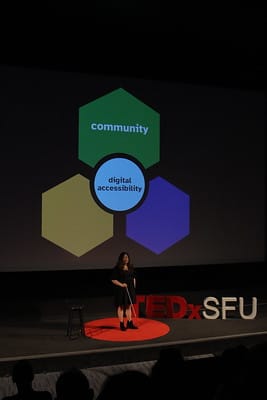
Connecting with the blind and visually impaired community was also a huge part of changing that perspective. I met people living full, interesting and complicated lives. I started learning different ways of doing things, advocating for myself and understanding that doing something differently did not mean doing it less.
The more I learned, the more I realized that many of the limitations I had associated with blindness weren’t actually coming from blindness itself. Some came from inaccessible environments, and others came from assumptions, including assumptions I had carried myself.
I also started sharing my own story. The more openly I talked about blindness, the more I realized that my story could help change some of those misconceptions for someone else.
That awareness and education piece is still such an important part of my work. I want someone who is beginning their own sight loss journey to know that blindness does not automatically mean the end of the life they imagined for themselves. Their life may look different. They may do things differently. But different does not mean less.
And I want sighted people to understand that they don’t need to be afraid of blindness or make assumptions about what blind people cannot do. Ask us. Get to know us. See the person before deciding what our blindness means.
For me, disability pride doesn’t mean that I have to love every part of being blind. There are frustrating days. There are things I miss and barriers I wish did not exist. I can acknowledge all of that and still be proud of who I am.
There was something incredibly freeing about realizing that I no longer had to measure my life against who I was before I lost my sight. I could stop trying to become that version of myself again and start discovering who I was becoming.
And I discovered strengths in myself that I had never really recognized before. I found my voice. I became more willing to step outside of my comfort zone. I found community and purpose. My world changed, but it did not become smaller.
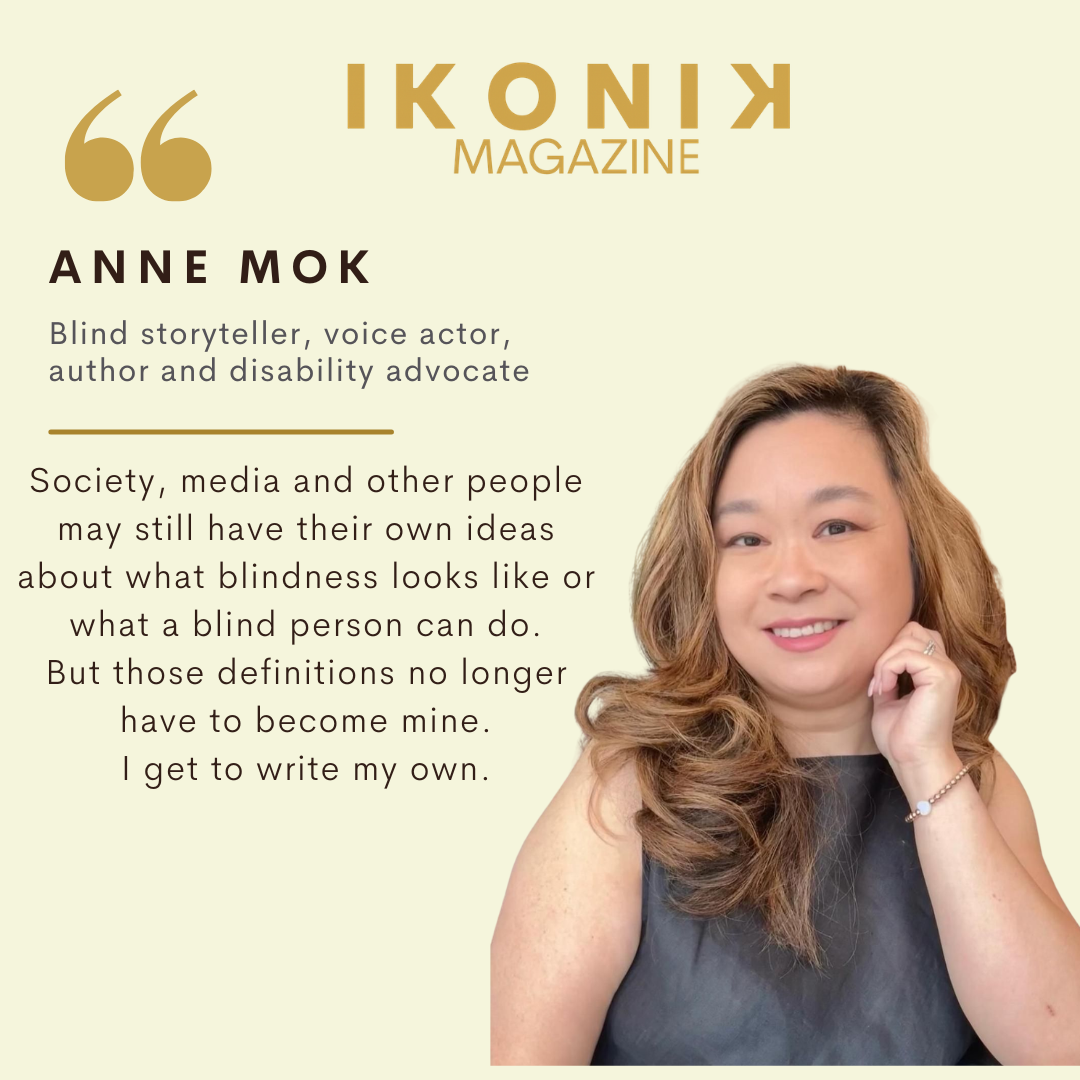
That is what disability pride means to me now. Blindness is part of who I am, but I get to decide what that means. Society, media and other people may still have their own ideas about what blindness looks like or what a blind person can do.
But those definitions no longer have to become mine.
I get to write my own.
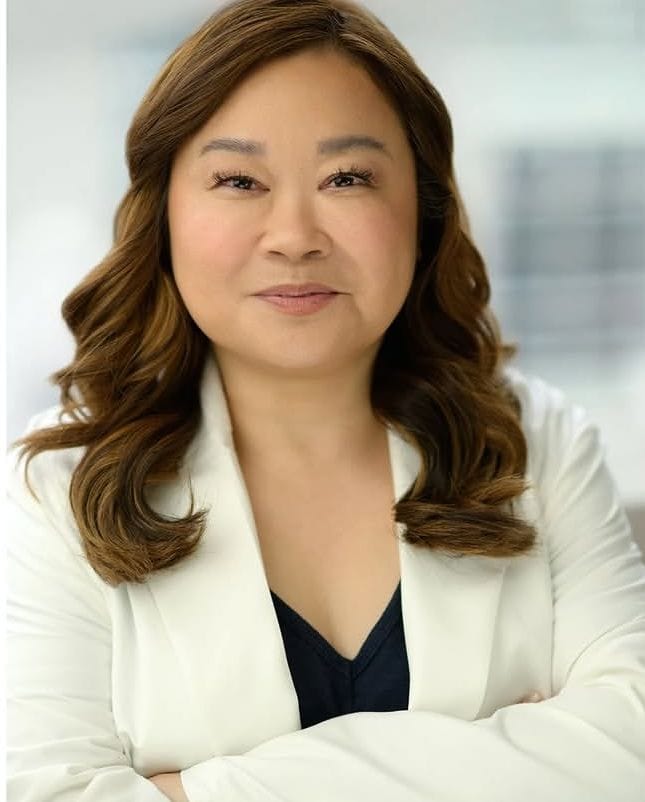
Was there a moment in your career when someone saw possibility or talent in you that others had overlooked? What changed when someone gave that potential room to grow?
There is one experience from very early in my social media journey that I still think about because, at the time, I had no idea where it would lead.
I had purchased a customized Braille T-shirt from Aille Design. They had just opened up orders for custom Braille T-shirts, and I happened to be the very first person to place an order. I chose to have my Instagram handle, “purposeinview,” written in Braille on the shirt.
The founder was so excited about that first order, but she was also curious about the story behind it. She wanted to know why I had chosen the name Purpose in View, and that curiosity became the beginning of a conversation neither of us could have known would lead to so much more.
We decided to have a virtual coffee chat over Google Meet. I still remember it because I had never used Google Meet or really any web conferencing platform before. I didn’t even know where I was supposed to look or how to position the camera. I was so new to putting myself out there in that way.
But we ended up having this wonderful conversation.
She originally wanted to feature me on her Instagram page and asked me to send her something about myself. No one had ever asked me to do that before, so of course I wrote far too much! I remember telling her, “Just take whatever you need from it for your Instagram post.”
Instead, she came back and told me that she had decided to create a community blog, and I was going to be the first person she featured.
That meant so much to me.
During our conversation, she had also noticed something I hadn’t really thought about. I was sharing my story on social media, but I wasn’t really showing myself. I wasn’t showing my face very much. I think there was still a part of me that was hiding behind the words.
She encouraged me to show up as my authentic self. She told me to keep sharing my story and allowed me to see that there was something in what I was saying that people might want and need to hear.
I think that was one of the first times someone outside of my immediate circle really saw possibility in me and gave me the confidence to see a little more of it in myself.
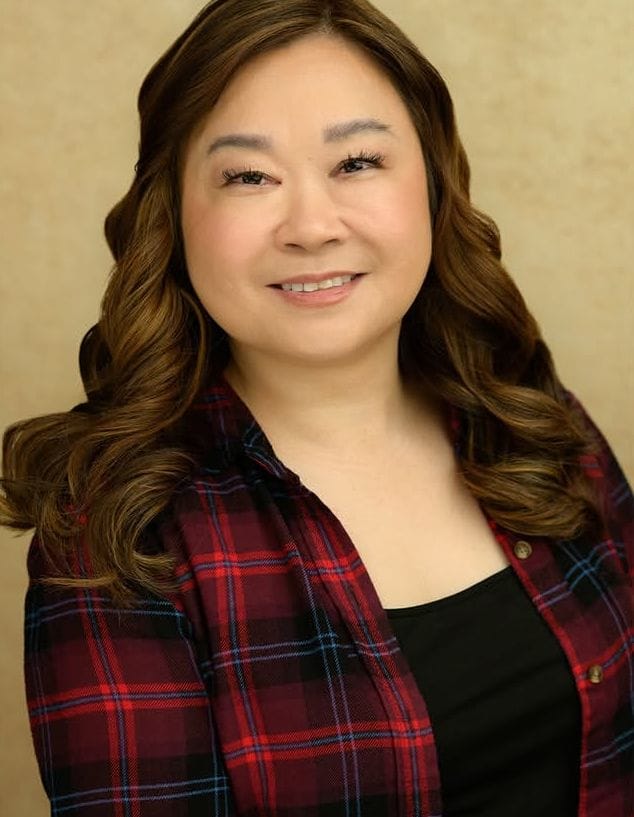
And then something happened that I never could have planned.
Purdys Chocolatier found me through that community blog. That same holiday season, I was invited to be part of their commercial launching their accessible holiday Braille chocolate box.
I sometimes think about the path between those moments, because even my decision to order that T-shirt had intention behind it. When I started Purpose in View, I wanted to challenge myself to make my content and my presence on Instagram as accessible as possible. But I also wanted my platform to be a place where I could support and uplift Canadian, women-owned small businesses. Aille Design represented so much of what I wanted to stand behind.
I could never have known where that one purchase would lead. Ordering the T-shirt led to a coffee conversation. That conversation became a community blog. The blog helped Purdys Chocolatier find me, and that led to an opportunity to be part of their commercial for the launch of their accessible holiday Braille chocolate box.
Looking back, I think there is something really meaningful about that. I started by supporting another woman and her small business, and through that connection, she saw something in me and encouraged me to step forward too. One act of support created this ripple effect of connection, opportunity and believing in what was possible.
What changed after that was really my confidence in allowing myself to be seen.
I was still very early in my journey. I didn’t have a strategy or a clear picture of where Purpose in View was going to take me. I was learning as I went. But having someone outside of my family and friends see something in me and say, in her own way, “Keep showing up. Keep telling your story,” gave me permission to explore a part of myself I hadn’t really trusted yet.
The opportunity with Purdys Chocolatier was another important moment because suddenly I could see how all of these pieces could come together: accessibility, storytelling, supporting businesses whose values aligned with mine, and representation of the blind and visually impaired community.
From there, I became more willing to say yes to opportunities that scared me a little. I started showing my face more. I became more comfortable speaking publicly and sharing parts of my lived experience. Eventually, that path grew into writing, public speaking, advocacy, content creation and voice acting.
But I think the biggest change was internal.
I began recognizing that the qualities other people were responding to were qualities that had always been inside of me. I had spent so much of my life being shy and questioning whether my voice mattered that I hadn’t really given myself the opportunity to discover what I was capable of.
That early experience taught me how powerful it can be when someone sees possibility in another person. It doesn’t mean they give you your talent or your potential. Sometimes they simply reflect something back to you that you haven’t learned to see in yourself yet.
And I carry that with me now in the way I try to show up for other people. If I can encourage someone else to use their voice, share their story, step into an opportunity or recognize something in themselves that they haven’t had the confidence to see yet, that matters to me.
Because someone once did that for me.
What started with a Braille T-shirt became so much more than I could have imagined. It gave my potential a little room to grow, and eventually, I learned how to give myself that room too.
There's an important difference between featuring a disabled creator and actually building a meaningful creative relationship with them. What does a genuinely valuable partnership look like to you?
For me, a genuinely valuable partnership begins with relationship and shared values.
There is a difference between a brand asking a disabled creator to appear in a campaign and a brand taking the time to understand who that creator is, what they care about and what perspective they can bring to the work.
The partnerships that have meant the most to me are the ones where there is genuine conversation. Someone has taken the time to get to know me beyond my blindness. They understand my work, my community and the things I care about, and I have the opportunity to understand their values too.
I think that matters because I never want to share something simply because I have been asked to promote it. If I am bringing something to my community, I want there to be a real connection to it. I want to understand the product, the people or the story behind it and be able to speak about it authentically from my own experience.
Trust is also incredibly important.
When a brand chooses to work with a creator, I think part of that partnership is trusting the creator to know how to communicate with their own community. Give us the creative space to tell the story in our own voice rather than asking us to fit into a version of what disability representation is supposed to look like.
For me, that might mean talking about how I experience a product through touch, sound, scent or texture. It might mean considering how the content itself can be made more accessible. Or sometimes it might have absolutely nothing to do with blindness. I am also a woman who loves beauty, travel, fashion, storytelling and discovering products and experiences that genuinely bring something into my life.
That is part of meaningful representation too.
I also really value partnerships that grow rather than feeling like a single moment of visibility. When there is ongoing communication, mutual support and a willingness to explore ideas together, you begin to build something much more meaningful than a post or a campaign.
And I think collaboration should go both ways. I want brands and creative organizations to feel comfortable asking me questions. I also want to feel comfortable offering feedback, bringing forward ideas and saying, “Have you thought about approaching it this way?” That is when I feel like I am being valued not simply as the person featured in the work, but as a creative contributor.
Ultimately, a valuable partnership feels human. There is respect, curiosity and trust. Both sides bring something to the relationship, and both sides are open to learning from each other.
I don’t want to simply be included in someone else’s story. I want there to be opportunities for us to create something meaningful together.
Your relationship with OKOKO began through the Golden Hour experience and has continued beyond that evening. What stood out to you about the experience, and what has the relationship that followed meant to you?
What stood out to me about the Golden Hour experience was that it never felt like I was simply being invited somewhere to experience a product. It felt like I was being invited into a community.
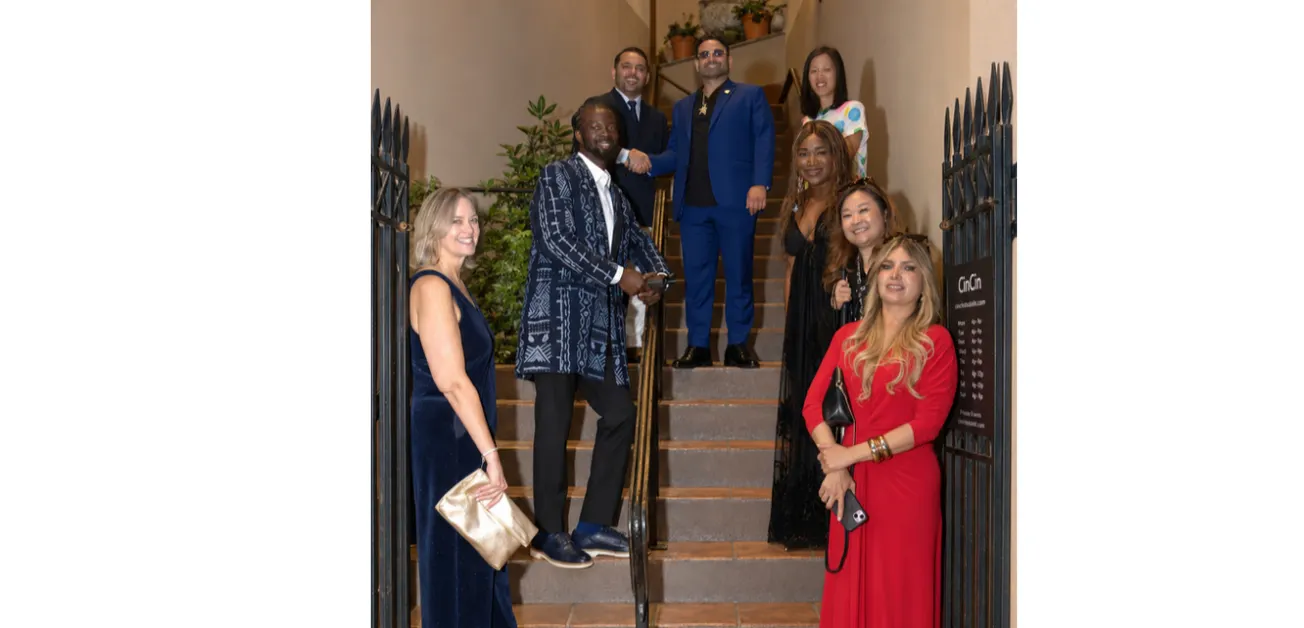
There was so much intention behind the evening, from the beautiful setting in the rose garden to the conversations, the people who were brought together and the opportunity to experience OKOKO in such a sensory way. As a blind woman, that really stayed with me because beauty is so often presented as something primarily visual. But beauty, to me, is also about touch, texture, scent, atmosphere, emotion and how something makes you feel.
I was able to experience the evening in all of those ways.
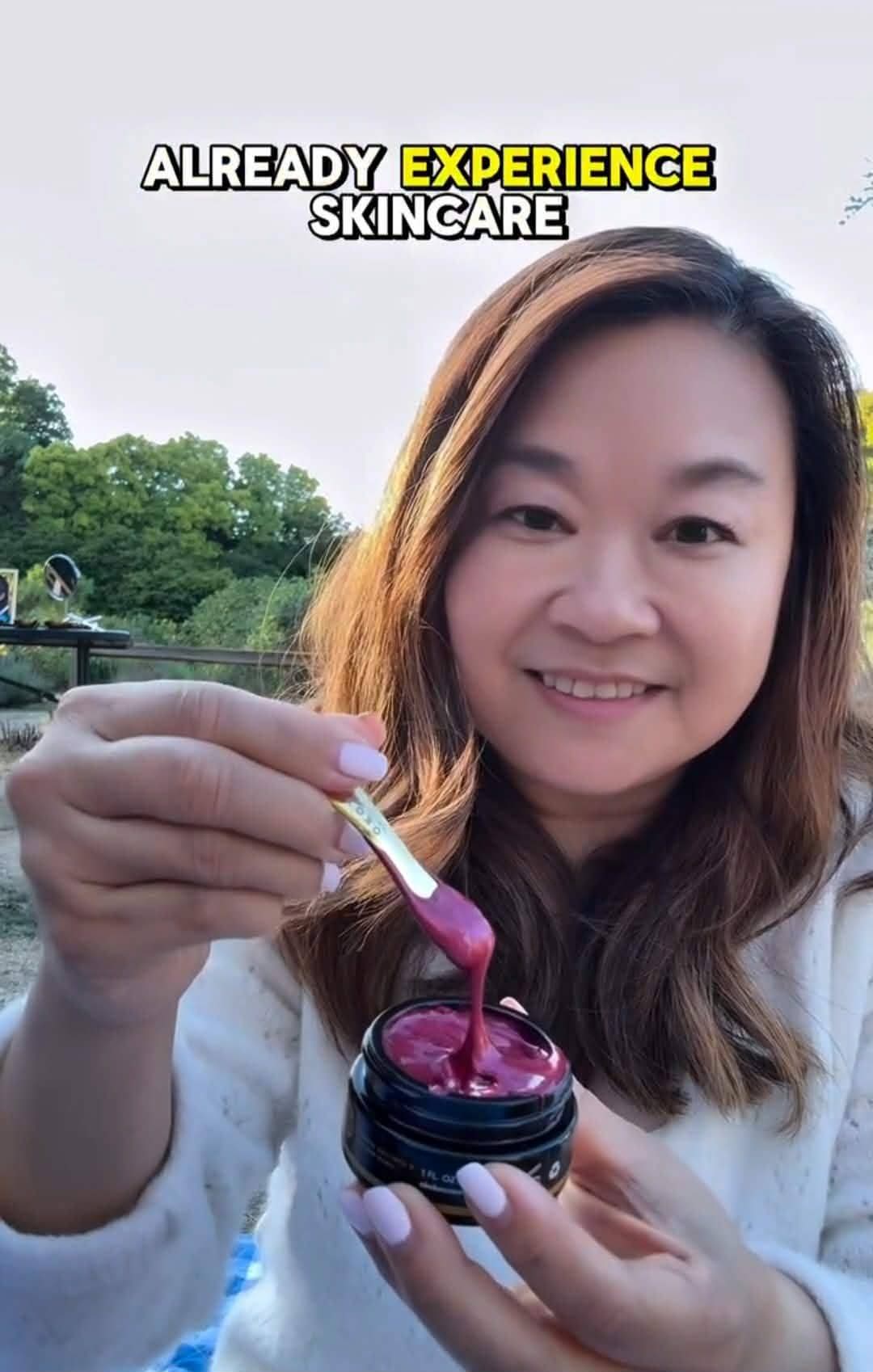
What also stood out was the connection with Oyéta. I felt there was genuine curiosity about who I was, how I experienced beauty and the perspective I brought as a blind creator. I never felt that I had to fit into a particular idea of what a beauty creator should look like or how I should talk about skincare. I could simply experience it in my own way and tell that story authentically.
That meant a lot to me.
What has been especially meaningful is that our connection didn’t end when Golden Hour ended. We continued talking. I continued experiencing OKOKO products in my own life and sharing them in ways that felt natural to me. Those conversations have continued to grow into ideas, creativity and a genuine relationship.
I think that is what makes this relationship feel different. It has never felt transactional.
There is mutual curiosity. I have been able to share how I experience skincare without sight and think creatively about how beauty content can become more sensory and accessible. At the same time, I have been learning more about Oyéta, her story, the intention behind OKOKO and the care that goes into what she creates.
And I think we discovered that we share something deeper too. We both care about connection, community and creating experiences that make people feel something.
For me, beauty has become much less about what I see when I look in a mirror and much more about how I feel in my own skin. Skincare can be a very sensory experience for me. It can be the coolness of a mask touching my face, the texture between my fingers, the scent of the botanicals, or simply giving myself permission to slow down and be present for a few minutes.
Being able to share beauty from that perspective has opened up conversations that I don’t think either of us necessarily planned when we first met.
And that is what I value most about the relationship that has followed. There has been room for it to evolve naturally.
I came to Golden Hour thinking I was attending a beautiful creator experience. I left with products I genuinely enjoyed, but more importantly, I left with new relationships and a sense of possibility around what beauty storytelling could look like when we experience it through more than sight.
That relationship is still growing, and I think that is part of what makes it so meaningful to me. We are continuing to learn from each other, create together and see where that connection can lead.
If the right person, a casting director, brand, producer, publisher, event organizer or creative collaborator, were reading this interview today, what kinds of projects and opportunities would you be most excited to explore next?
I think I’m at a really exciting point in my life because I’m more open than I have ever been to what might come next.
There was a time when I would have looked at an opportunity and immediately thought about all the reasons I might not be able to do it because I’m blind. Today, I’m much more likely to ask, “How can we make this work?” That shift has opened up an entirely different world for me.
I would love to continue growing as a voice actor, particularly in audio description, narration, commercial work and character-driven projects. Audio description will always have a special place for me because I am part of the community it serves, but I also want opportunities where being blind has absolutely nothing to do with why I am behind the microphone. I want to be considered because my voice, performance and interpretation are right for the work.
The same is true for on-camera opportunities. I would love to see more blind and disabled people naturally represented in commercials, television, film and branded content without disability always needing to be the storyline. Sometimes I want to tell stories about disability and accessibility. Sometimes I simply want to be the woman drinking the coffee, wearing the beautiful outfit, travelling somewhere new or enjoying life.
I want both.
I’m also very interested in continuing to work with brands and creative organizations that value storytelling, accessibility and genuine collaboration. I love exploring how I experience products and environments differently and finding creative ways to translate that experience into content that can connect sighted and blind audiences.
Speaking will continue to be an important part of my work as well. I want to have conversations about disability, representation, accessibility, creativity, purpose and what becomes possible when we stop making assumptions about one another. I especially love spaces where the goal isn’t simply for me to tell my story, but for that story to open up a larger conversation.
And as an author, I know there are still more stories in me. I would love to continue exploring opportunities in publishing and storytelling that allow those stories to grow in new directions.
But I think what excites me most are the opportunities I haven’t imagined yet.
So much of what I am doing today was never part of some carefully mapped-out career plan. It came from being curious, saying yes, developing my craft and meeting people who saw possibilities I hadn’t considered.
So if the right person is reading this, I hope they don’t only ask, “Where could Anne fit into what we’re already doing?”
I hope they might also ask, “What could we create together that we haven’t thought of yet?”
Those are the conversations I’m most excited to have!
If someone encounters Anne Mok for the very first time through this article, what is the one thing you hope they remember about you and your work?
If someone encounters me for the very first time through this article, I hope they remember that there is always more to a person than what we first see or assume.
So much of my work has become about perspective. Blindness changed the way I experience the world, but it also challenged me to question so many of the things I once believed about myself, about disability and about what was possible for my life.
I spent many years feeling shy, making myself smaller and wondering whether my voice really mattered. I never imagined that one day I would be using that voice as a storyteller, an author, a speaker and a voice actor.
So if someone remembers anything about me, I hope it isn’t simply, “Anne is blind and she has done all of these things.”
I hope they remember the possibility behind the story.
I want someone who is going through their own change or questioning what comes next to know that they may not yet see everything that is still possible for them. I want someone who has felt unheard to know that their voice matters. And I want someone who has made assumptions about disability to leave a little more curious about what they might not yet understand.
That is really what I hope my work does. I want to create connection between the blind and visually impaired community and the sighted community, not by pretending our experiences are the same, but by giving us opportunities to understand one another better.
Because when we understand each other differently, we begin to see each other differently.
Maybe that is ultimately what “seeing beyond sight” means to me.
It isn’t about whether we can see with our eyes. It is about being willing to look beyond assumptions, listen to one another and recognize the humanity, possibility and value that have been there all along.
If someone finishes this article with a little more curiosity about another person, a little more belief in their own voice, or a willingness to see possibility where they might once have seen limitation, then I hope that is what they remember about me and my work.
Great conversations don't simply answer questions.
They leave us with better ones.
Reading Anne Mok's story, it becomes impossible not to reconsider how often society mistakes visibility for value, representation for belonging, or accessibility for obligation. Her work through Purpose in View reminds us that the greatest barriers are rarely physical—they are the assumptions that quietly shape the way we build products, tell stories, hire talent, and define potential.
That is why Anne's voice matters far beyond disability advocacy.
She represents a new generation of creative leaders whose lived experience is not a limitation but a competitive advantage. Her perspective enriches storytelling, strengthens brands, expands innovation, and demonstrates that inclusion is not an act of charity—it is a catalyst for better ideas.
For business leaders, marketers, publishers, casting directors, and founders, Anne's message is both an invitation and a challenge: create spaces where people are not merely present, but influential. Build with diverse perspectives from the beginning. Listen before assuming. Collaborate before deciding. Because when every voice has room to shape the story, the story becomes stronger.
At IKONIK Magazine, we believe authority is built by amplifying people whose work changes conversations before it changes industries. Anne Mok embodies that belief. Through every story she tells, every room she enters, and every barrier she quietly dismantles, she reminds us that true leadership begins with perspective.
And perhaps that is the greatest lesson of all.
The future will not be shaped by those who see the most.
It will be shaped by those who help the world see differently.
Discover Anne Mok. Experience Purpose in View. And prepare to rethink what it truly means to see beyond sight.
- Website: https://purposeinview.com/
- Instagram: https://www.instagram.com/purposeinview/
- LinkedIn: https://www.linkedin.com/in/anne-mok-purposeinview/