
Is what I’m looking at the real deal?
We’re asking ourselves this question more than ever before. Maybe, the thought has even already crossed your mind upon reading this opening paragraph.
The ongoing rise of AI-generated content is contributing to a skyrocketing trust recession across the internet. Now, there’s a new source of skepticism, annoyance, and fatigue in daily life: browsing the online world while expending brain calories deciding whether or not something is originally human — and trustworthy.
Also, what we’re seeing is increasingly being created from a mish-mash of AI-generated content (as it continues to proliferate unapologetically). According to Forbes, more than 75% of consumers are concerned about how capable AI is at compiling and spreading “credible” information found online.
So, what’s the antidote to widespread distrust and fear of fakeness that exists where we spend a good chunk of our regular waking hours? An unmistakably human virtual vibe. For many service-based businesses, this has become a key strategy to stand out in the sea of AI sameness — and build trust with their target audiences.
Since 2025, I’ve heard some form of “be authentic online” repeatedly from the mouths of online marketing gurus and at various marketing conferences. Initially, I totally resonated with this significant shift in communication strategy, and was even excited by the idea of being advantageously human.
Showing up as you in the virtual world should feel like a natural transition away from sticking to just the business stuff… right? This may be intuitive thinking for some. After chewing on this seemingly straightforward advice though, I now believe it’s overly simplistic.
“Be authentic online” is a concept that’s simple to understand, but challenging to implement — especially for us humans who lean more towards introversion and are less open-book. I’ve come to this conclusion upon reflecting on my own experience publicly sharing in a more “Nicole” way, and through conversing with various service providers who’ve expressed resistance to narrowing the gap between their online and offline way of being.
Unfortunately, authenticity has also become an eye-rolling buzzword over the years — but modern marketing provides more reason to ponder and return to its true meaning. Yes, the A-word has to do with showing up real versus fake, but it goes deeper: a way of being where one's outer actions and behaviours match inner values and beliefs.
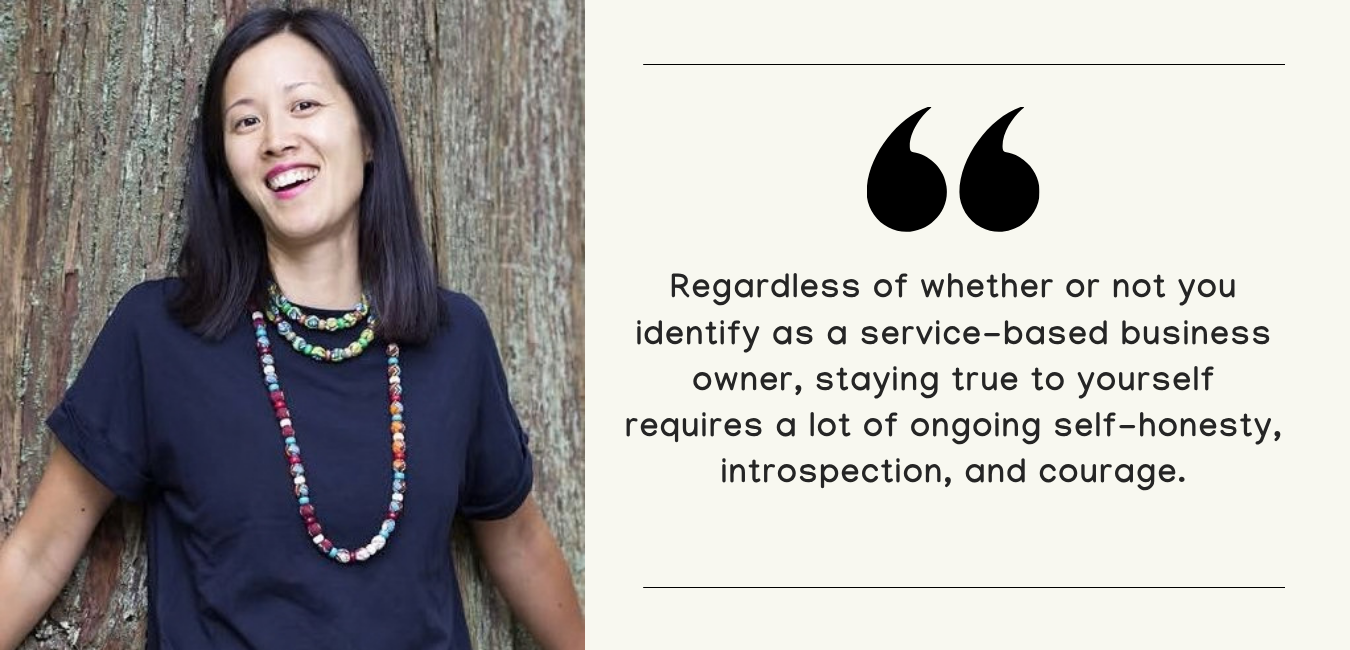
Regardless of whether or not you identify as a service-based business owner, staying true to yourself requires a lot of ongoing self-honesty, introspection, and courage. Universal barriers also exist upon doing this on the internet, making its implementation easier said than done.
WHAT CAN WORK AGAINST US BEING AUTHENTIC ONLINE
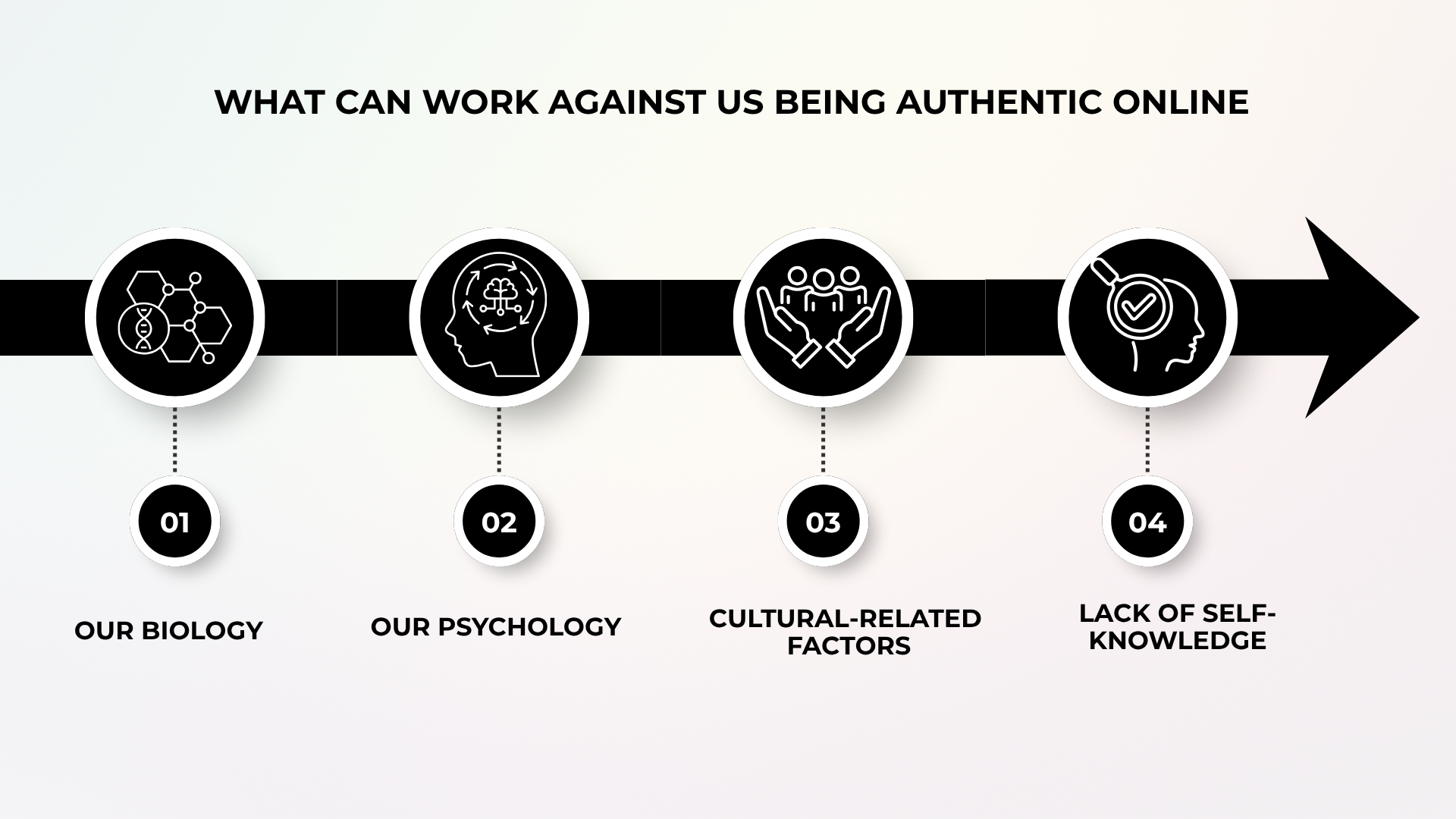
1) Our biology
Going against the grain and standing out doesn’t come naturally to many of us. Way back when, being part of the pack meant you’d live to see another day. Upon taking seemingly social risks during modern times, our primitive “lizard brains” are quick to rev up fight-or-flight, even though we’re not in any real danger. As humans, we’re simply hardwired to choose safety by looking to our left and to our right — and doing what others do.
2) Our psychology
An irrational tendency that affects many humans is called “The Spotlight Effect”. This is a psychological phenomenon where we believe others are paying close attention to us: scrutinizing what we do, what we say, and how we look. The reality? We’re actually much more focused and preoccupied with ourselves.
3) Cultural-related factors
Individualism is only emphasized in certain parts of the world. For example, collectivism is more common across Asian cultures: what the family unit desires is prioritized over one’s own preferences. Although I was born and raised in Canada (where pursuing self-discovery is often celebrated), I didn’t grow up in a way that encouraged expressing my true feelings, opinions, and what makes me happy. Consequently, I lacked a sense of authentic identity for a good chunk of my life.
4) Lack of self-knowledge
Let’s return to this definition of authenticity: a way of being where one's outer actions and behaviours match inner values and beliefs. If we’re unclear about the latter, a self-established North Star to outwardly align with doesn’t exist. A lack of meaningful purpose and intentionality behind the creation of a business limits the possibility of authentic marketing communication.
WHAT CAN HELP US BECOME MORE AUTHENTIC ONLINE
As a service provider in the business of selling expertise (service provision, consultations, courses, memberships etc), the shift from strictly sharing what you know to who you are is significant. Communicating your competence, credentials, and achievements feels safe because it’s not you. In our post-AI world though, this polished marketing approach has become less effective in helping you stand out and build trust with your target audience.
I’m not encouraging you to put your private life on display, nor dial up vulnerability to the point where you get a post-sharing hangover (that causes feelings of regret). This is by no means a requirement for online authenticity. It’s also not an appropriate approach for maintaining a perceived professional vibe.
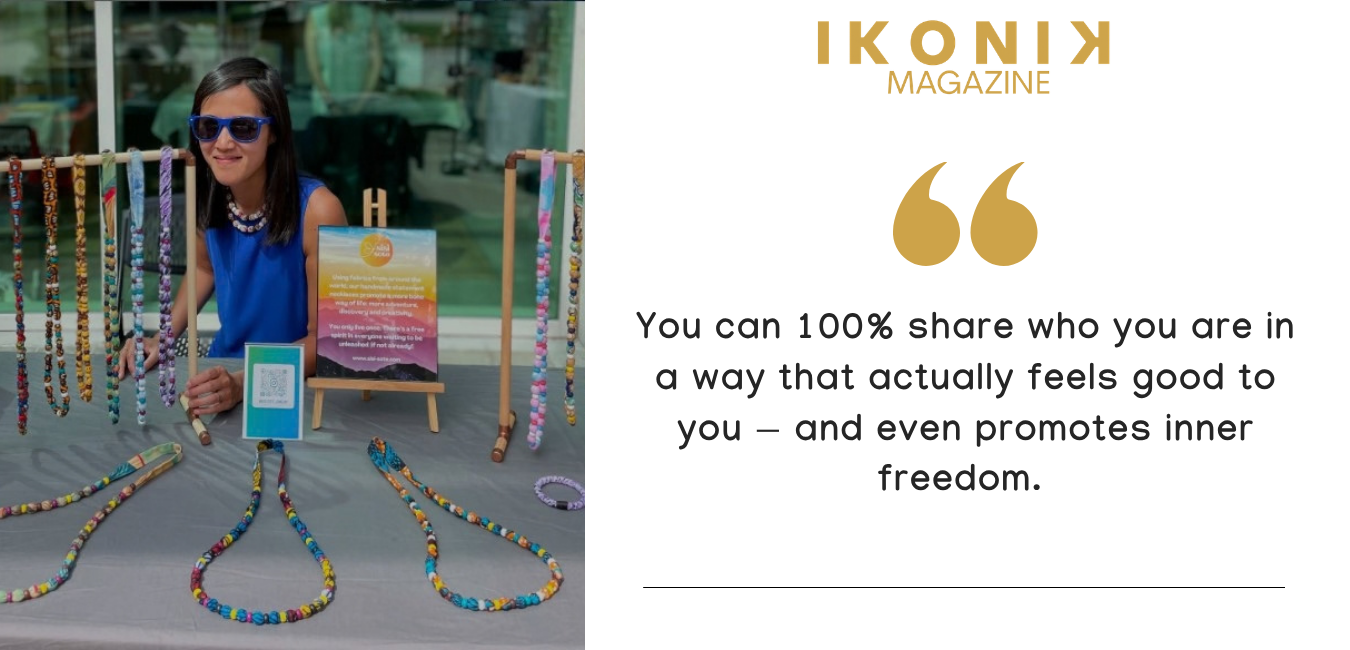
You can 100% share who you are in a way that actually feels good to you — and even promotes inner freedom.
I believe that being authentic online is a learned skill that anyone can get more comfortable with over time. Often, it’s another journey in personal development alongside the obligatory one that many business owners sign up for. Besides knowing the barriers that can work against us showing up as ourselves, building this “real-me muscle” takes time, courage, and repetition. It’s establishing a new behaviour — where starting small and getting out of your comfort zone consistently can support the shift from hiding to shining in the virtual world.
Nicole Chiang is a pharmacist-turned-copywriter and marketer, world adventurer, and creator of Sisi Sote Jewellery. She helps service providers across industries stand out and attract their people online via handcrafted copy that’s both strategic and courageously human. She’s created a free guide to help others shift from sharing what they know to who they are — in a way that promotes inner freedom and actually feels good. Grab your copy here.