There are artists who create beautiful work.
Then there are artists who create conversations.
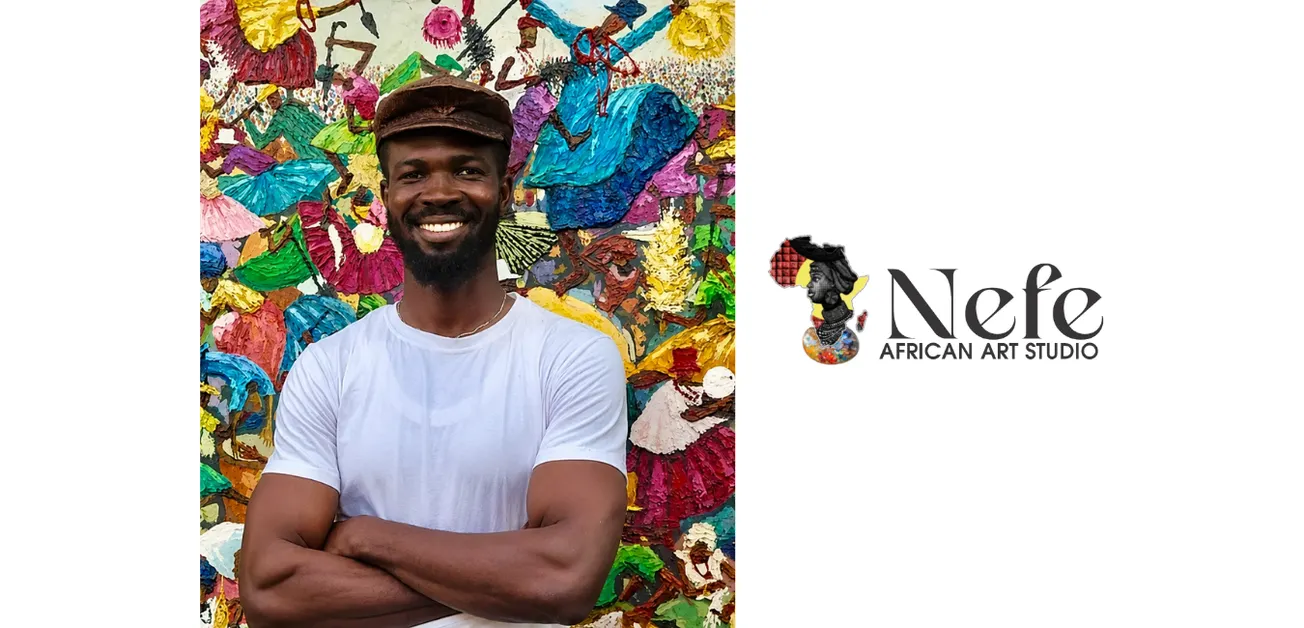
Nefe Ogodo belongs firmly in the second category.
Born in Warri, Nigeria, and now based in Vancouver, Canada, Ogodo has built a body of work that is as visually striking as it is deeply intentional. Every bold colour, every expressive figure and every carefully chosen title reflects his lifelong commitment to telling African stories with honesty, pride and humanity.
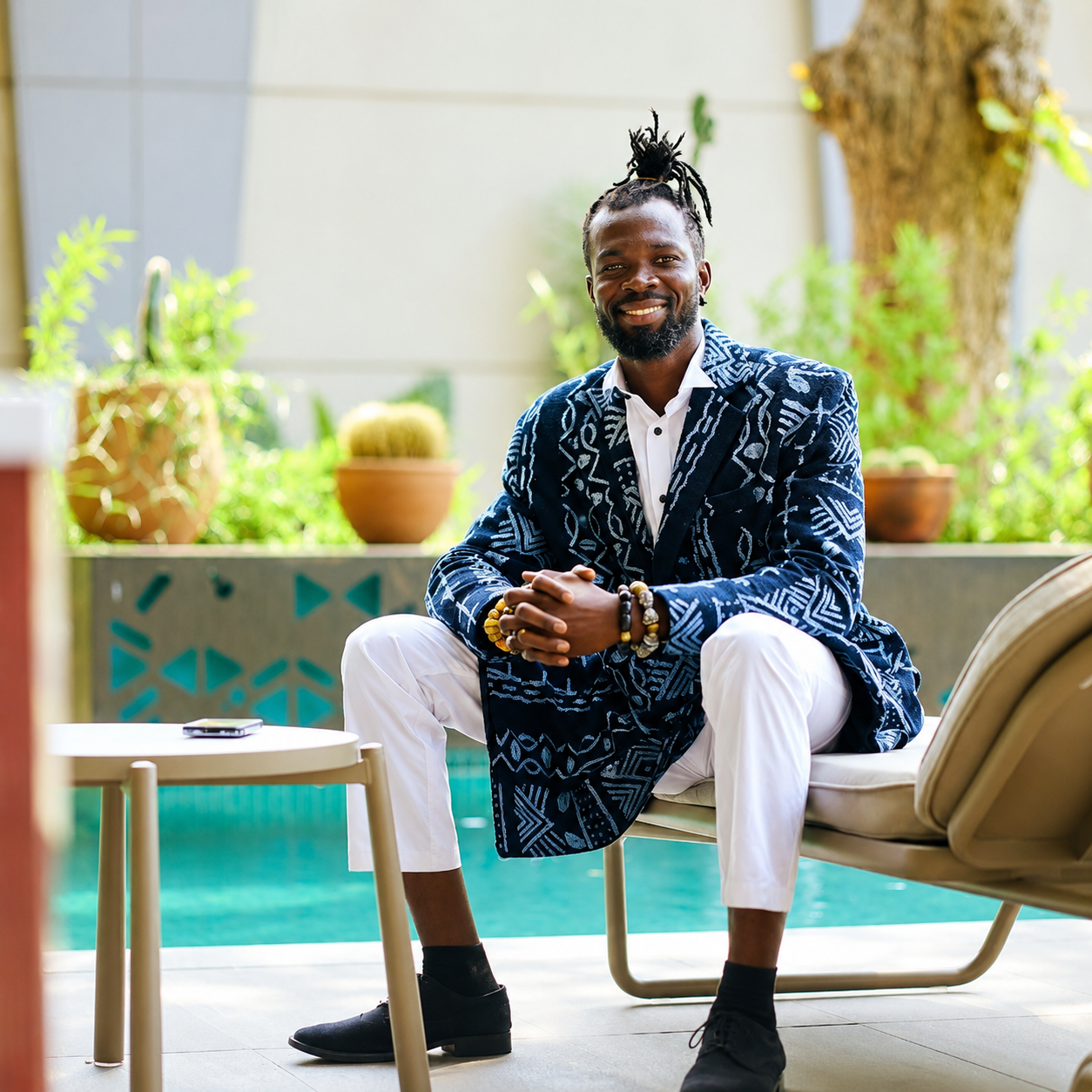
His paintings move beyond aesthetics. They explore identity, heritage, resilience, Black beauty and the emotional threads that connect people across cultures. Whether he's celebrating the strength of African women, challenging harmful beauty standards or capturing everyday moments often overlooked, Ogodo paints with a purpose that extends far beyond the canvas.
At a time when conversations about representation, culture and belonging are more important than ever, his work reminds us that art has the power not only to inspire but also to educate, preserve history and reshape perceptions.
In this exclusive interview, IKONIK Editor-in-Chief Oyeta Kokoroko sits down with Nefe Ogodo to discuss the journey behind his art, the philosophy that drives his work, and his mission to reshape how the world sees Africa, one painting at a time.
Before we talk about the art, who is Nefe Ogodo when there's no canvas in front of you?
Well, Nefe Ogodo is a Nigerian artist based in Vancouver, Canada. I studied Painting and General Art at Auchi Polytechnic in Edo State, Nigeria. I completed my National Diploma in 2006. Not satisfied with the knowledge I had acquired, I went back to study Painting for my Higher National Diploma and graduated in 2010. Since then, I've been practising as a professional artist.
Without the canvas in front of me, I enjoy photography, reading books about Pan-Africanism, and African culture and tradition. I try to immerse myself in them as much as possible because they are a huge part of who I am. What one word would define you?
Simplicity. I like simplicity a lot. Life is simple. It's we humans who are making life complicated for ourselves.
What one word would define you?
Simplicity. I like simplicity a lot. Life is simple. It's we humans who are making life difficult for ourselves.
Why do you value simplicity so much?
My art is deeply rooted in African culture, tradition, and unity, and those are some of the simplest, most natural parts of life. A lot of people believe you have to go somewhere extraordinary to find inspiration, that you have to reach the clouds before you can create something meaningful. But I believe our history and everyday lives hold all the inspiration we need.
A simple conversation between two people can become a theme for a beautiful painting. Ordinary moments are often the most powerful.
Take me back to the beginning. Where did you grow up, what shaped you, and how did art become such an important part of your life?
I was born in Warri, Delta State, Nigeria. I grew up in Warri. In those days, it was an oil-rich city, with lots of companies and foreigners. And I can vividly remember there were a lot of cultural activities, lots of colours. That's what I grew up with. Growing up, you know, African parents would want their child to become a doctor, become an engineer, become a lawyer or a pilot. My dad wanted me to be a lawyer, but I ended up becoming an artist. I chose what I wanted. Then, growing up, I used to draw a lot. In my primary school days, I would fill all my exercise books with drawings. Sometimes I would pick a movie and start using my drawings to tell, or retell the story of the movie with my drawings and, you know. A lot of people, even at that early age, were showing their appreciation. "Oh, can I see your drawing book? Can I see your movie book?" And I did a lot of drawings on the walls in my streets. I once got into trouble for painting on a car, luckily its a washable poster colour. That shaped me and formed the person I am today- those early foundations, early beginnings.
Nefe African Art Studio says, "Art is not decoration, it's identity." What does that mean to you personally, and how do your Nigerian heritage and African identity influence what you create?
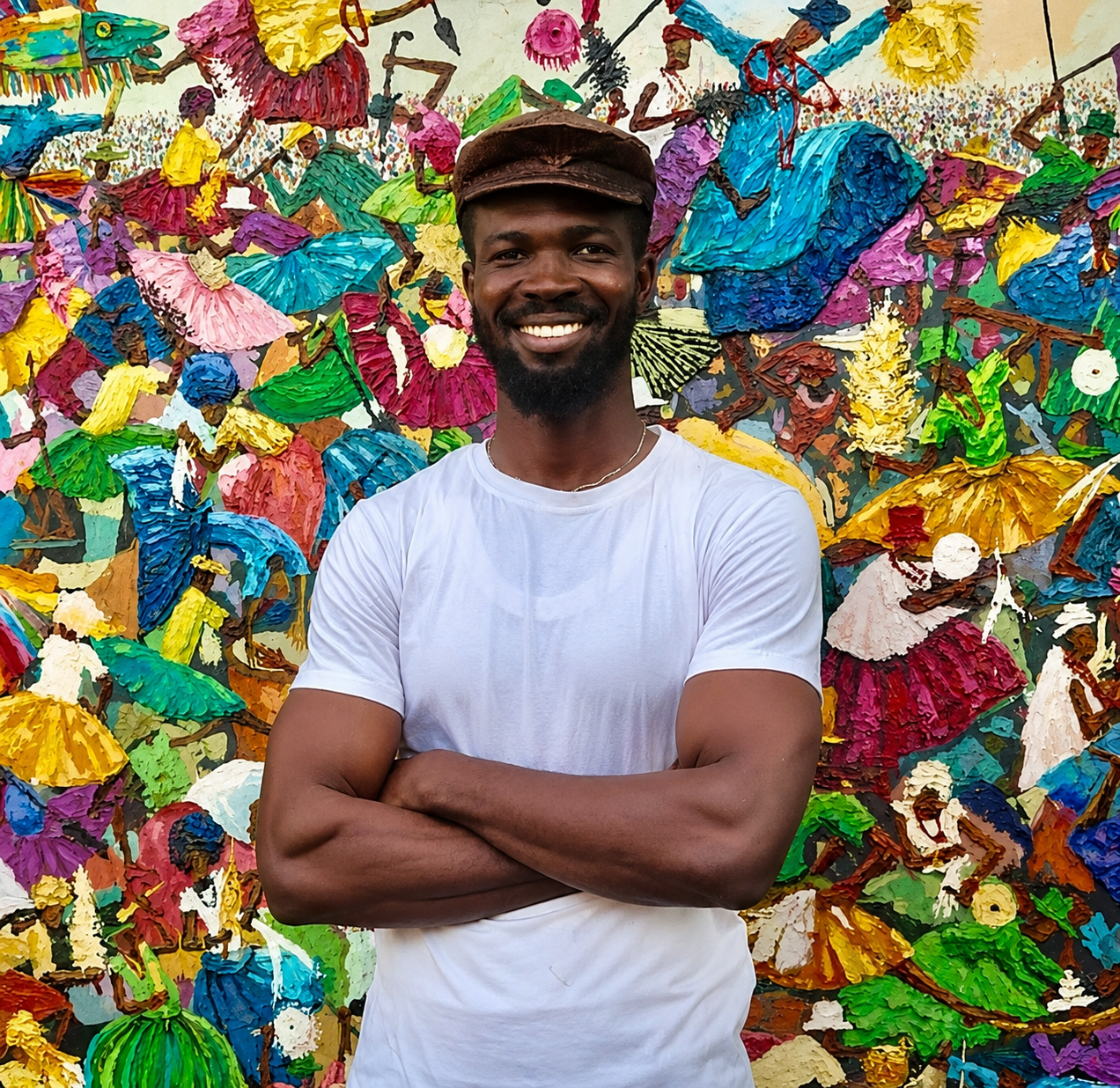
Art is beyond just painting. Art is even beyond showcasing culture and heritage. I try to use my art to evoke emotion. And somebody who has never seen Delta State before, has never heard the word Urhobo/Isoko before, will take a look at my art and say, "Oh, wow, this looks like what I saw in Cuba. Some people will look at my art, and they stick around it, and sometimes I'm wondering, "Why is this guy still there? I mean, like seven minutes starring at one painting." So art is beyond just the aesthetic value. It's beyond just the beauty. I really love the emotion that my art evokes. I love that.
Speaking of emotions, is it more about how you want people to feel when they see your art, or the emotions you experience while creating it?
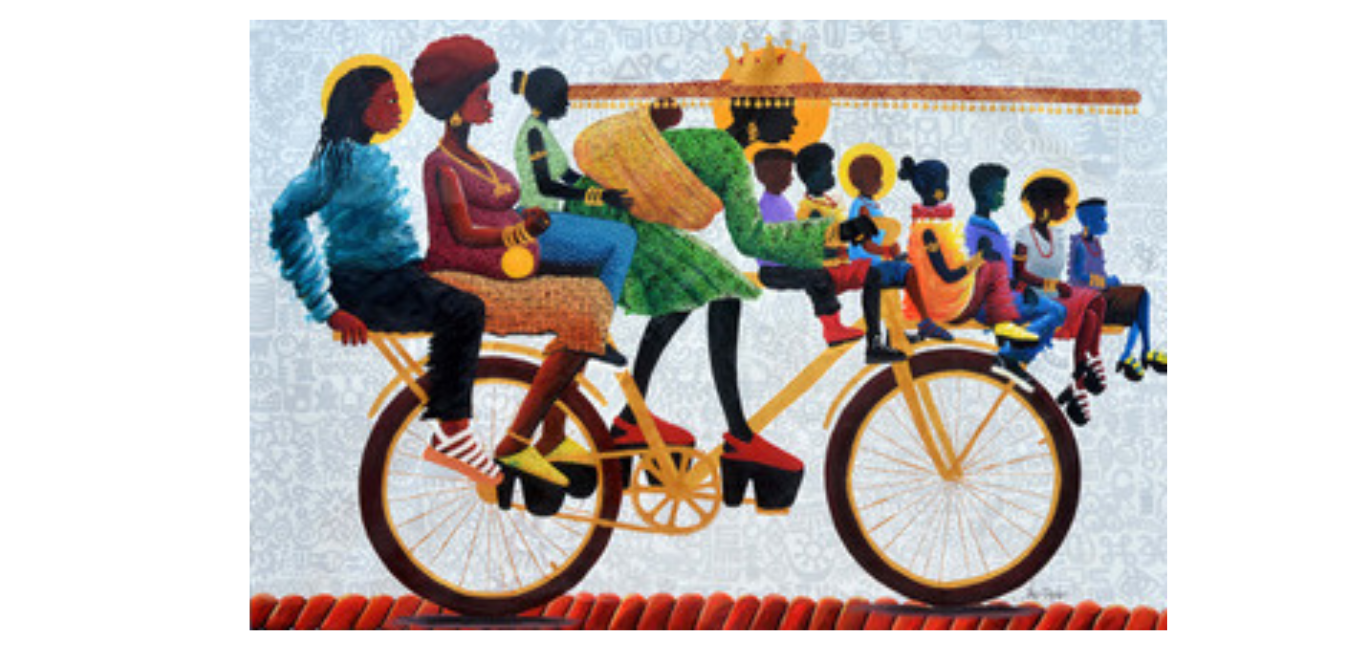
Not necessarily the emotions I experience while creating art. Art speaks differently to different people. One of my recurring series is The Strength of a Woman. It features a beautifully dressed woman riding a bicycle with several beautifully dressed children.Some people see the painting and simply think, "This is Africa. This is how people ride bicycles there." Others see something much deeper. They see their mother.
They remember the sacrifices she made raising them, perhaps without a father figure. Some people are moved to tears. That's the kind of emotional connection I'm talking about.
When someone stands in front of a Nefe Ogodo painting, what do you hope they feel or understand about Africa, identity, and Black beauty that they might not have understood before?
Well, when you stand before a Nefe Ogodo painting, I don't want you to be in a hurry to understand it immediately. I want you to take a good look at the painting, take a good look at the colours, the way they relate to each other. Take a look at the flow, take a look, look at the humour. If, after looking at it and you are curious, that's enough for me.
You've spoken about Pan-Africanism and your desire to show the real Africa—the one many people don't get to see. What do you hope people understand about Africa, identity, and Black beauty after experiencing your work?
Our history and traditions remain some of the most under-documented in the world. So I take it as a call of duty, I take it upon myself to show the world the beauty of Africa, to show the world the strength of Africa. In the Western media today, whenever they are showing Africa, you see war, you see sickness, you see disease, you see poverty. They are over-amplified. There are lots of magnificent buildings and high-rise buildings in Abuja, Lagos and many other cities in Nigeria, but you hardly shown in the Western media. I've painted Lagos cityscapes, and people here in Vancouver have looked at them and said, "This can't be Lagos."
That's because many people still imagine Africa as nothing more than villages, thatched roofs, wildlife, and endless bush.
Through my paintings, I want people to discover another Africa—an Africa filled with colour, culture, unity, resilience, and beauty. When they leave with a different perspective of the continent, I know the painting has done its job. Because they are not used to that part of Africa. A lot of people, a vast majority of people here today, still believe Africa is just thatched houses and villages and trees, bushes and animals you see. And by the time I begin to open their eyes to what Africa really is- the beauty, the colour, the unity, the community, the tradition- a lot of people begin to see Africa in a different light, in a new light, and that is very important to me.
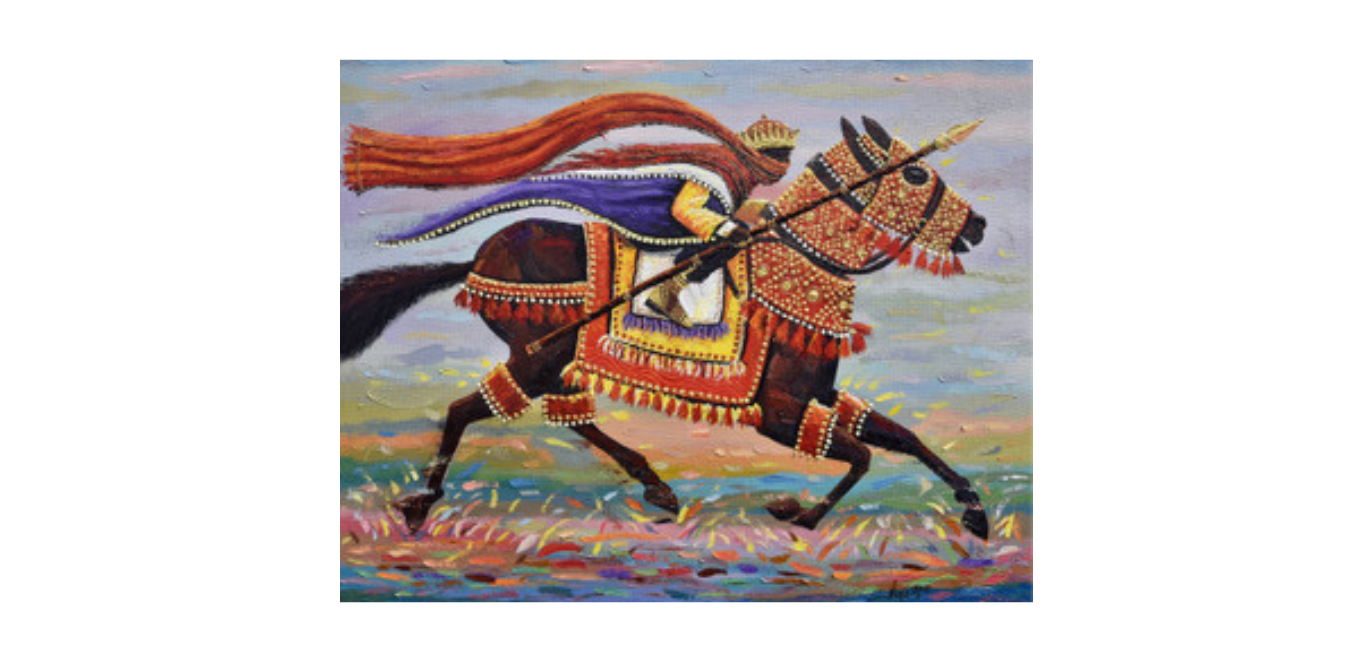
Some of your work has incredibly powerful titles, like From My Black Skin is My Only Crime, to Style Your Hair- to Style Your Afro Hair and Carry it with Arrogant Pride. Can you share one or two pieces that carry especially important stories for you, and take us inside what inspired them?
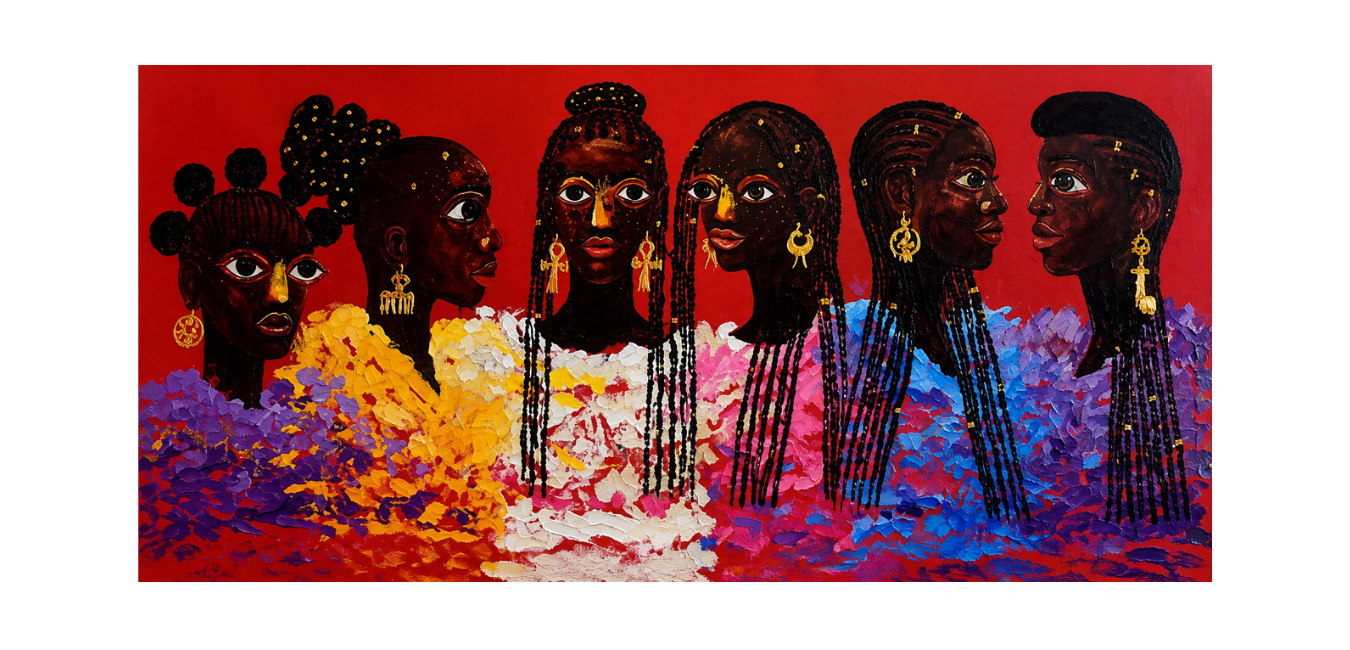
Carry Your Black Skin and Afro Hair with Arrogant Pride is a series I started a few years ago to advise our African women to be proud of who they are. A lot of African women bleach their skin. A lot of African women use Brazilian hair, Peruvian hair and all that. People have not seen their natural hair for many years. And I use those very beautiful African-styled hair in my painting to tell them that you don't need Brazilian hair to be beautiful. Your Afro hair, the texture of your hair is different; it's beautiful, it's unique. And I try to paint these women to look beautiful but now flawless because nobody is perfect. I styled the hair in my paintings sometimes exaggeratedly beautiful just to push my point. And when a woman bleaches her skin, she's killing the melanin, which is the whole essence of life in terms of spirituality, the melanin shield the skin from the sun and we destroy it with harmful chemicals.
Further more, our Black women, are bleaching their skin because of this Western narrative that fair is beautiful, Black is ugly. When a Black lady looks at the magazine, all the adverts they see are fair ladies they are kind of intimidated. But I try to use my painting to let them understand and see reasons with me that Black is beautiful. Our hair is beautiful, and we should carry it; we should flaunt it. I look forward to a future where all our women are carrying their natural hair. They are even looking for ways to darken their skin, and it becomes globally accepted, not only by our Black women, but even by women from other race.
I look forward to the future where women from other races are buying Afro hair and wearing it on their heads. I look forward to that. Another series I worked on that I loved so much was: My Black Skin Is My Only Crime, and that was a painting I did after the murder of George Floyd in USA. That painting is a powerful political painting where I listed a lot the names of a lot of Black people who have been systematically taken out by the system. I listed a lot of names in the painting. Names like Emmett Till, Medgar Evers, Malcolm X, Martin Luther King Jr., Fred Hampton and many others were murdered by the CIA during the COINTELPRO programs. They are all present in that painting.
Why do you think, for example, Black women need to embrace their skin tone, their hair?
Black women are goddesses. They are the cradle of humanity. A black woman can give birth to any race in the world. They are beautiful as they are. But unfortunately, a lot of our women have been so whitewashed that they begin to hate their skin. When everything they hold dear has been painted to white. White Jesus, white angels, white wedding, they began to see everything good as white. On the other hand, when they are painting Satan, they are painted him as a black man and everything bad as black and demonic. Those images over the years, have created a lot of cracks on the psych of our African women and they begin to hate their skin. That's why they bleach it, most of them. They begin to hate their hair. That's why they don't want to see it. So I try to re-educate them and try to let them know that, you know, the right way is keeping your hair as it is. You are beautiful as you are.
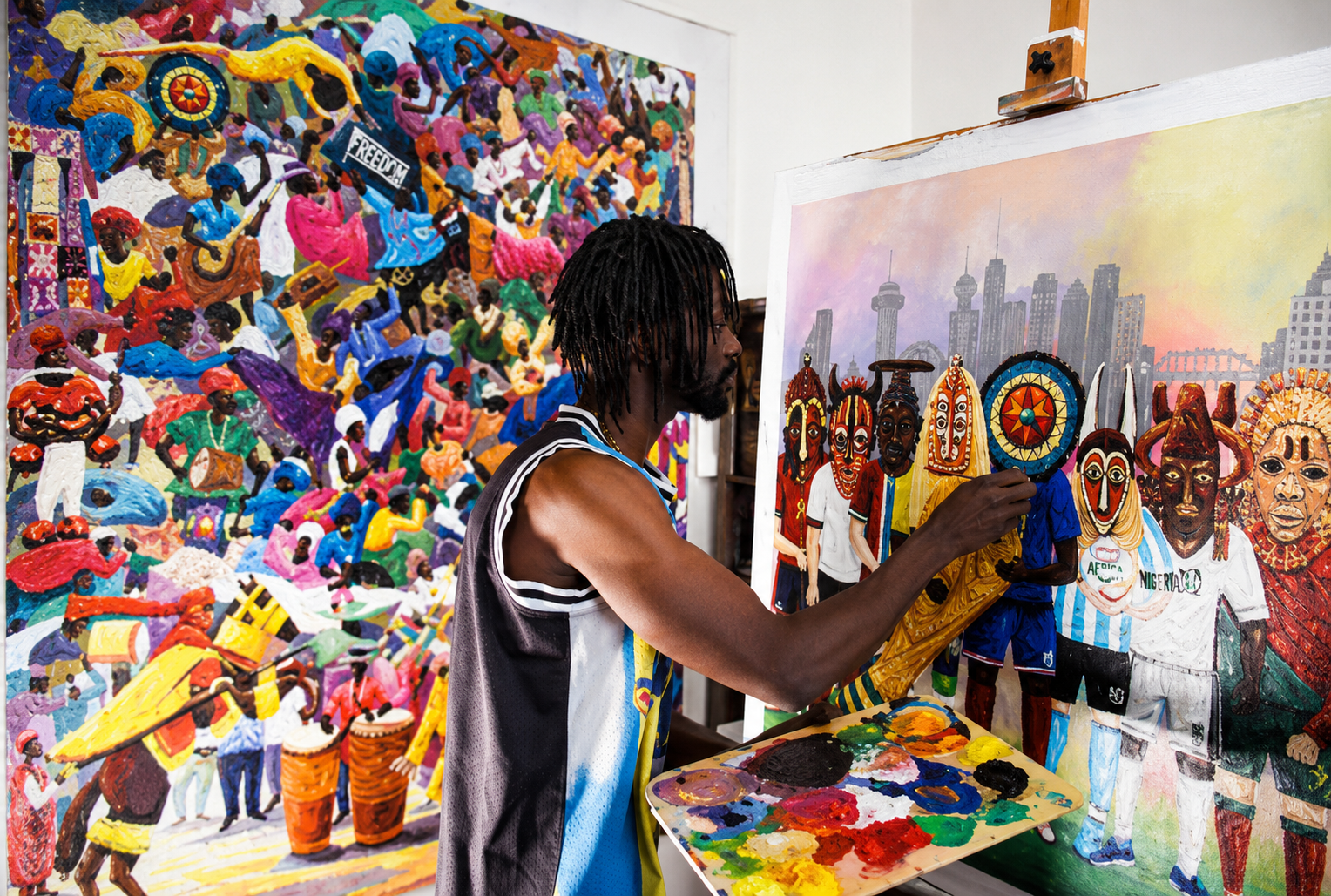
Such a great message, very empowering. And how did you come to have this perspective in life?
So I have a friend. This lady, I knew her to have very dark and beautiful. Her skin was glowing, and I loved her beautiful black skin. Many years later, when I travelled back to my hometown, when I saw her. She's now a shadow of herself, very fair. And I was like, "What is going on? Is this you? Why would you bleach your skin?" She was like, "Oh, I, I have lost like three boyfriends to fair girls. You know, my boyfriend left me for a fair girl, and I decided to be fair. Maybe guys are more attracted to fair girls these days, I won't blame her that much. To some extent, our Black brothers need to do better. A lot of them also believe that fair is beauty and that unfortunately is some of their definition of beauty. And a lot of these ladies are being pressured to want to be fair-skinned- that's part of the reason.
I remember being at the Calabar Carnival in Nigeria in 2014. It's an annual festival held every December in Cross River state of Nigeria, and I use to attend it regularly. During that particular carnival, I saw a lady trying to cross a gutter. I think the gap was too wide, and her skirt was too tight, so she missed her footing and fell in.
You needed to see the condition of her skin. She had been bleaching it for well over a decade I suppose. It had lost its natural glow and had become extremely fragile. I've seen people fall and bruise their skin before, but this was different. The damage was severe.
When you bleach your skin for a long time, even a simple injury can become difficult to heal. In some cases, the skin becomes so delicate that doctors struggle to stitch it back together properly.
Witnessing experiences like that, along with other things I had seen over the years, inspired me to use my art as a form of advocacy. Through my paintings, I campaign against skin bleaching and encourage people to embrace the beauty of their natural skin.
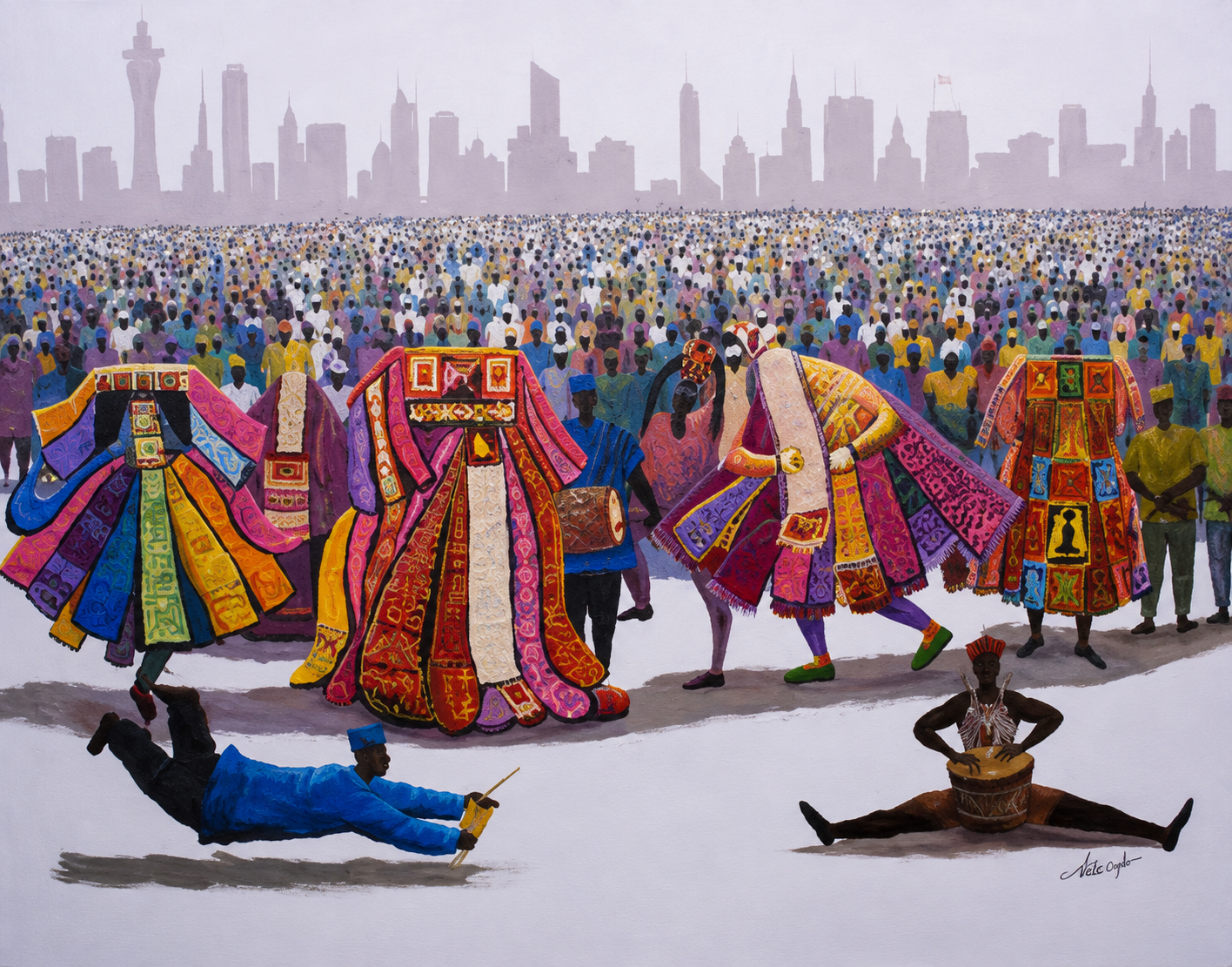
What brought you to Vancouver, and how was building your artistic practice here shaped both your work and the way people experience it?
I came to Vancouver in 2024. I was invited to exhibit here by the Vancouver Art Foundation. I came for the 2024 Art Vancouver Exhibition that was held at the convention centre. I stayed for about six months and went back to Nigeria, and decided to return to Vancouver last year. And I have been staying in Vancouver from that time till now. When I arrived in Vancouver in May of 2024, I was repeatedly advised that my work—centered on African cultural heritage—would find little resonance here. The prevailing suggestion was to shift my focus toward landscapes, florals, and pastoral scenes, which, I was told, were more aligned with local tastes. I listened respectfully, but chose to remain rooted in my authentic creative voice, using my art to continue telling African stories.
Today, that same body of work hangs in over 200 homes across British Columbia alone. This experience has reinforced my belief that authenticity, not conformity, is the foundation of lasting artistic impact. Social pressure to adapt may be strong, but it is no substitute for creative integrity. I have come to trust that every piece of art has its rightful collector—someone who recognizes its value and, when the moment arrives, acquires it without hesitation or negotiation. And I am- wow, and this is, you know, important to me. And it means a lot to me.
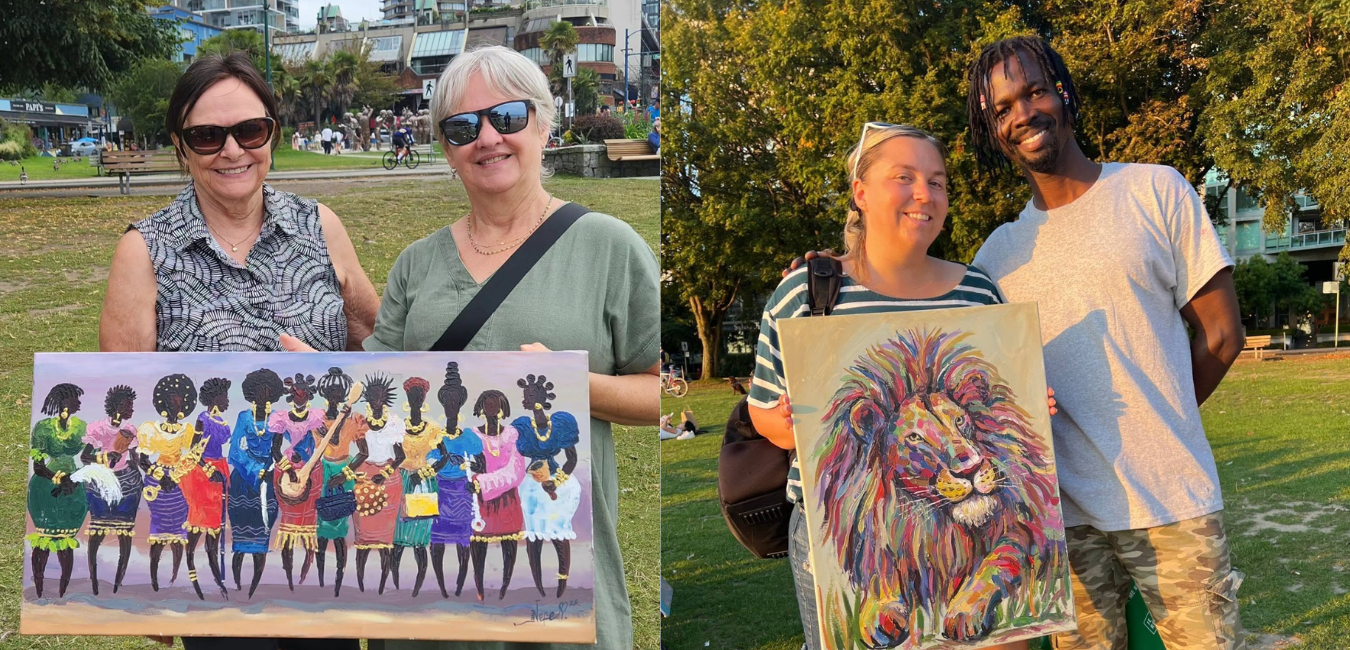
Where did most of these customers come from? Did they meet you at a pop-up or?
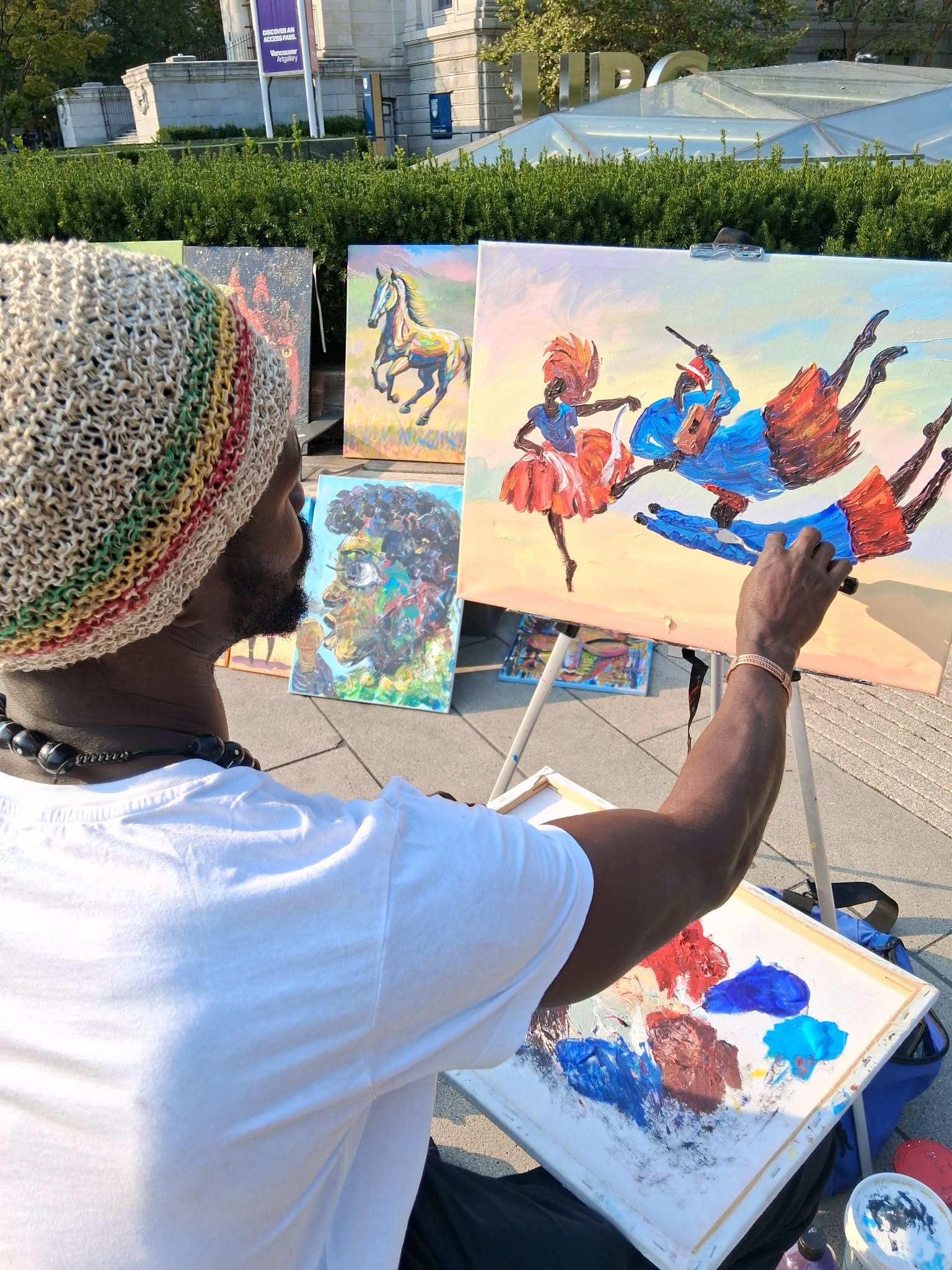
Yeah. In 2024, I did a lot of pop-up exhibitions, and sometimes I just take my art, my canvas and easel to the streets to paint. Then I put some of my art on display. As I paint in the streets, people by will stop and make a purchase. But one of the places where I made a lot of sales was the African Descent Festival in 2024. I made a lot of sales at that festival, and some people bought my painting, went home, reached back out to me, and came to my studio to look for a bigger piece to buy.
How's the journey so far? What is one thing that you're most proud of?
One of the things I can say I'm the most proud of was the Sound Out group exhibition I participated in 2023. It’s themed 'Beyond the Return'. The exhibition was organized at the science centre in Accra Ghana.
Sound Out is a big exhibition, some of the biggest names in Ghana were featured in that exhibition. And towards the end of that exhibition, the then First Lady of Ghana (Mrs Rebecca Naa Akufo-Addo) came to attend the exhibition and she bought one of my paintings, and after buying the painting, I was invited to the Flagstaff House of Ghana. Myself and some other Ghanaian artists that their works are equally purchased by the First Lady. They gave us a tour around the Presidential Villa and I was very proud of myself on that occasion.
Also, my exhibition in Vancouver 2024 was my first international exhibition held in North Africa that I was present. Although I have had a few other international exhibitions, in all those exhibitions I've always sent my paintings over, and they exhibited my art on my behalf. But this time around, I was so proud of being in Vancouver. It’s a big show with over 40000 visitors. I met a lot of people, I asked a thousand questions about my art and culture, the press were there too. It was a fantastic experience.
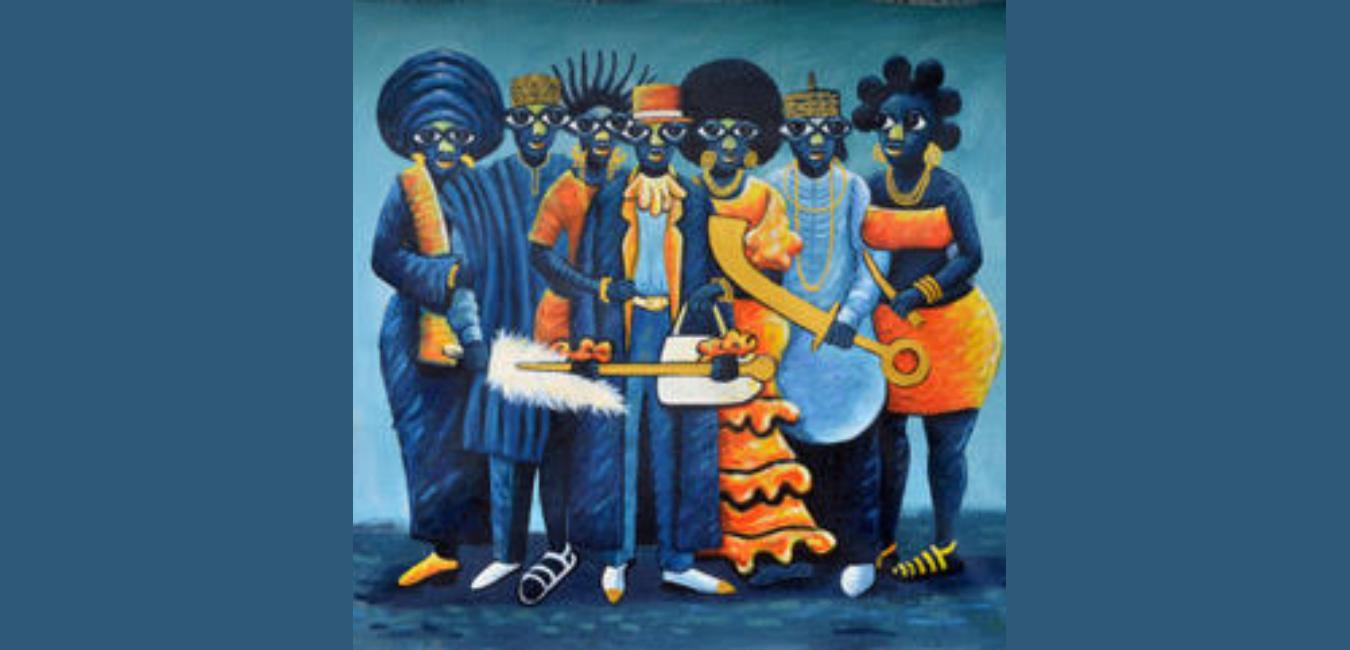
So I've watched people stop in front of your paintings, ask questions, connect with the stories, and even take pieces home. Why do you think people form such a personal connection with your work, and what do you think someone is really taking home when they collect a Nefe Ogodo?
Yeah, that's an interesting one. They are buying a piece of African cultural storytelling, a piece of my personal journey, they are connecting to Africa. They are buying the original piece of a growing artist.
What are you building toward now? If people meet you again five years from today, what do you hope has happened for Nefe Ogodo and Nefe African Art Studio?
Yeah, in the next five years I'm looking at becoming a popular artist, a globally recognized name. I am working towards showing my work in bigger art galleries in the USA, in the Venice Biennale, bigger exhibitions in top art galleries and museums around the world. That is what I look forward to achieving in the next five years.
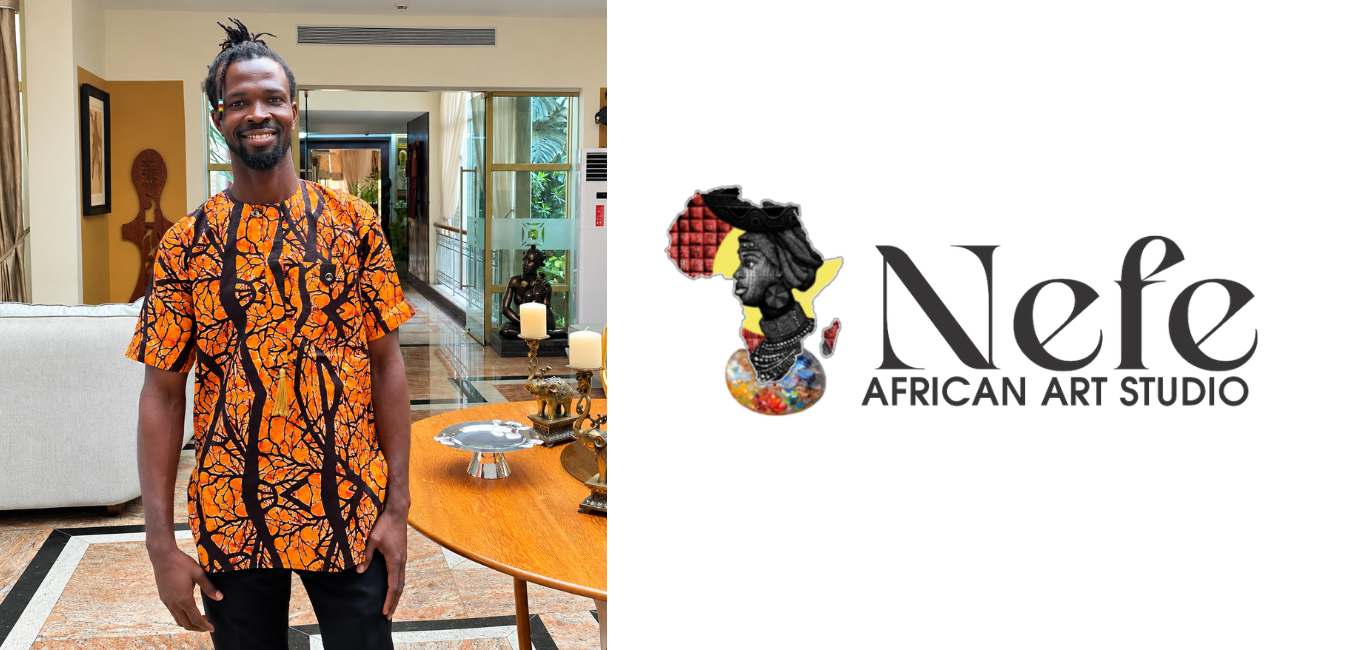
Twenty years from now, someone is standing in front of a Nefe Ogodo painting. They may never have met you, and you're not there to explain it. What do you hope they understand about you, your culture, and themselves? And above all, what do you hope they feel?
Standing before a Nefe Ogodo, I hope they feel: curious, connected, feel the emotion, respect my effort.
Your message for an artist who's starting: what would be your advice for them?
I would advise them to take their practice very seriously. It's not an easy thing at all to be an artist. There are many months that you will be broke as an artist, but don't give up. Keep on practising. Keep on painting. There are days when you'll be short of art supplies. Don't let that stop you. Some of the finest discoveries, or I can say some of my finest masterpieces, are works I did when I was without art supplies. I remember when I was doing my national youth service in Akure, Ondo State, Nigeria, I couldn't find an art supply store. That was in 2011. I couldn't find oil colour. Then I was told I had to go to Lagos if I wanted to get art supplies. So what did I do? I got a pen, and I started using a pen to do some black and white work. And that black-and-white work was so great, so unique, that collectors saw those paintings, and they were like, "Oh, just throw away all your colours and focus on black and white."
I remember there was a period where I couldn't get money to buy art supplies, and I was using fabrics as a medium to paint. So the journey will always be very rough at the beginning. But don't stop, don't give up. Keep on working, keep on pushing, keep on trying, keep on painting. Don't stop painting. With time, everything will fall into place for you as an upcoming artist, and everything will be okay. And again, a lot of upcoming artists want to start selling their art in thousands; it takes time. Don't be in a hurry to want to sell your work in thousands. You have to start with baby steps and grow. You have to build from the bottom to the top and not from the top to the bottom.
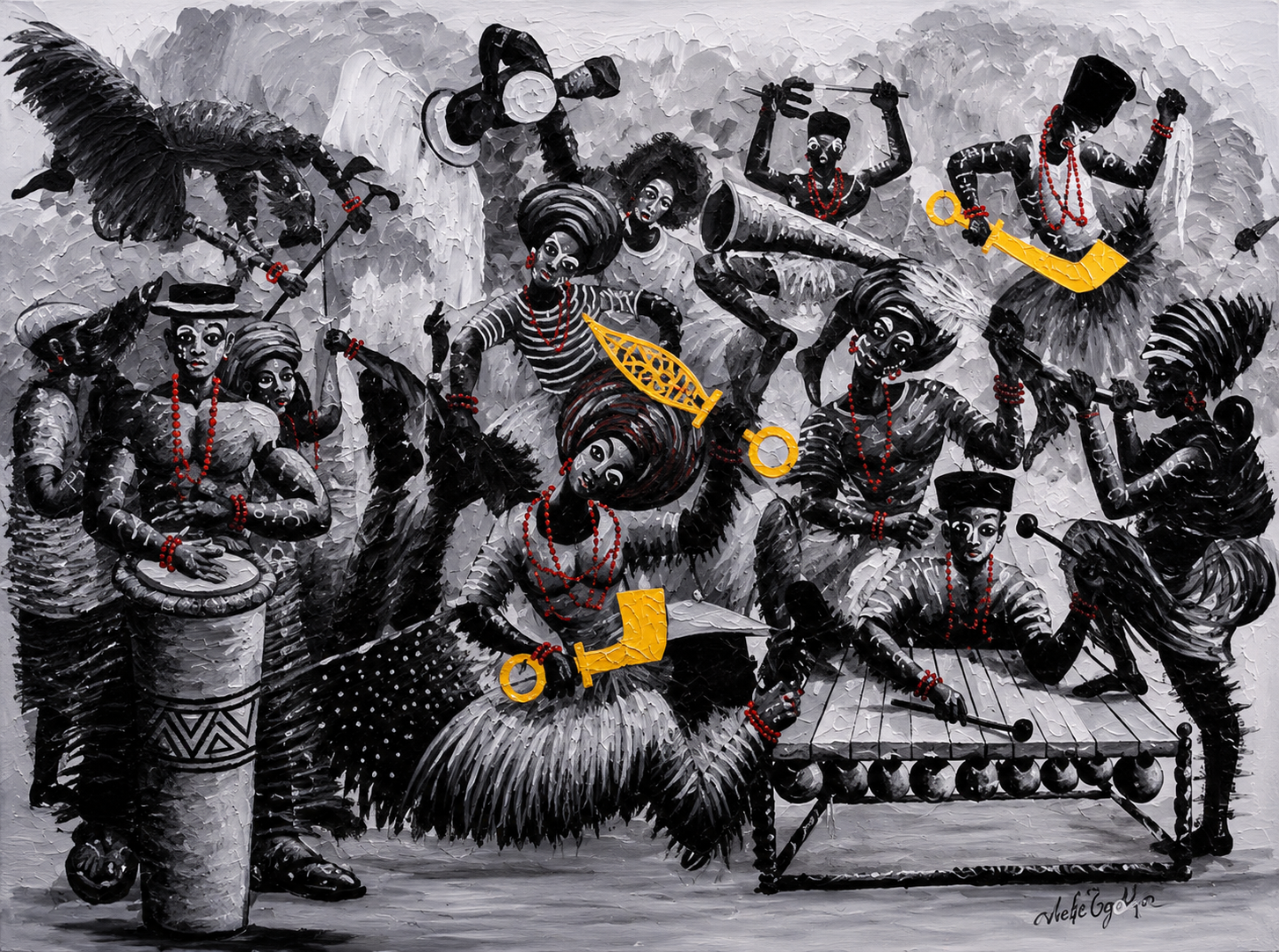
As our conversation draws to a close, one thing becomes unmistakably clear: Nefe Ogodo isn't simply creating paintings; he's creating perspective.
His canvases invite us to slow down, question what we've been taught and embrace a richer understanding of Africa, its people and its stories. Every brushstroke is an act of preservation. Every exhibition is an opportunity to reshape perception. Every conversation sparked by his work becomes part of a larger movement to reclaim narratives that have too often been told by others.
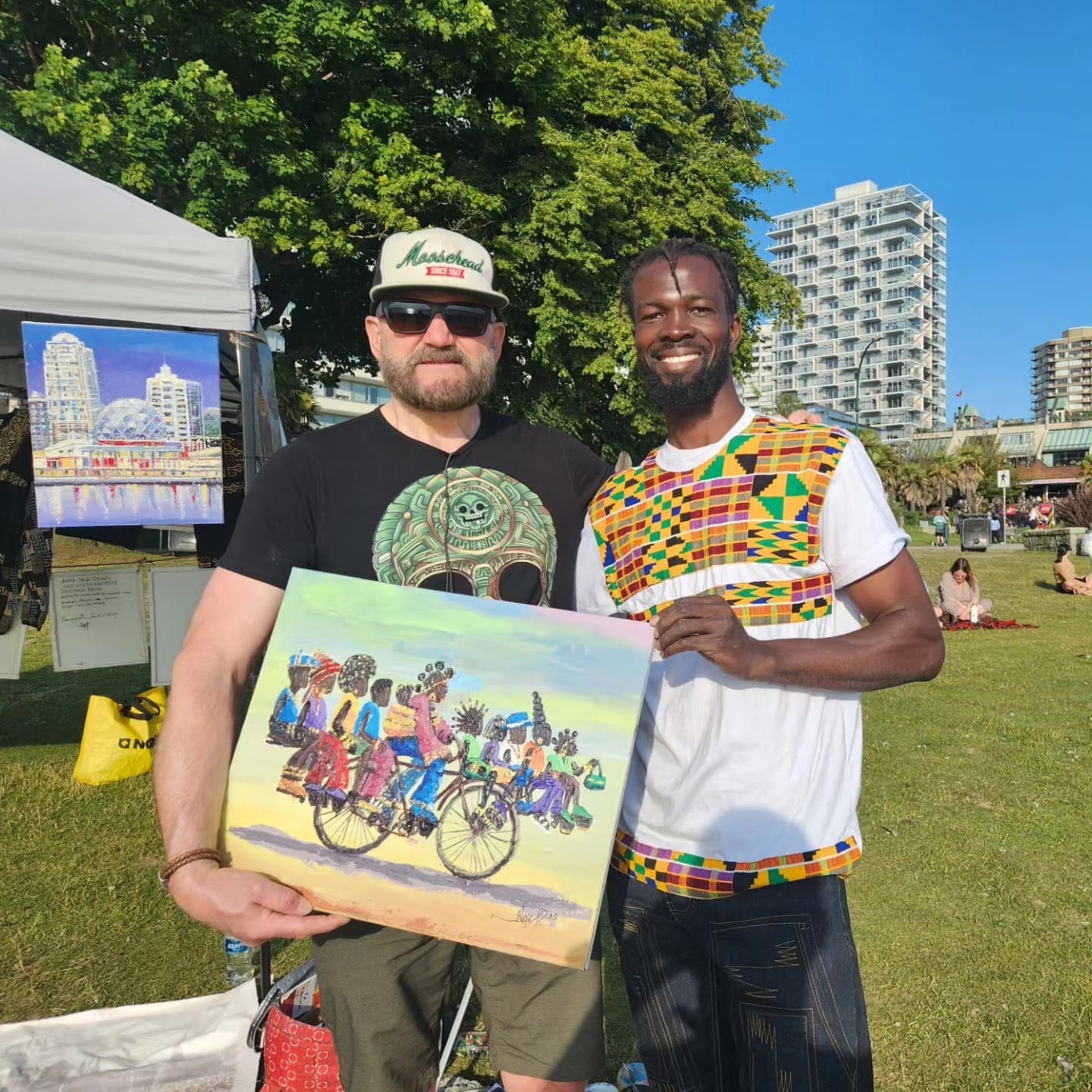
Whether his art hangs in a gallery in Vancouver, a collector's home or one day in museums across the world, his mission remains the same: to ensure that African stories are told with authenticity, dignity and pride.
At IKONIK, we believe the world's most compelling stories are found in people who dare to create differently, think boldly and leave a lasting impact. Nefe Ogodo embodies that spirit.
This is more than an interview.
It's a reminder that art can challenge assumptions, preserve culture and connect humanity one painting at a time.
Discover more visionary founders, creators and changemakers shaping culture, business and innovation around the world at IKONIK.