For decades, the beauty industry has sold women the promise of looking younger, often overlooking one of the most significant biological transitions they will ever experience: menopause. While conversations around hormonal health have grown louder, skincare tailored to the realities of perimenopause and menopause remains surprisingly limited.
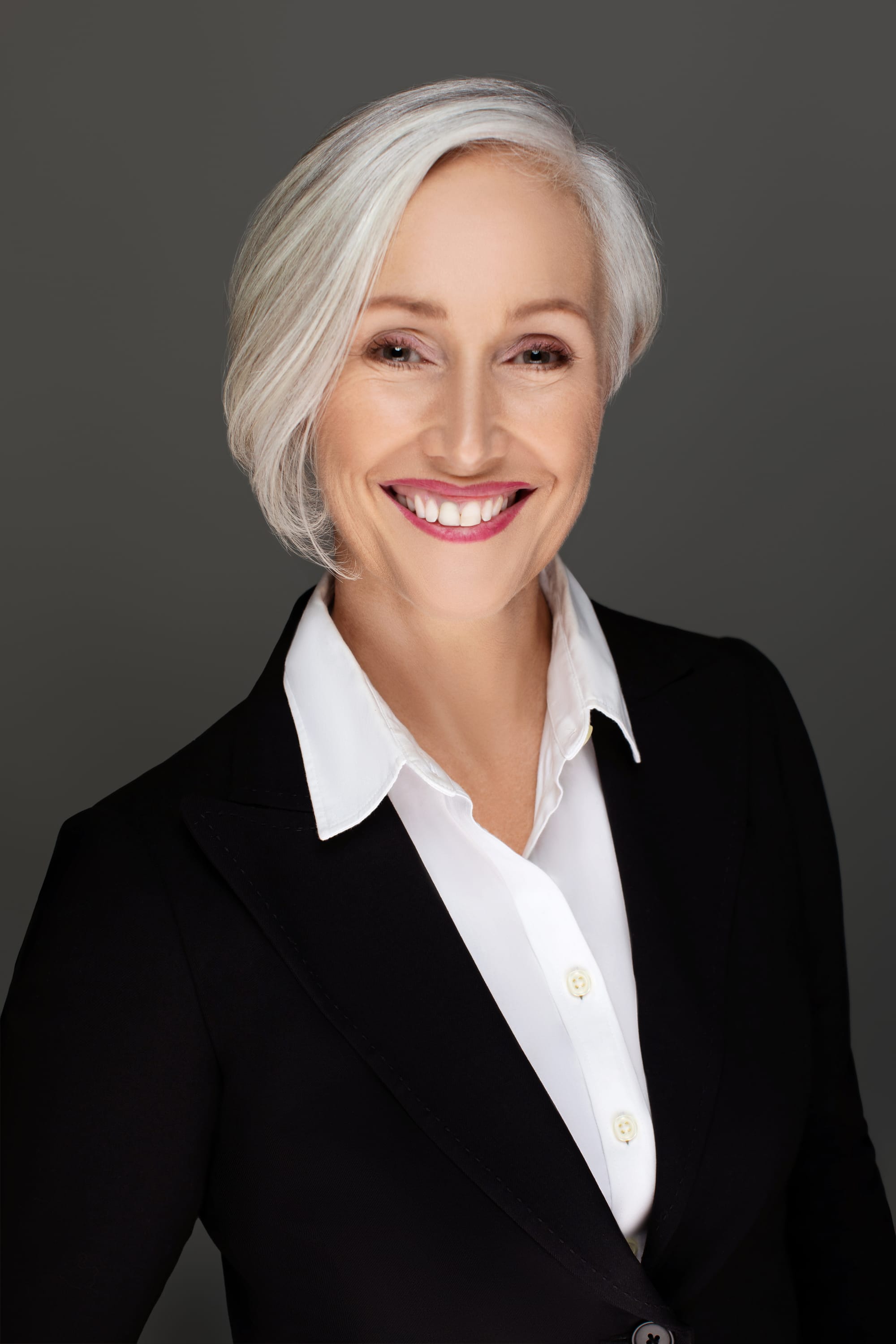
Barbara Marengo knows this gap intimately. After spending years navigating unexplained symptoms, medical dismissal, and dramatic changes to her skin, she transformed her personal journey into purpose. As a menopause coach, cosmetic formulator, and founder of Philogeni, she is challenging outdated beauty narratives with science-led formulations designed to support—not fight—the natural evolution of women's skin.
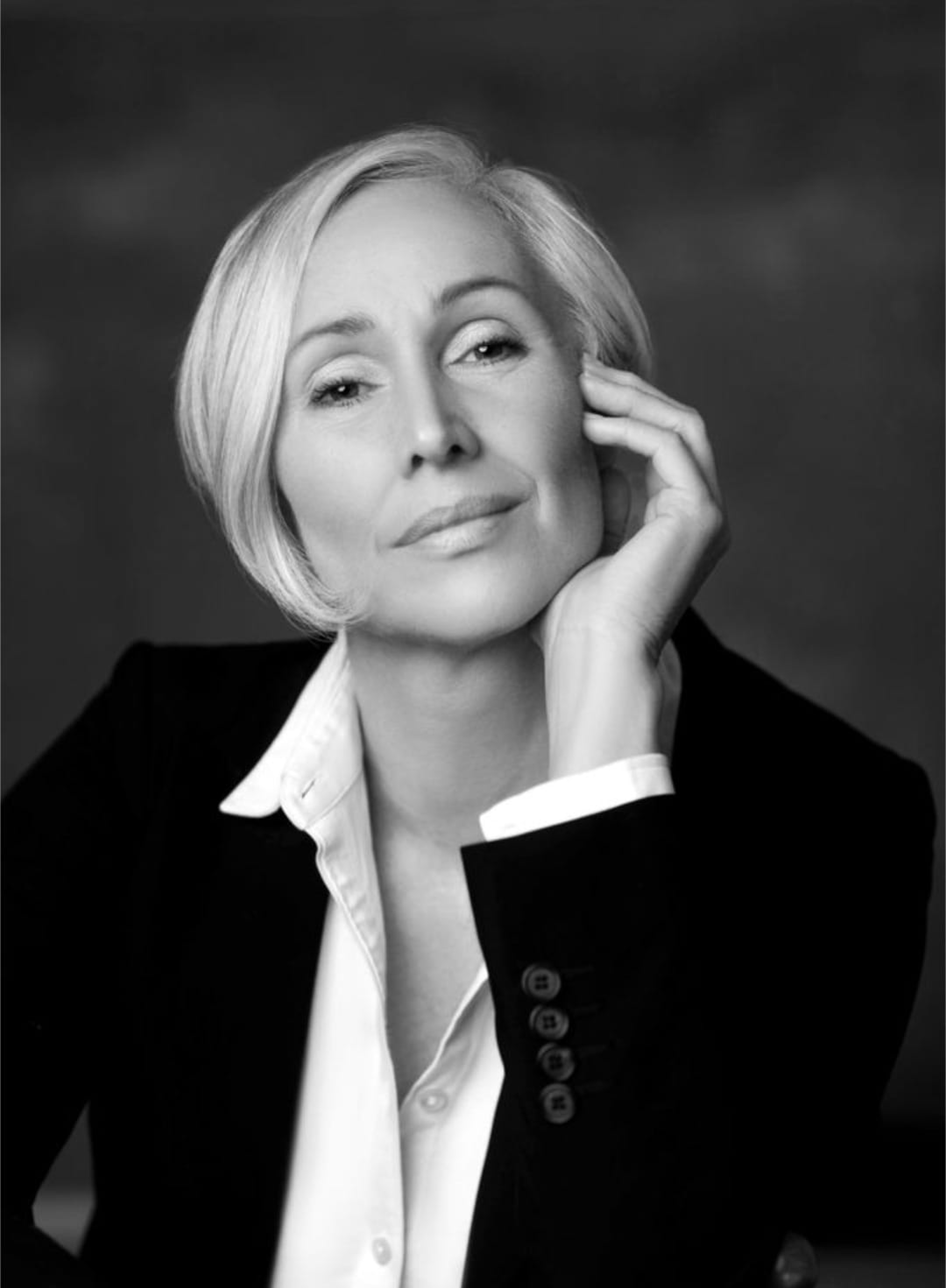
In this exclusive conversation with IKONIK Magazine, Barbara shares how her own experience inspired Philogeni, why collagen loss deserves more attention, and why the future of skincare isn't about anti-aging—it's about intelligent care that works with the body, not against it.
Take us back to the beginning. What was happening in your own life when you first began thinking differently about menopause and skincare, and what ultimately led you to create Philogeni?
I went into early menopause at thirty-six. I had four children under four and a varicose uterus after the twins, we first realized something was wrong when my periods became so heavy I ended up seeing a doctor because of a severe iron deficiency. That led to an ablation, which solved the iron deficiency, but it also meant I stopped having periods altogether. My last period was at thirty-six.
Because of that, I never really knew when I'd actually entered menopause. Doctors define the transition by whether your periods have stopped for at least a year — but mine had stopped for a different reason, so my doctors were reluctant to say I was officially in menopause, and just as reluctant to put me on HRT, because no one knew how long I'd actually been in it.
So it didn't show up for me the way people expect. It showed up as twenty years of symptoms I kept getting fobbed off for: brain fog, fibromyalgia, more than twenty kilograms of weight gain in my late forties that had nothing to do with how I'd lived before, tendinopathy in both knees and my elbows, carpal tunnel and extremely dry, scaly skin all over my body. Every visit, the answer was another pill — Prozac for the anxiety, something for sleep, anti-inflammatories for the pain, antibiotics or cortisone for my skin — never an explanation.
Everything came to a head around the same time: we moved from South Africa to Canada in 2018, and my thirty-year marriage ended. Out of sheer desperation, I started trying to understand what was actually happening in my own body. I found an organization called Girls Gone Strong and trained as a menopause coach — not to help other people, honestly, but selfishly, to understand what was happening to my body and advocate for myself.
In the years that followed, with a lot of lifestyle changes, many of the symptoms started resolving on their own. I don't struggle with fibromyalgia or extreme anxiety the way I did. I changed my diet, lost twenty-two kilos, and eventually — because I learned how to advocate for myself with the medical system — got access to HRT. I'm healthier and happier now than I've been in a long time.
Along the way, I learned that one of estrogen's biggest impacts on the body is on collagen — not just in joints, but in skin. I'd already trained in cosmetic formulation with Formula Botanica, and it became the obvious next step: formulate skincare specifically for the collagen loss women experience in hormone transition.
That's where the name Philogeni comes from — it's a homophone of “phylogeny,” the evolution of a species, and also “philogyny” meaning “for the love of woman.” The brand isn't about anti-aging or looking twenty years younger. It's about becoming a stronger, healthier version of yourself — without the gaslighting the cosmetic industry has built its business on.
Many women reach perimenopause or menopause and suddenly feel as though skin they've understood for years is behaving completely differently.
Our evolution is a transition. Having said that, the clinical data is clear: from our early twenties, we start losing collagen at a rate of about one percent per year. Once a woman enters menopause, that decline accelerates dramatically — she loses up to thirty percent of her collagen in the first five years after menopause alone. It isn't based on lifestyle, diet, or ethnicity. It's a well-documented clinical fact that every woman fortunate enough to go through menopause will experience this same collagen loss. From there, the decline continues at roughly two percent per year.
So the reason so many women reach perimenopause and menopause feeling like the skin they've understood for years is behaving completely differently is because it is behaving completely differently. The chemistry in your body isn't operating the way it used to. We're only recently coming to understand how much estrogen affects cellular function in every organ in the body — and skin is our largest organ, and the one everyone sees. When you look in the mirror at fifty-five and wonder what happened to the plumpness and structure in your skin, that's the collagen that's no longer there.
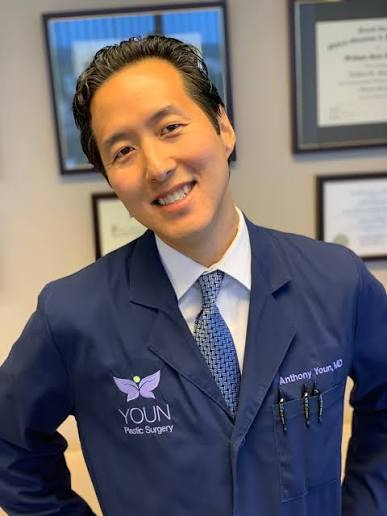
Dr. Anthony Youn describes it well: like the logs of a log cabin. When you're younger, those logs are tightly packed, firm and plump. As estrogen declines and collagen drops, those logs fray and become less robust — and so does your skin. It becomes less resilient, thinner, more reactive to environmental factors, and more sensitive.
Through your conversations and work with women, what recurring skin concerns, frustrations or questions have you encountered during perimenopause and menopause?
There are really three things I hear about most, and I've come to think of them as sensitivity, extreme dryness, and efficacy.
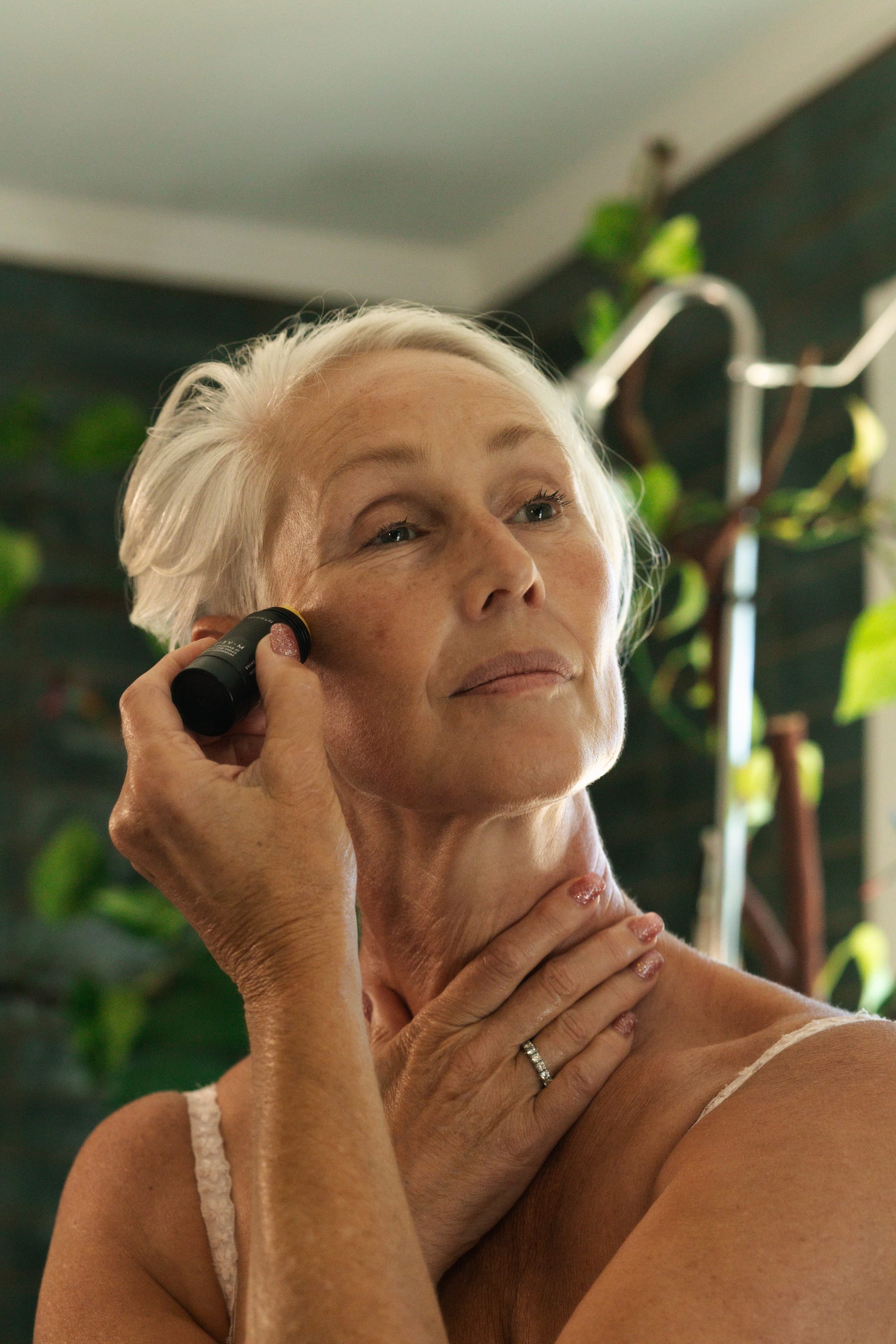
Sensitivity: skincare that was perfectly well tolerated for years suddenly stops working — not because it's become less effective, but because it now causes redness, reactions, breakouts. For a lot of women that shows up as actual skin conditions, rosacea and perioral dermatitis among them, which I've dealt with myself. Skin that's losing estrogen loses some of its own ability to regulate inflammation and repair its barrier, so it becomes reactive to things it handled easily before.
Extreme dryness: so many women go through moisturizer by the tub, and no matter how much they apply, it's never enough. Once collagen breaks down, skin loses the structure to hold onto moisture — I think of collagen as the mortar between the bricks in a wall, and when that mortar crumbles, moisture isn't retained, it evaporates. There's also what I call the lipid gap: skin at this stage doesn't need more water, it needs more oil, to repair the barrier and actually hold on to the moisture you're applying.
Efficacy: this is really the crux of it. As estrogen declines, skin loses its own ability to keep making a lot of what once kept it resilient — not just collagen and elastin, but its own hyaluronic acid, its ceramides, and antioxidants like CoQ10 that it produced on its own. So simply adding more hyaluronic acid isn't the answer, because water was never really the deficit — the deficit is in everything else skin can no longer maintain unassisted. That's really the thinking behind everything I formulate: vitamin C and vitamin E for antioxidant support, ubiquinol to replace what's being lost, niacinamide to rebuild the barrier and calm reactive skin, panthenol to soothe and lock in moisture, peptides to signal collagen and elastin production, and beta glucans — which I source from a blend of mushrooms, reishi, chaga, cordyceps and maitake — because they're both deeply barrier-supportive and calming for reactive skin. I use bakuchiol instead of retinol, because it gives the same cell-renewal benefit without the irritation retinol causes on already-sensitized skin. And tremella mushroom, sometimes called the “beauty mushroom,” because it binds moisture the way hyaluronic acid does, but from a source sensitive, menopausal skin actually tolerates.
Philogeni describes its approach as Bio-Intelligent Skincare. What does that mean to you?
Bio-Intelligent Skincare means formulating specifically to replace what your skin has lost. Science is the backdrop to everything at Philogeni, and there's a form-follows-function narrative running through it — nothing in a Philogeni formula is there without doing something very specific. At the same time, everything works synergistically, both with the other ingredients and with the skin itself. It's biomimetic skincare that actively works to simulate the skin's own natural makeup and processes, and replace what's been lost.
This isn't the same as clean or natural skincare for its own sake. An ingredient earns its place in a Philogeni formula because it mimics or restores something the skin itself would still be doing if estrogen hadn't declined — not because it's trendy or plant-derived. That's the difference between biomimetic and simply “natural.”
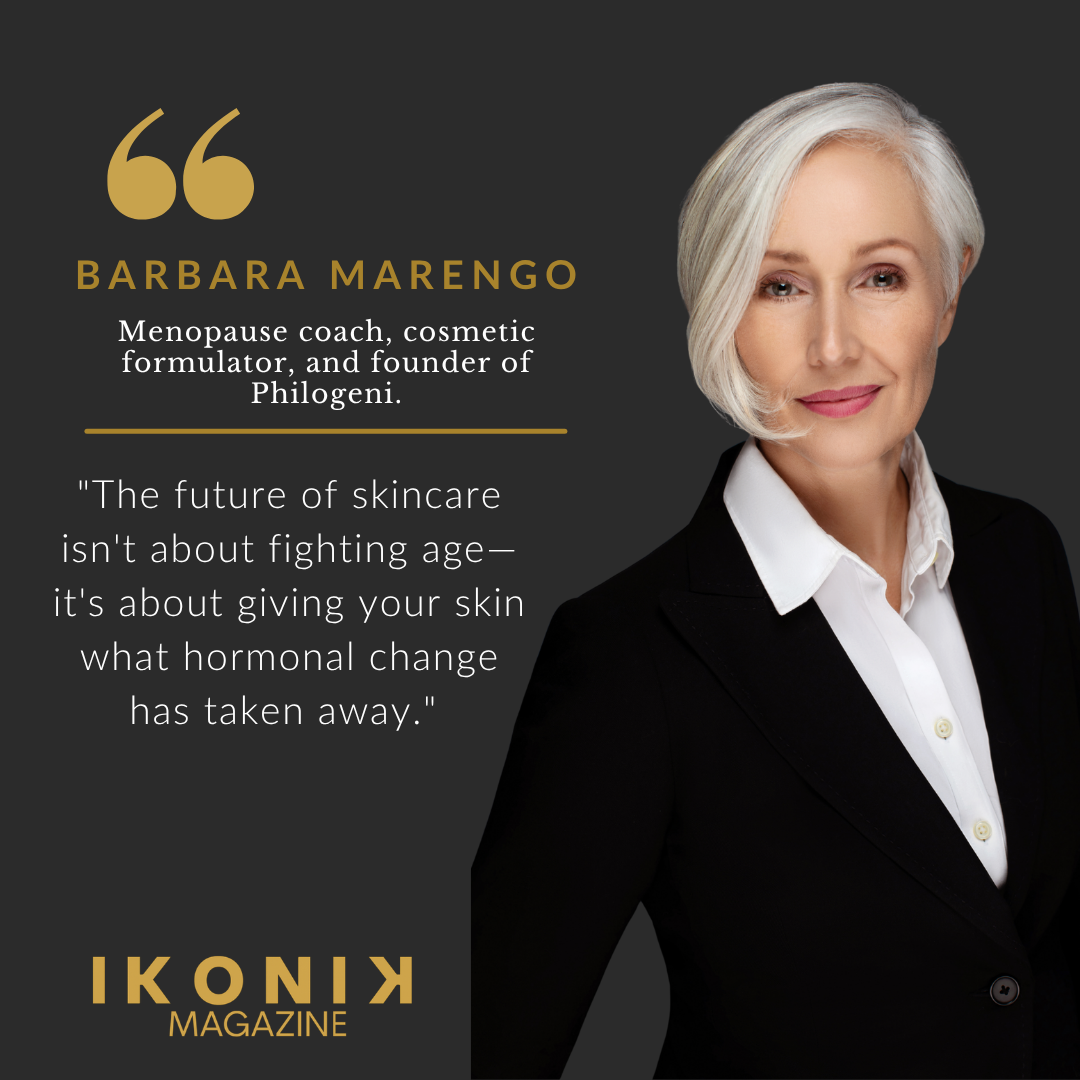
It's also why Philogeni never talks about anti-aging. Bio-Intelligent Skincare isn't fighting or reversing what the body is doing — it's working with it, replacing specifically what hormonal change has taken away, so skin can keep functioning the way it's biologically meant to at this stage of life.
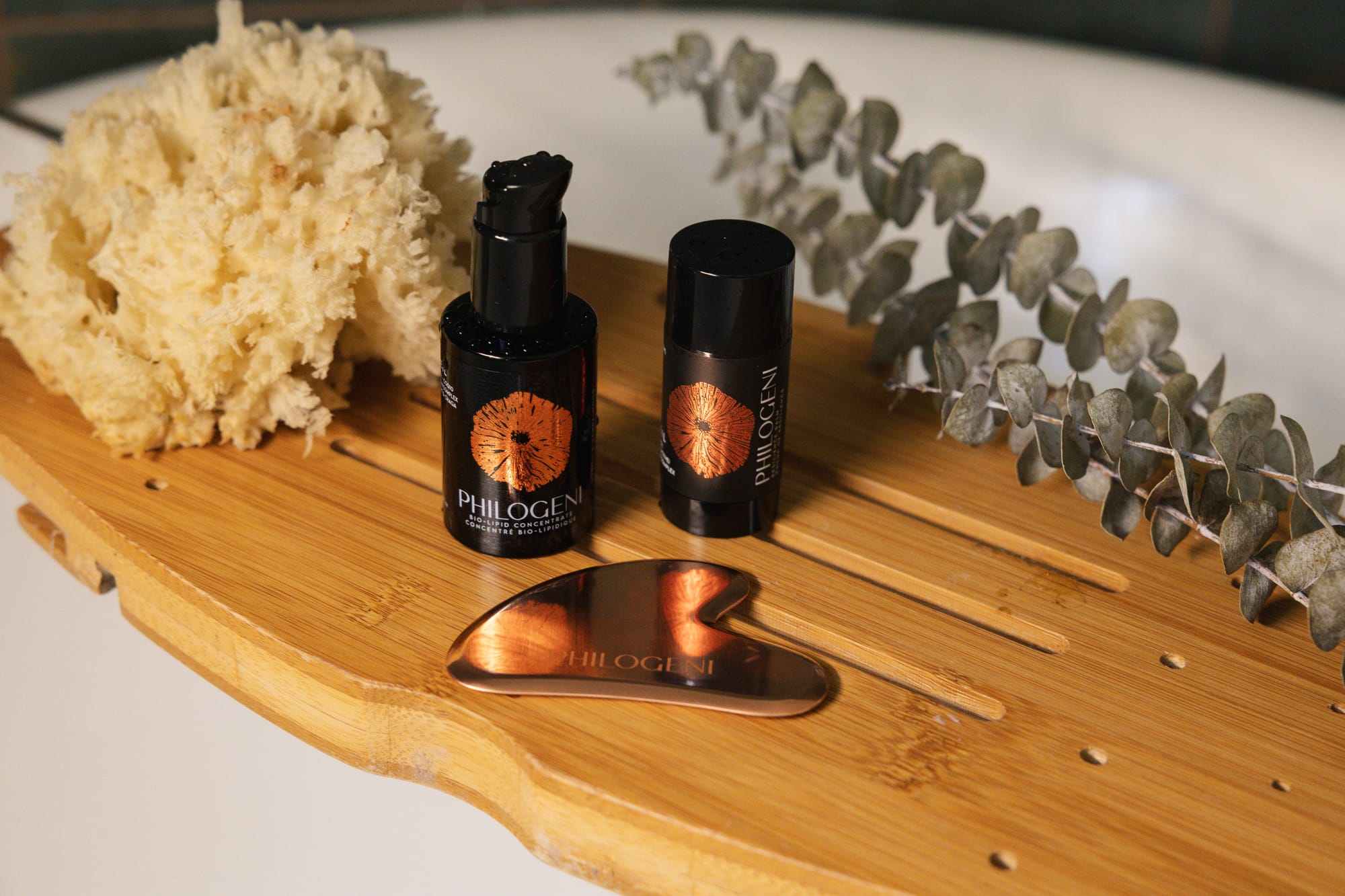
A good example of what that looks like in practice is Philogeni's core regimen: the serum and balm share one active stack, delivered through two vehicles — anhydrous for the day, occlusive for overnight — because skin needs different things depending on when and how a product is worn. That's one expression of form following function. As the Philogeni line grows to include a cleanser, a moisturizer and a mask, each of those will follow the same principle in its own way, built around what that specific step in a routine is actually meant to do.
Your approach to formulation brings together ingredients such as biomimetic lipids, adaptogenic mushrooms, botanicals and nutrient-rich plant oils.
The categories matter because each one solves a different piece of what changing skin needs, and none of them work in isolation — that's really the Bio-Intelligent philosophy in action.
Biomimetic lipids are the foundation. One of the biggest losses in menopausal skin is its own ability to hold onto moisture — not because it needs more water, but because the barrier itself, the ceramides and lipids that once kept it intact, are declining. I choose lipids specifically for how closely they mimic what skin already makes for itself, so skin recognizes them and can actually use them to rebuild its barrier, rather than just sitting on the surface.
Adaptogenic mushrooms do two things at once. The beta glucans in Philogeni's mushroom complex — reishi, chaga, cordyceps and maitake — are deeply calming and barrier-supportive, which matters enormously for skin that's become reactive and sensitized. And adaptogens more broadly are about resilience: helping the body, and the skin, respond better to stress rather than just tolerating it. That resilience piece is central to how I think about this whole transition — it's not about stopping change, it's about giving skin what it needs to adapt well. Tremella, Philogeni's “beauty mushroom,” plays a slightly different role: it binds moisture the way hyaluronic acid does, but from a source that sensitive, menopausal skin actually tolerates.
Botanicals like bakuchiol do the work retinol would traditionally do — encouraging cell renewal and collagen support — without the irritation that retinol so often causes on skin that's already more reactive than it used to be. That's the trade I'm always making: real efficacy, without asking already-compromised skin to handle more than it can.
And the plant oils are the nutrient-rich vehicle for all of it — rich in the fatty acids skin needs to actually absorb and use these actives, chosen the same way as everything else: for how well they mimic what skin's own oils used to do.
None of these ingredients is chosen for a trend or a marketing story. Each one earns its place because it replaces something specific that hormonal decline has taken away, and because it works with the others, not against them, to do it.
With more skincare products now being marketed toward mature and menopausal women, it can be difficult for customers to know what actually matters.
It's absolutely harder for customers to know what matters. There's so much greenwashing, so much marketing misinformation. You have brands created by hobby crafters — well-intentioned, but making wild claims about what their products can do that simply aren't backed by science. There's no efficacy behind them, and that's genuinely unfortunate for the customers trusting them.
What actually matters, in my view, is looking for products backed by science: ingredients that are well understood, ethically and sustainably sourced, and well documented for their efficacy. If a product itself hasn't been clinically tested, at minimum the ingredients in it should be — clinically trialed, sourced from reputable suppliers, and backed by proper safety data sheets.
I think a lot of this comes down to decades of cosmetic and fashion marketing telling us we're not good enough, that we just need to use X, Y or Z product to somehow become good enough. I remember L'Oréal's old byline, “Because you're worth it” — which, if you think about it, implies that some of us are worth it, and by extension, some of us aren't. The cosmetic industry needs to come clean about that. And this isn't only the big cosmetic houses that have profited from women's insecurities for decades — it's also plenty of small, well-intentioned producers out there selling what amounts to snake oil.
There is also an emotional side to changing skin that isn't always discussed.
There is also an emotional side to changing skin that isn't always discussed. Part of it is about the skin itself, and part of it is about identity — the way our sense of who we are gets challenged by a shift this dramatic. So many women going through midlife are watching kids leave home, or going through divorce, at the same time their bodies are changing. It's striking: divorce rates climb sharply during this window of life. No single study says menopause causes divorce, but the timing is impossible to ignore — the hormonal shifts of this transition can lower our tolerance for pushing through things we used to just absorb.
I also think our tolerance for nonsense drops away when we go through menopause, and that's something that doesn't get talked about enough. Then there's the fact that hormonal changes during menopause have a real, documented impact on women who are ADHD, diagnosed or not. Estrogen affects dopamine regulation, and as it declines, symptoms women have compensated for their whole lives can suddenly become impossible to manage. Women with ADHD are already massively underserved and underdiagnosed, and menopause makes that gap even more consequential. Add in the sleep disruption so many of us experience during this transition, and the toll a lack of sleep takes on emotional regulation, and you start to see how much is actually happening beneath the surface.
This is a massive shift in identity. Our entire lives, and the traditional notion of womanhood tied to our role within the family, shift with it. I think we need to change the narrative — to celebrate moving into this new stage rather than mourning what's behind us, while also being genuinely kind to ourselves through it. There's an inner wisdom that comes with going through menopause, and I think it deserves to be embraced and celebrated, not hidden.
It's also worth naming that menopause isn't only something that happens through aging. Many women go into surgical menopause as the result of a cancer diagnosis, which carries its own additional layer of emotional weight that deserves its own conversation entirely.
What all of this comes back to is this: your skin is what's without — it's what people see, it's what you see every time you look in the mirror. But your emotions, your feelings, are what's within. And I think those two are far more closely linked than we tend to give credit for.
Rather than simply offering individual products, you're building Philogeni around a more guided philosophy for caring for changing skin.
When you consider how much overwhelm so many women are facing during this period of their lives, the idea of less is more becomes really important. There's a concept in skincare called skinimalism, which is really about simplifying our routines — and Philogeni has taken that on board in the way we guide our customers to care for themselves and their skin. It isn't about one product, or two, or three. It's about doing as much as you need, without adding anything extra. For some women, that might mean one or two products. For others, with different needs, it might mean five or six.
What matters is that your skincare routine becomes a ritual of self-love — a moment, at least twice a day, where you can actually look in the mirror, care for yourself, and love the skin in front of you. Finding a routine that works for you is what's important, because there's no one-size-fits-all. That means being educated enough to understand what's on the label, what's actually in the products you're buying, and choosing wisely.
You have the wisdom of a sage. You've been around for half a century. Let's celebrate that, and put that wisdom to work for our best.
You bring together an unusual combination of experience as a menopause coach, cosmetic formulator and founder.
Yes, I bring an unusual combination of experience as a menopause coach, cosmetic formulator, and founder. I feel privileged to have lived an interesting life — I've lived across three continents, I have four beautiful adult children, and I have an absolute love for nature and animals. All of that together lets me see the world as a daily celebration, genuinely excited about what tomorrow brings.
I faced full-blown menopause at fifty, and started Philogeni at fifty-five. Formulating a skincare range at this stage of my life isn't something I expected to do, and I'm hugely excited by it. What a blessing, to start again — not just for myself, but to build something that benefits every woman going through this same transition. Philogeni means a celebration of our evolution, and for me personally, it's a celebration of my own evolution — not just the evolution of my skin.
Looking ahead, what do you want Philogeni, and Barbara Marengo, to become known for?
I've always been a passionate advocate for being the change you want to see in the world, and the idea that Philogeni could be a beacon of that change genuinely excites me. I want to make a difference — not just for women, but for the world. I want to be someone my children respect and look up to.
I want to become known for beautiful formulations rooted in science, but never afraid of change — using ingredients that challenge boundaries, like mushrooms, not for the sake of novelty, but to do things better. Using tremella instead of hyaluronic acid. Using bakuchiol instead of retinol. Because while the science tells us what our skin needs replenished, I believe we can deliver it better, using the power of nature.
What do I want to become known for? A force of change.
Is there anything about menopause, changing skin, your journey as a founder, formulation, or the future of Philogeni that you feel is important but that we haven't asked?
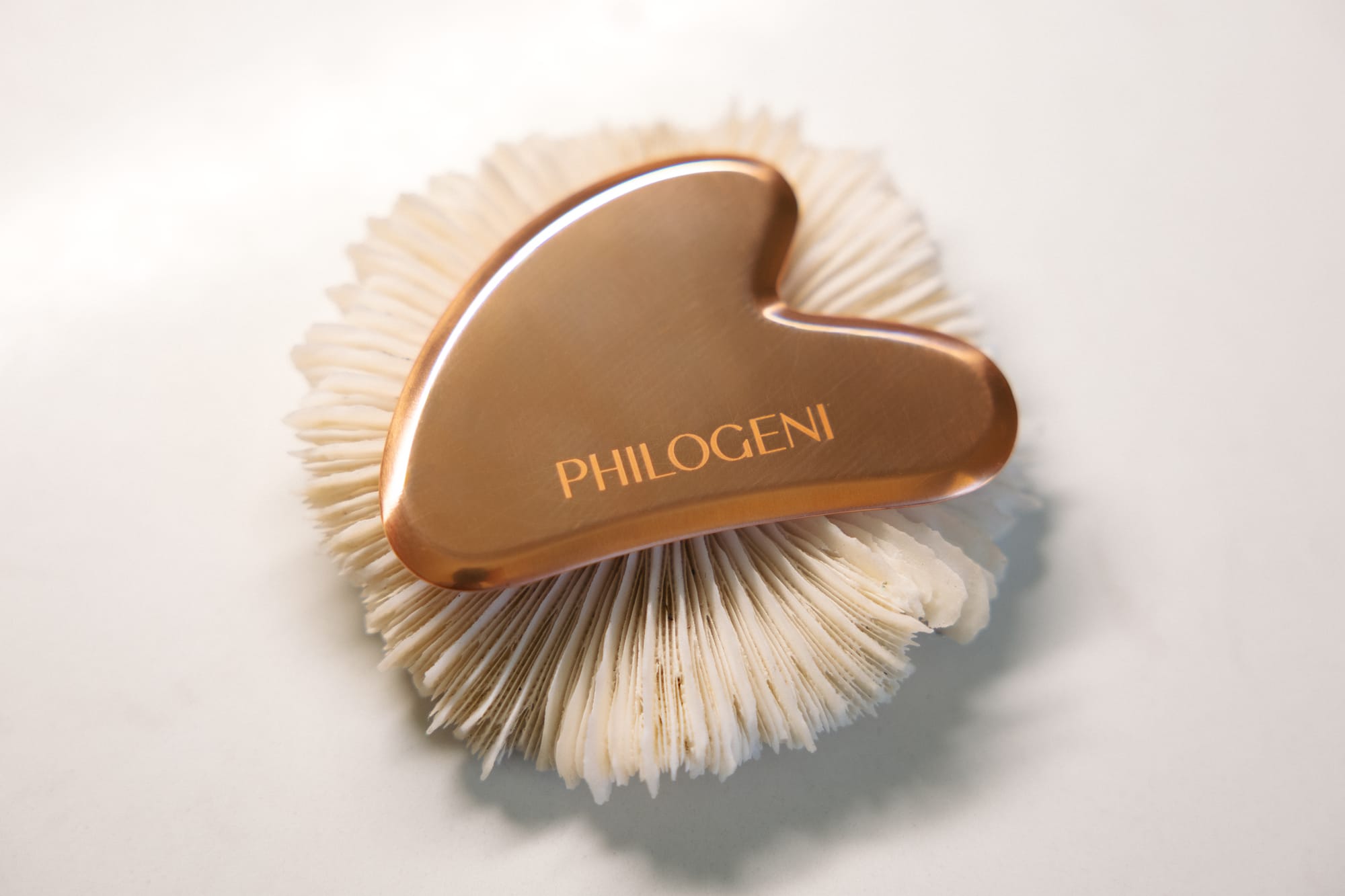
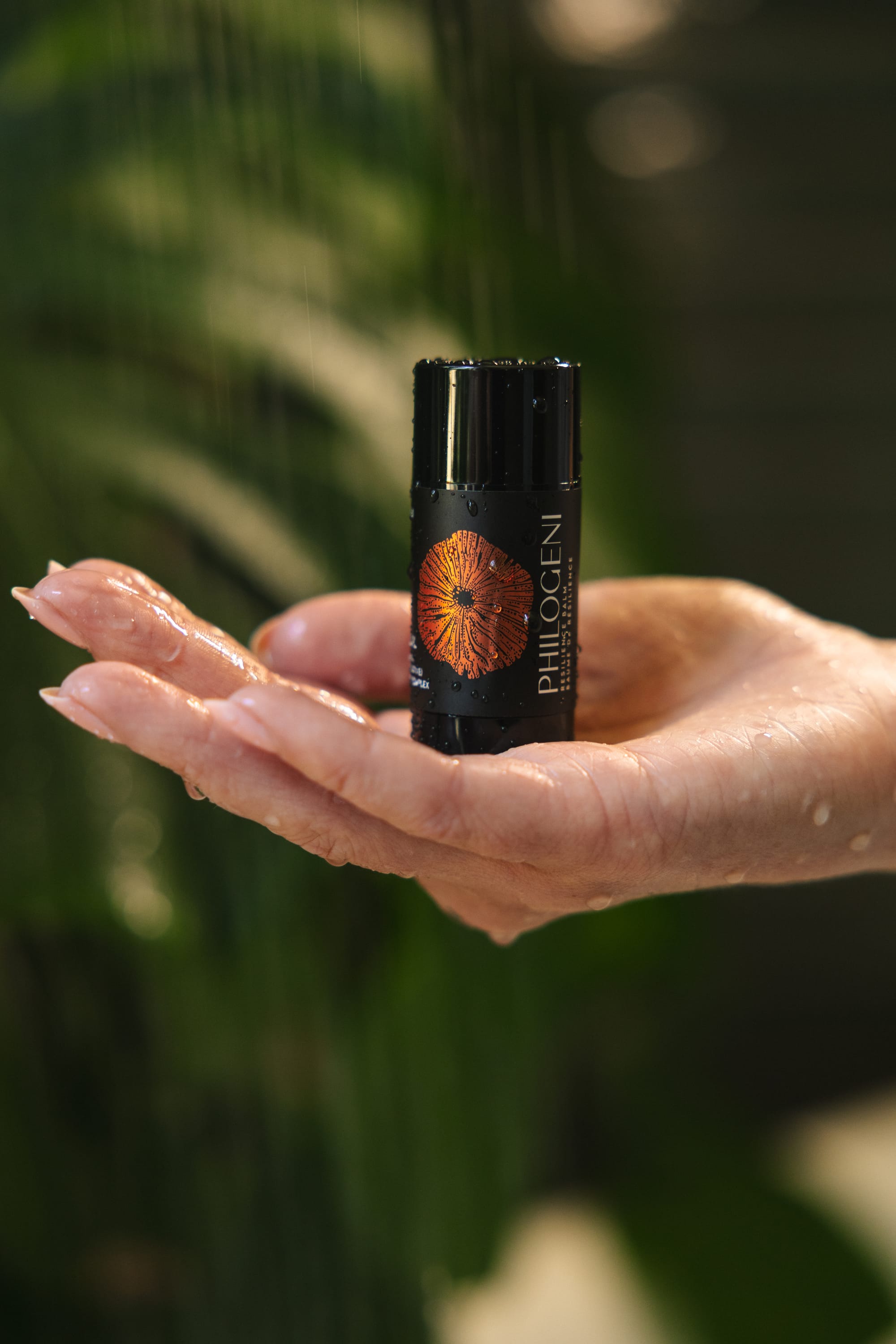
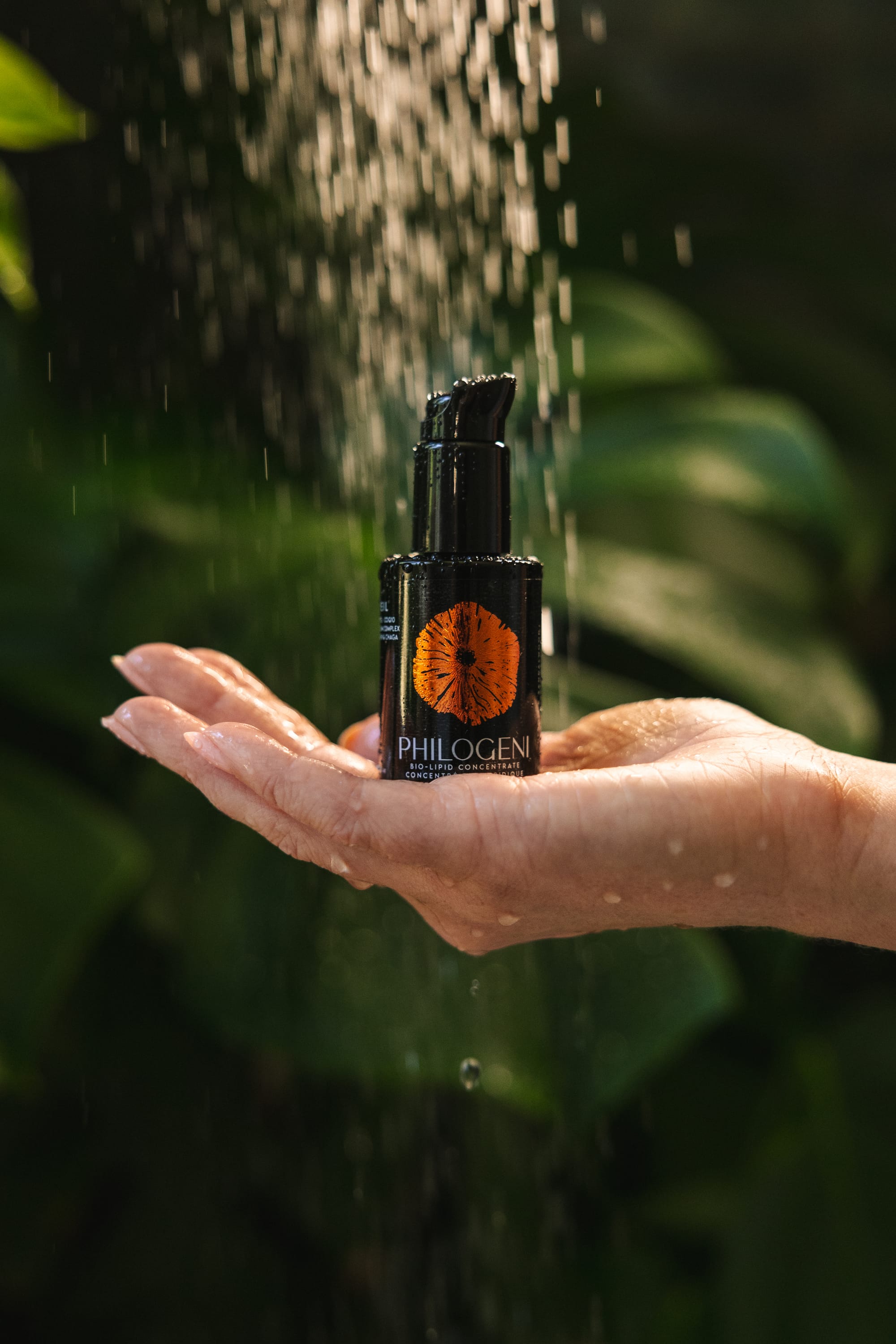
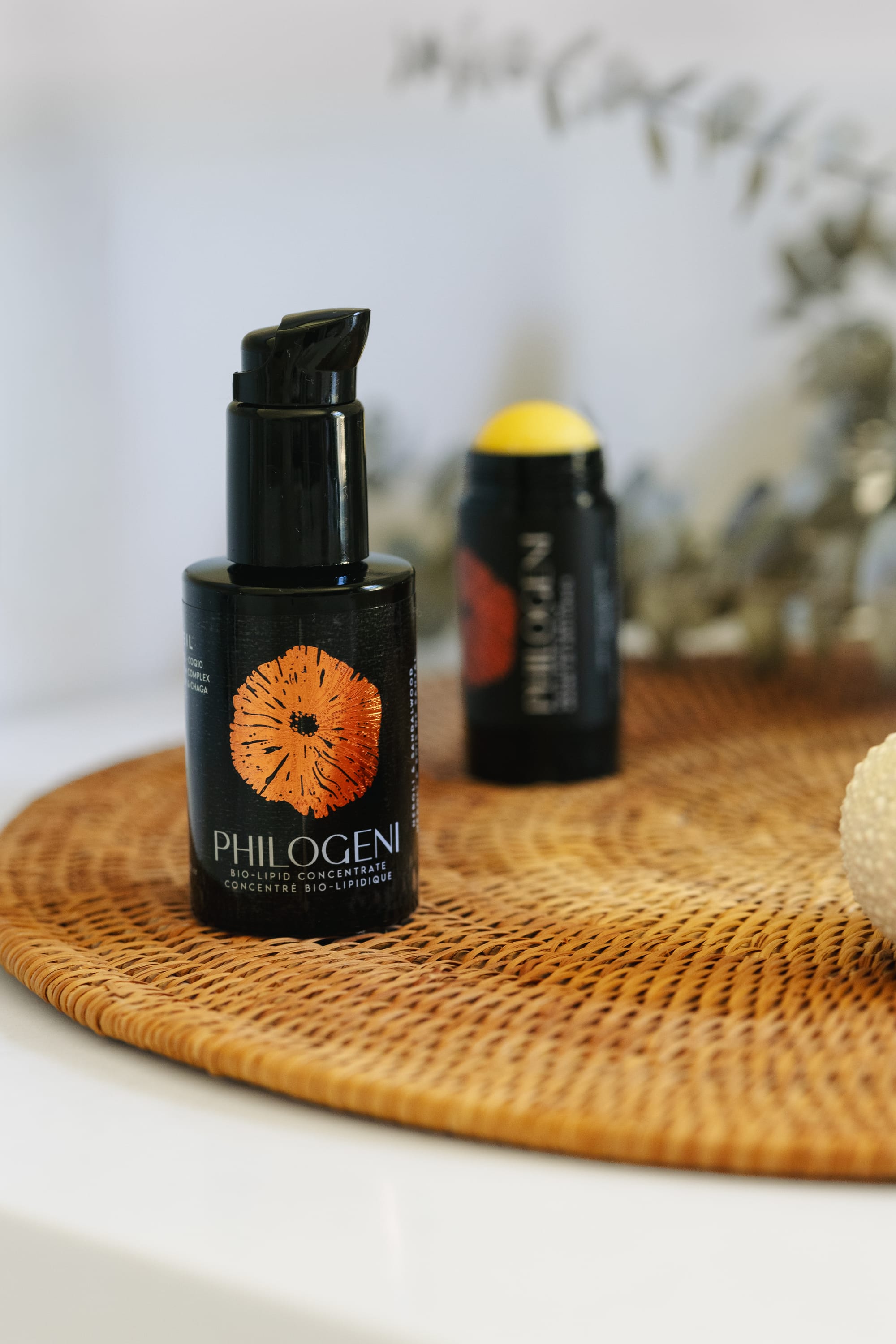
I'd like to share the deeper meaning behind how our brand values are reflected in our packaging. What you see on the outside needs to be a genuine reflection of what you can expect on the inside — so for us, packaging is just as important as the product itself. It's part of the message we're conveying, not decoration on top of it.
It's black and white with copper foil — simple and iconic, but each element is deliberate. The black and white represents where we're not negotiable: on our values, our principles, on caring for people, on putting people and planet first, and on the philosophy behind our products, which is about celebrating the evolution of women.
Copper carries its own meaning. It's one of the most conductive materials mined on earth, antibacterial, and valued in Ayurvedic tradition for centuries as Tamra — believed to support balance and vitality when water is stored overnight in a copper vessel, a practice called Tamra Jal. Modern research has also confirmed copper's antimicrobial properties on surfaces. For me, copper is the perfect symbol for what we're doing: moving information, moving women, from one stage into the next, in a way that's simple, effective, clean, and caring.
And then there's the spore print — the illustration of a mushroom, inspired by one I actually found growing in my own garden. I didn't know what it was, so I researched it, and identified it as a species of Psilocybe. I want to be completely clear: there is no psilocybin, and no magic mushroom compounds of any kind, in our formulas. We use only mushrooms that are well-researched and proven beneficial for skin science. But finding that mushroom, and learning what it was, stayed with me — it felt like the perfect symbol for transformation, for the magic in our own evolution. Mushrooms are also, biologically, more closely related to animals than to plants, which I think ties beautifully into the idea of adaptogens and resilience — the same resilience our bodies have carried through millions of years of biological evolution.
Barbara Marengo's story is more than the launch of another skincare brand—it is a reminder that innovation often begins with listening to experiences that have long been ignored. Through Philogeni, she is helping redefine what beauty looks like during one of the most transformative stages of a woman's life.
Rather than promising impossible youth, Philogeni embraces science, education, and self-compassion, encouraging women to see menopause not as something to conceal, but as an evolution worth celebrating. As conversations around women's health continue to grow, Barbara's work stands as a powerful example of how purpose-driven entrepreneurship can challenge industry norms while creating meaningful solutions for real people.