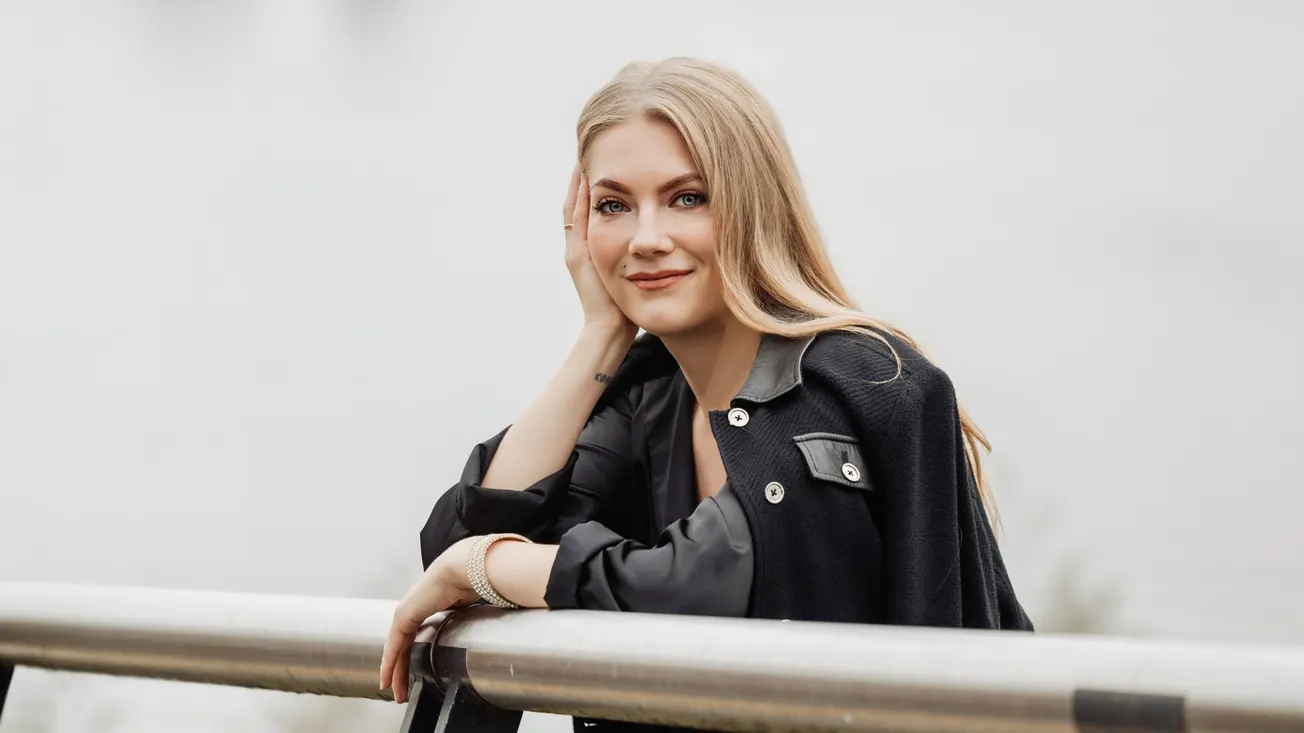
What if the woman now teaching leaders how to communicate better was once told she would never speak again?
That’s Kimberley Karstunen’s story. After losing her hearing as a child and facing a prognosis that shattered her voice, she didn’t give up — she built something stronger. Today, she is the founder of TAKKLE, where she helps organizations transform workplace culture through authentic communication and human connection.
In a time of burnout and disengagement, Kimberley reveals a simple truth: real performance isn’t driven by policies or benefits — it’s built on people. Through her own journey of resilience, she shows why the future of business depends on leaders brave enough to reconnect with themselves and their teams.
For those discovering you for the first time, can you tell us about TAKKLE and the mission behind what you're building?
Without people- what do we have?
At TAKKLE we believe what we experience at work doesn’t stay at work. It follows us into our family, friendship, and community lives. That is why our impact focuses on workplaces- because when we support people in the environments where they spend so much of their lives, the ripple effect reaches far beyond one organization.
People are the backbone to every economy, community, and relationship. Yet too often are treated as a number to manage, rather than someone to deeply understand.
TAKKLE exists to flip that script. Our mission is simple: bring people back to themselves, so they can better show up for each other.
Your story begins with being told you will never verbally communicate again after losing your hearing at a young age. How did that experience shape the person, leader, and founder you are today?
I learned from a young age that just because you're handed a script doesn’t mean it’s your story to live- you can rewrite it.
Being told I would never verbally communicate again could have set my life on entirely different tracks if I had listened. Instead, choosing the “impossible” path trained me. It taught me persistence, consistency, and will- that sometimes you trip, face-plant, and run into the same hurdle over and over again until one day, you realize you have built the strength to clear it.
This developed my non-verbal communication skills by paying attention to body language, energy, emotion, and what was left unsaid.
That is the lens I bring into leadership today: it is not about “me.” It is about “us”- seeing people clearly, understanding what they carry, and helping elevate those around us.

You often say, "People quit people, not companies." What does that phrase mean to you, and why do you believe it resonates so deeply with employees and leaders alike?
That phrase came from boiling down hundreds of conversations to the same core complaint: people.
Whether it was employees venting about micro-managing leaders, or leaders of disengaged employees- industries from tech to entertainment were frustrated over the same issue- behavior.
After the 200th conversation, I remember thinking “why are we complicating this?”
If people are complaining about people, we have to go within the people. That means teaching self-awareness, personal development, and communication- not continuously reaching outside of them with another perk, policy, or wellness retreat. Those things can be beautiful, but without addressing behavior, they become band-aids.
After interviewing more than 300 employees, what patterns have you consistently observed about why people disengage or leave organizations?
When I set up on the Vancouver seawall and interviewed everyone from seniors to teenagers, janitorial staff to executives, the thing that made people smile most, or spill their frustrations and fears- was human behavior.
I know I may sound like a broken record at this point, but that is because it really is that simple: your people are your backbone. Not your payroll, another number, or something to manage and move on from.
A happy and engaged team leads to more creativity, stronger communication, better KPIs, and a healthier ROI. One bad apple can spoil the whole batch, but does that mean we cannot try to heal the apple? No. We can try.
At TAKKLE, we believe every human has the potential for growth. They just have to choose it too.
Many leaders still view culture as a soft concept. Why do you believe culture is one of the most important business strategies an organization can invest in?
To understand this, we have to understand history.
A large portion of leadership in Canada is shaped by older generational workplace norms- many by a ‘suck it up’ model and separate emotions from work. So, of course, culture can be seen as soft- and I do not say that as criticism. I see it as a piece of the puzzle.
For many leaders, that mindset was how they survived, built, and created stability. Gen X started to unravel parts of that narrative, and Millennials helped bring conversations around emotional intelligence, mental health, and workplace culture more into the mainstream.
The opportunity is not to dismiss the tenacity and resilience of those earlier generations. It is to integrate that strength into how we build culture today.
Because culture is not separate from performance- culture is what performance happens inside of.
Through your work with organizations, what are some of the biggest communication mistakes leaders unknowingly make?
Communication starts with how much you know and trust yourself.
One of the biggest mistakes leaders make is looking outside themselves for every answer- reading every book, following every framework, and forgetting to listen to their own inner compass. Tools are helpful, but if a leader does not understand why they react instead of respond, the same patterns will keep showing up.
We all have a story, and from that story, we pick up behavioral and communication patterns- some we wrote ourselves, and some that were handed to us.
My advice for leaders is simple: come back to yourself.
When you notice a reaction, pause. Sit with it. Ask where it is coming from and why. The more you understand the narrative underneath your reaction, the easier it becomes to dismantle it.
You are your own greatest compass.

You've spoken about the importance of paying attention to what isn't being said. What have your experiences taught you about human behavior, trust, and connection?
What is not being said does not always match what is being said.
Today’s world pulls our attention everywhere at once. It is overwhelming, distracting, and quite frankly, confusing. Because of that, I invite people to give their undivided attention when listening to someone else.
What do you see? What do you feel? Does it match the words?
Presence helps dismantle the assumptions we may carry while someone is speaking. It brings us into the moment instead of waiting for the gap where we can say what we want to say.
What my experiences have taught me is this: trust is built when people feel truly seen, not just heard.
What are some of the warning signs that an organization may be experiencing culture challenges long before they become visible problems?
Silence.
It’s a quiet trickle starting when communication stops in meetings, high-performers stop speaking up, colleagues stop addressing tension directly, and gossip begins seeping through the cracks instead of issues being brought to leaders and dealt with head-on.
Another warning sign is fear around mistakes. If leaders are not admitting their own mistakes, even in small ways, it ripples into the culture. People learn to hide, protect, and keep secrets when they make mistakes instead of bringing them forward, learning from them, and growing as a team.
Culture challenges are not always loud at first. Sometimes they begin in what is no longer being said.
Looking back on your own journey, what experiences taught you the most about trust, connection, leadership, and human behavior?
Following my own energy taught me trust.
When I first started my business, many of the decisions I made did not make sense on paper. Logically, they looked uncertain. But my energy was clear- I felt excitement and this deep knowing that I was on the right path. I still had to work hard, but it did not feel forced. I was building trust and leadership within myself by walking into the unknown and choosing to believe it would work out no matter what.
Then life happened, and my brother passed.
Everything came to a halt. I felt disconnected from myself and the world around me, and that experience taught me a completely different side of human behavior. It taught me what emptiness can feel like, and it also taught me that even in pain, we still have a choice- not to erase the pain, but to ask what it is here to teach us.
That became one of my biggest lessons: two things can exist at once. Pain and love. Fear and courage. Joy and sadness. Scarcity and gratitude.
Life is full of polarity. Sometimes we meet the shadow first so we can understand the light more deeply.
And maybe that is the invitation for us all: to look at what life has handed us and ask not only what it took, but what it came to teach.
Those experiences taught me that trust, connection, and leadership all begin within. The more connected we are to ourselves, the more deeply we can connect with and understand others.
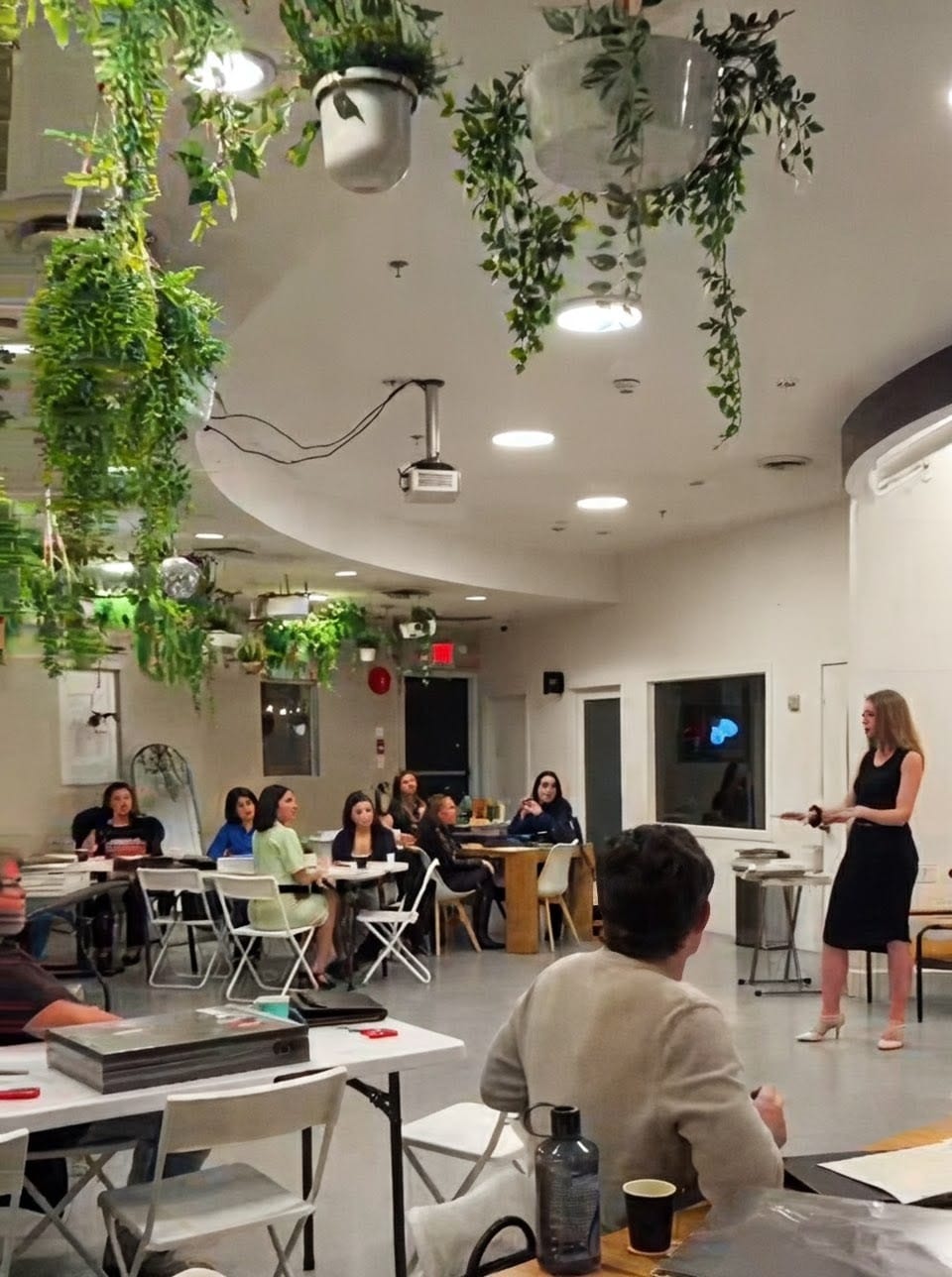
You are part of Internet Masterminds, a vetted community where founders and executives come together to grow, collaborate, and share ideas. What role has being surrounded by ambitious entrepreneurs and leaders played in your growth as a founder, and how has that community influenced your thinking or approach to business?
The beautiful part of Internet Masterminds is the authenticity, transparency, and willingness to help one another.
I have been personally mentored by Matt Astifan, the founder, many times, and I have also built close relationships with members who have my back- even on the days I feel overwhelmed, confused, or stretched thin. As a founder, that kind of support matters. Sometimes being able to bounce an idea off someone and receive clarity so quickly brings my stress right down.
It really does feel like a business family. There is a sense that we are moving as a unit, not building alone. Everyone brings different skill sets to the table, and being surrounded by people who are willing to help, challenge, and support each other is honestly magical.
It has taught me that business growth is not meant to happen in isolation. It has also reminded me to focus on what I am great at, ask better questions, and seek support or delegate in the areas where I am stuck.
The biggest takeaway for me has been authenticity. When you are truly yourself, the right people align with you, and the wrong people naturally fall away.
If TAKKLE succeeds beyond your wildest expectations over the next decade, what changes do you hope to see in workplaces, leaders, and employees as a result?
“Oof, I love this question” was the first thing that came out of my mouth.
If TAKKLE succeeds beyond my wildest expectations, I see more power in the pause.
I see leaders and employees becoming more responsive rather than reactive. I see workplaces with more honest conversations, stronger communication, deeper trust, and a greater sense of community.
And the impact of that is not just emotional- it’s economic. Disengagement costs the global economy trillions in lost productivity, which means culture is not a soft conversation. It affects performance, retention, innovation, and the health of entire organizations.
How beautiful is it to know that something so big can begin with something so simple- coming back to ourselves.
Where can people connect with you, learn more about TAKKLE, or explore working together?
Website: https://www.takkle.co
LinkedIn: https://www.linkedin.com/in/kimberleykarstunen
Instagram: https://www.instagram.com/kimberleykarstunen
Kimberley Karstunen's journey proves that our greatest challenges can become our greatest strengths.
From being told she might never speak again to helping organizations build stronger cultures through trust, communication, and human connection, she has redefined what leadership truly means.
At the heart of TAKKLE's mission is a powerful belief: when people feel seen, valued, and understood, teams thrive, cultures strengthen, and organizations succeed.
In the end, the greatest competitive advantage isn't technology or strategy—it's people. And meaningful change begins when we take the time to truly connect with ourselves and one another.