
1. Identity as origin
Your work feels like more than fashion; it feels like identity work. When did you realize you weren’t just designing garments but designing presence?
When I noticed that women weren’t coming to me just for an outfit. They came during moments of change—a new chapter, a celebration, sometimes a quiet reclaiming of themselves. What they really wanted was to feel aligned. That’s when I understood I wasn’t designing clothes anymore—I was helping women show up as themselves.
2. Stepping into your own name
After building Dress Cozy, you launched under your own name. What did that transition unlock for you creatively and personally?
Dress Cozy was about comfort, for my clients and for me. But using my own name forced honesty. Creatively, it gave me freedom. Personally, it was confronting. There was nothing to hide behind anymore. It was my vision, my voice, and my responsibility. And that changes everything.
3. Absolute exclusivity
No design is ever repeated in your atelier. Why was that principle essential, and what does it protect for the woman who wears your work?
I don’t believe exclusivity means never revisiting an idea. Sometimes a woman connects with a silhouette I’ve created before—maybe she loves the open back or the structure of a bodice. But her body is different. Her comfort is different. Her story is different.
So even if we begin from a similar starting point, the piece always evolves. Maybe the back closes. Maybe the line softens. Maybe the proportion shifts. It becomes something that belongs only to her.
For me, exclusivity protects that intimacy. The feeling that the garment was considered, adjusted, and shaped around you, not simply selected. The design is never static. It adapts. And in that adaptation, it becomes personal.
4. The woman you design for
Who is the Carolina Botelho woman, not demographically, but emotionally? What is she stepping into when she chooses bespoke?
She’s a woman who has lived. She’s gone through change, loss, and growth. When she chooses bespoke, she’s not trying to fit into anything; she’s choosing to be reflected. She’s stepping into ownership of her presence.
5. Translating story into form
Your process begins with listening. What are you listening for when a client shares her story, and how does that translate into silhouette, fabric, and line?
I begin by understanding the occasion—where she’s going, what she wants to communicate, and how she wants to feel when she walks into a room. But listening isn’t only about words.
Throughout our conversation, I’m observing. How she sits. How she gestures. How she speaks. Her body language. If she instinctively covers a part of herself, or if she naturally takes up space.
I’m studying where she feels secure and where she feels exposed.
That’s what guides the silhouette, the structure, and the way fabric moves around her body. Some pieces need softness. Some need architecture. The design becomes a quiet response to who she is and who she’s ready to be seen as.
6. Clothing as power
What shifts have you witnessed in women once they wear a piece that finally feels like themselves?
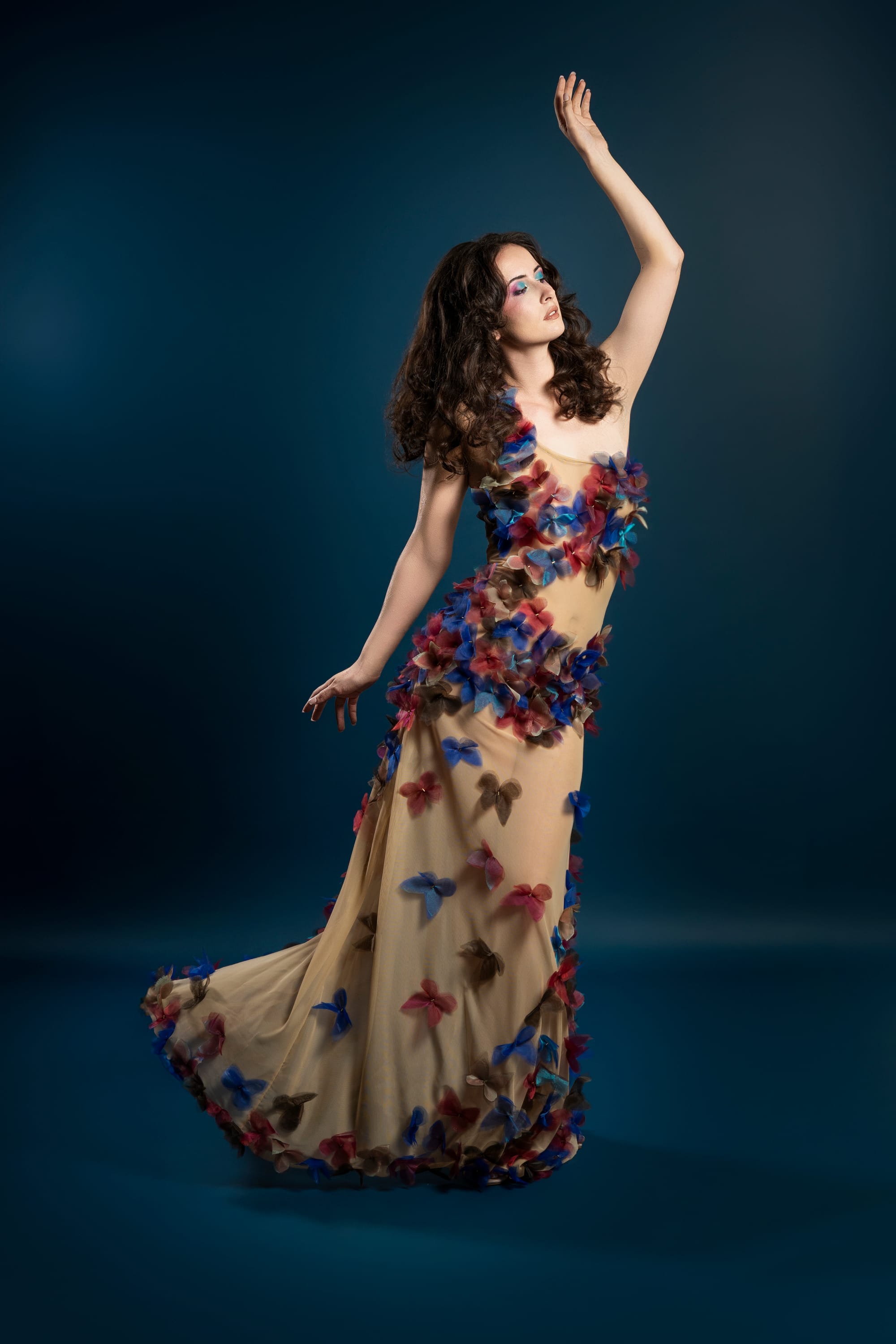
They relax into themselves. Their posture changes. They stop adjusting. When a woman feels represented instead of dressed up, there’s a calm confidence that takes over. And that calm is powerful.
7. Heritage and place
Your work carries a Brazilian soul while living in Vancouver. How do your roots shape your definition of elegance and craftsmanship?
Being Brazilian and building my career in Canada shaped me in ways I didn’t fully understand at first. Brazil lives in my instinct, in the warmth, the movement, and the emotion I allow into a piece. It’s bold, expressive, and alive.
Vancouver, on the other hand, taught me restraint. It taught me quiet confidence, subtlety, and intention.
As an immigrant, you’re constantly negotiating who you were and who you’re becoming. My work reflects that tension. Elegance, for me, is emotional but controlled. It’s softness with structure. Freedom within form.
Craftsmanship is patience. It’s respect for the handmade. It’s memory stitched into something contemporary.
My Brazilian soul gives the work its heartbeat. Living here gives it discipline. And somewhere between those two places, my definition of elegance was born.
8. Lines of Heritage
This collection is deeply tied to architecture, memory, and resilience. What story were you telling, and what did it mark in your journey?
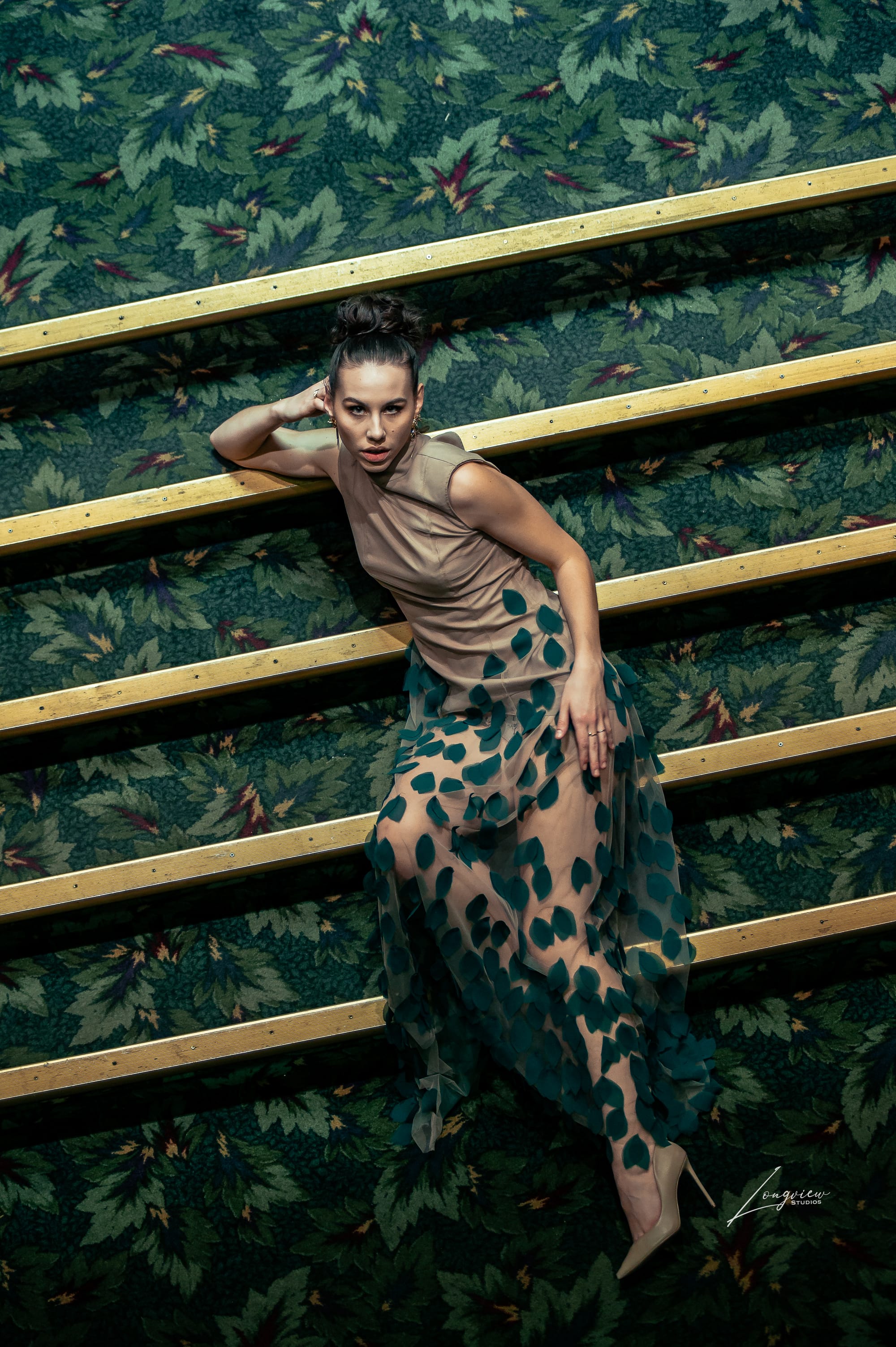
Lines of Heritage was about going back to my roots: to Brasília, to my hometown, to the memories that shaped me.
It was my way of transforming those memories into garments. The light, the lines, the strength of the city I grew up in. I stopped looking outward for references and simply spoke from origin.
That collection marked the beginning of a new phase. It grounded my work in who I am and where I come from and allowed me to move forward with clarity.
9. Legacy and future
When someone searches “Carolina Botelho” years from now, what do you hope they instantly understand about your work and philosophy?
That it was never about trends. It was always about women.
About helping a woman feel seen, understood, and comfortable in her own presence. About honoring her story, her body, and her evolution.
Fashion, for me, was never just clothing. It was a tool. A mirror. A way for a woman to step into a room feeling aligned instead of disguised.
I hope they understand that my work was about something bigger than garments. It was about identity, confidence, and giving women a space where they didn’t have to shrink, adjust, or pretend.
It was about reminding them: you don’t need to become someone else. You just need to be fully yourself.
A detail you obsess over that most people never notice
The look in a woman’s eyes the first time she tries the piece on. It tells me everything. Whether she feels seen, safe, powerful… or still unsure. That moment says more than any fitting adjustment ever could.
The emotion you design for before anything else -Belonging
A fabric that always feels like home -Linen
One word that defines how you want women to feel in your work - Seen