
- Your hair began thinning at 15, an age where identity is forming. Looking back, how did that experience shape your understanding of femininity and self-worth?
It had a profound impact on my identity and sense of self-worth. I was a teenager in the late ’90s and early 2000s: the era of America's Next Top Model, ultra-thin beauty standards, and shampoo commercials featuring impossibly thick, glossy hair. Every runway model had long, full hair. Mine was thinning.
I didn’t see anyone my age going through what I was going through. I didn’t even notice older women in my town with visible thinning. I felt completely alone and deeply unfeminine. I was embarrassed. I felt ugly. I wanted to disappear.
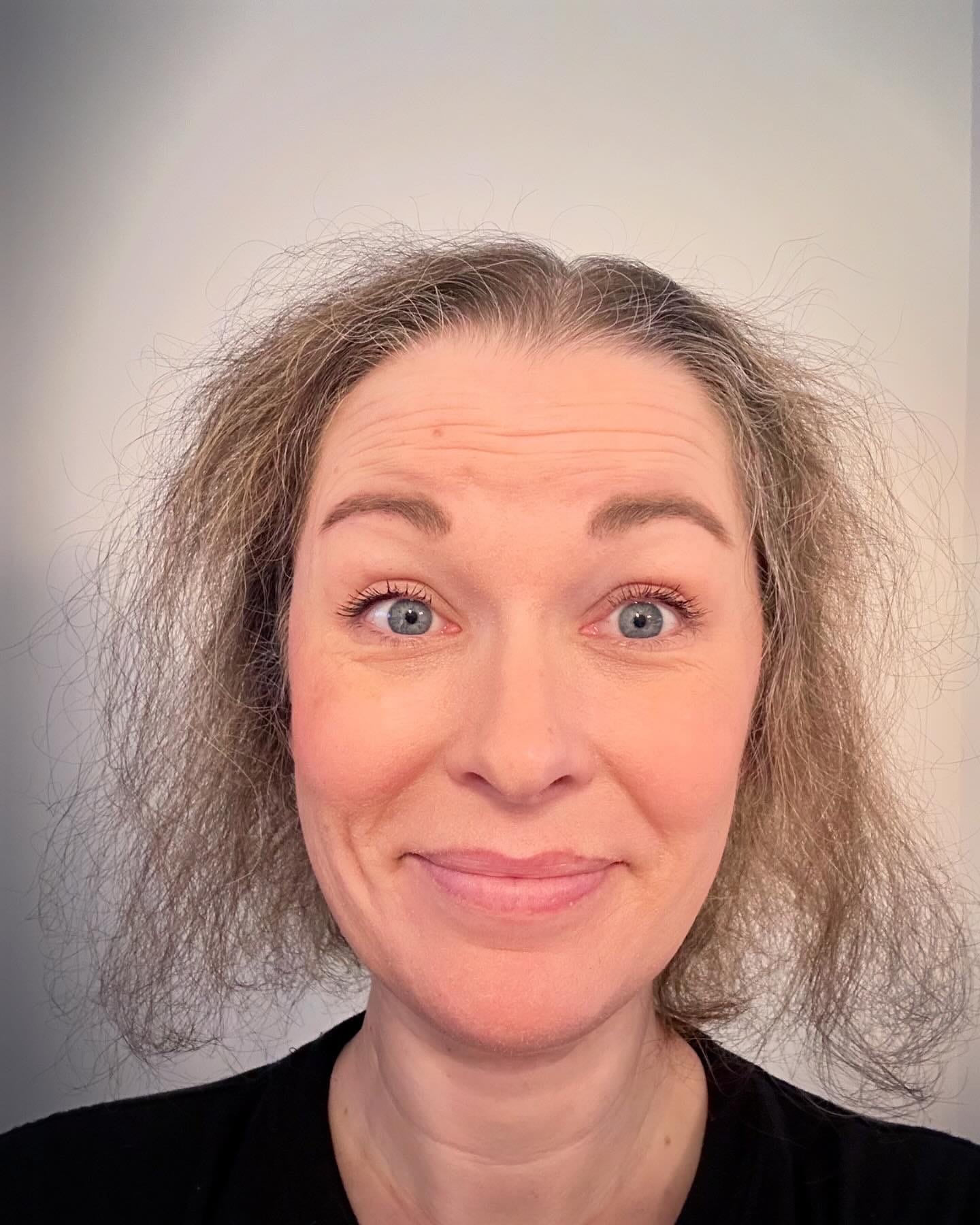
I avoided swimming, the gym, and anything else that might reveal my balding spots. When your hair is thinning, wet hair feels like exposure. So I shrank. I hid. I became a quieter, smaller version of myself for years.
Losing my hair at 15 made me believe femininity was tied to thickness, beauty, and desirability. It took me a long time to untangle that belief and rebuild my self-worth from the inside out.
- For years you managed it privately. What finally shifted internally when you chose visibility over concealment?
The shift began with honesty.
In my early twenties, I told a man I was dating about my hair loss, and shortly after, he ended the relationship. That confirmed my deepest fear: that I was unlovable because of my hair. For six years after that, I hid it from every man I dated.
When I was 28, I had been dating my now husband for about a month. I knew I had strong feelings for him, and I also knew I couldn’t build something real while hiding such a big part of myself. So I told him.
He couldn’t have cared less. He made it clear he didn’t love me for my hair and that it changed nothing.
That acceptance changed everything.
It wasn’t just about him. A few close friends responded the same way when I opened up to them. For the first time, I felt safe, and safety gave me the courage to stop hiding.
In my early thirties, I started wearing wigs again, but this time without secrecy. If someone complimented my hair, I’d say, “Thank you, it’s a wig,” and the conversation would open from there. Those small moments became the beginning of my advocacy.
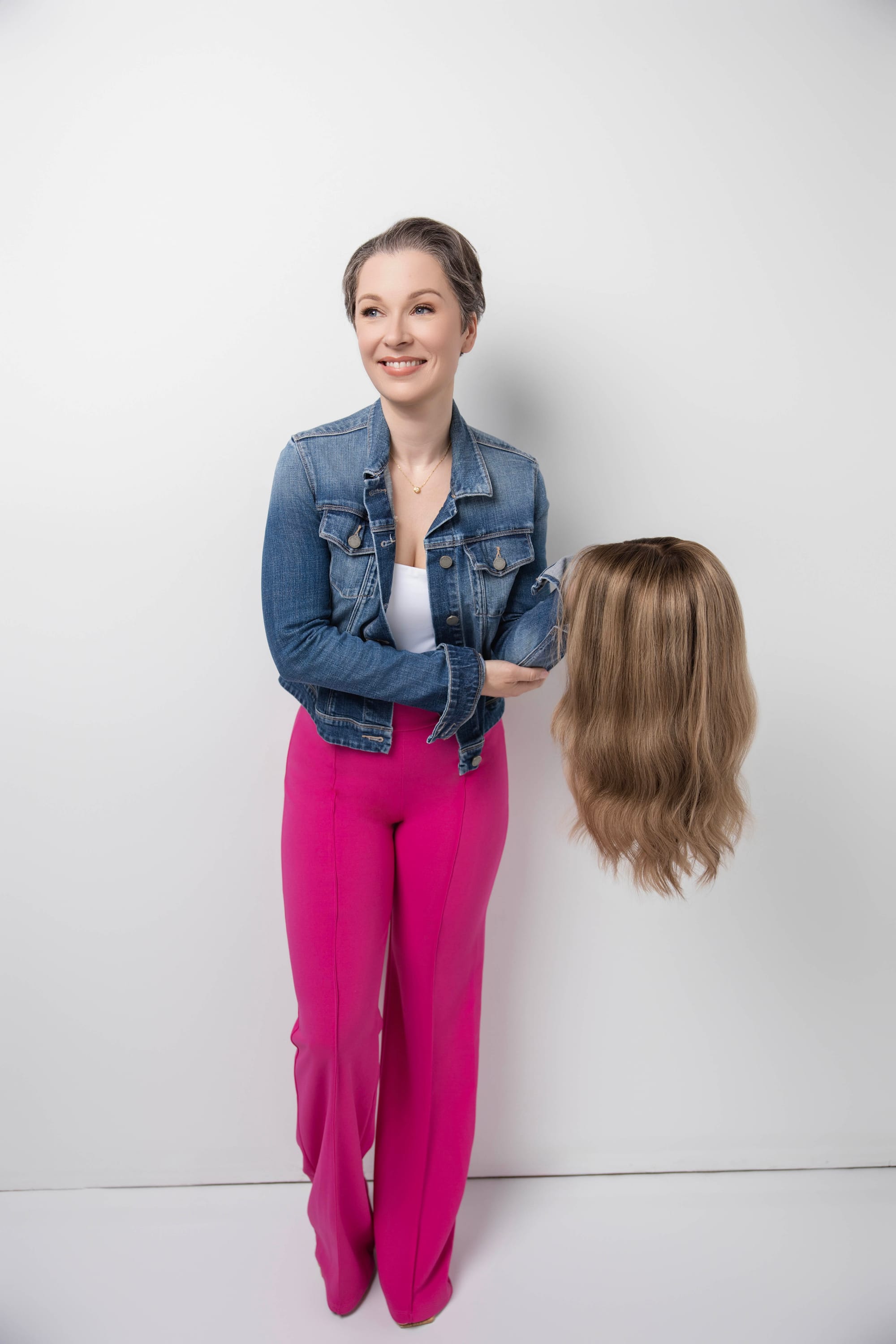
Visibility didn’t happen overnight. It happened one honest conversation at a time. Once I stopped hiding, I realized the shame had been heavier than the hair loss itself.
- Female hair loss remains widely under-discussed. Why do you think society still struggles to hold space for this conversation?
There’s a glaring double standard.
When men lose their hair, it’s expected. It’s joked about. No one questions a bald man walking down the street. But when a woman loses her hair, people assume she’s sick. They assume cancer. They assume treatment. Those assumptions are deeply damaging.
A woman in my Vancouver support group has alopecia areata that progressed to alopecia universalis, meaning she has no hair on her body. She often wears headscarves because that feels more comfortable than a wig. Strangers approached her in grocery stores and said, “I love your scarf. How much longer do you have on treatment?” These comments are usually well-meaning, but they’re also intrusive and painful.
Women with hair loss are constantly bracing themselves for stares, comments, and unsolicited assumptions. That emotional labor is exhausting.
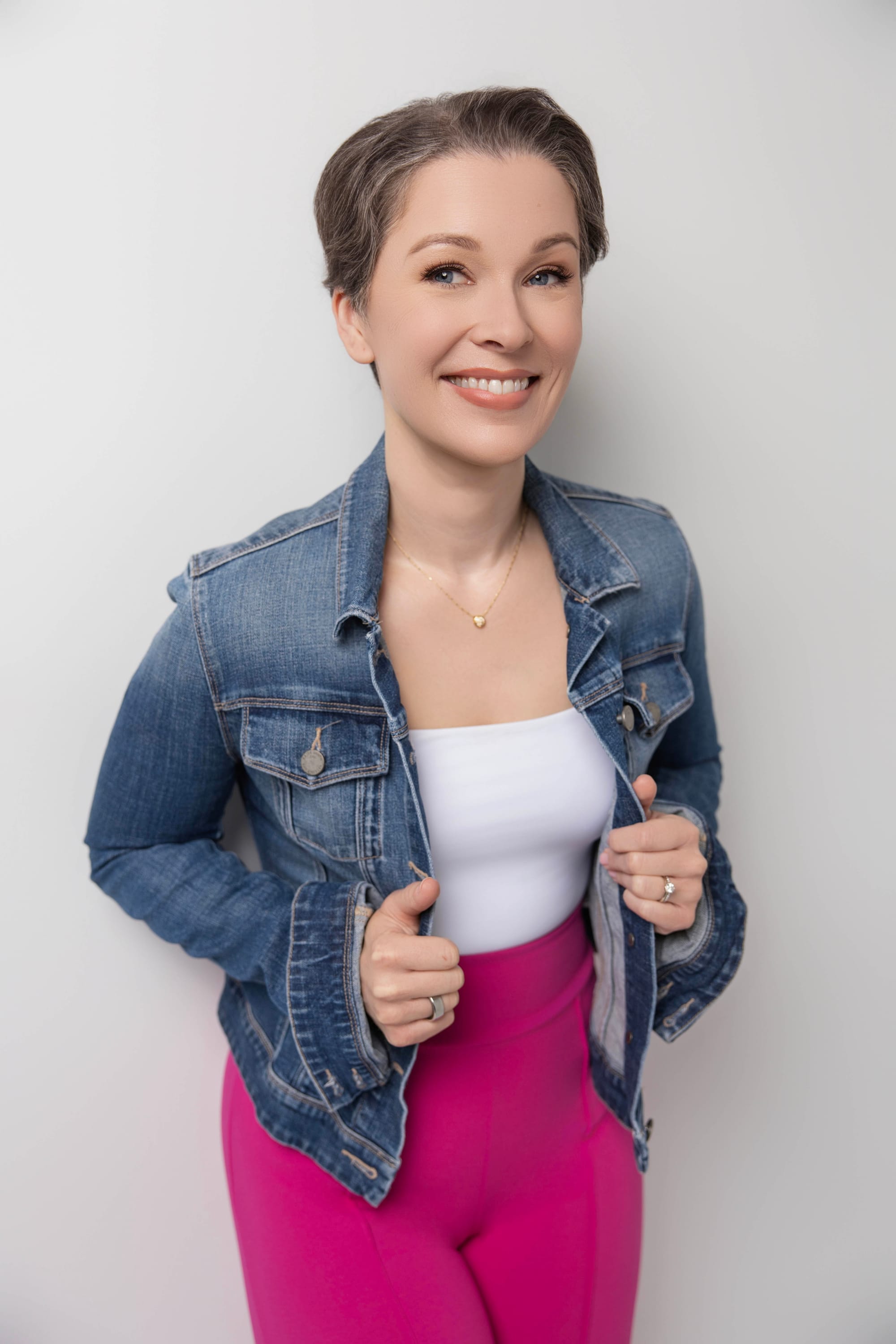
We’ve been conditioned to believe that hair loss in women is unattractive, shameful, or a sign that something is wrong. So we hide, and because we hide, no one realizes how common it is.
I’ve met countless women across Vancouver of different ages, backgrounds, and ethnicities, who feel completely alone because they don’t know another woman with hair loss. The reality is, they’re everywhere. We just haven’t made it safe enough to talk about.
That’s the stigma, and it won’t shift unless more of us are visible and willing to have the conversation.
- You built a career in healthcare and biotech before launching Hair Loss Pride. How did those experiences influence the way you approach advocacy and support today?
Spending 20 years in healthcare shaped everything about how I show up now.
It taught me to listen carefully. It taught me that what looks like a surface issue is often layered with emotional, psychological, and identity-based complexity. It taught me how important evidence-based information is in a space that’s filled with misinformation and false hope.
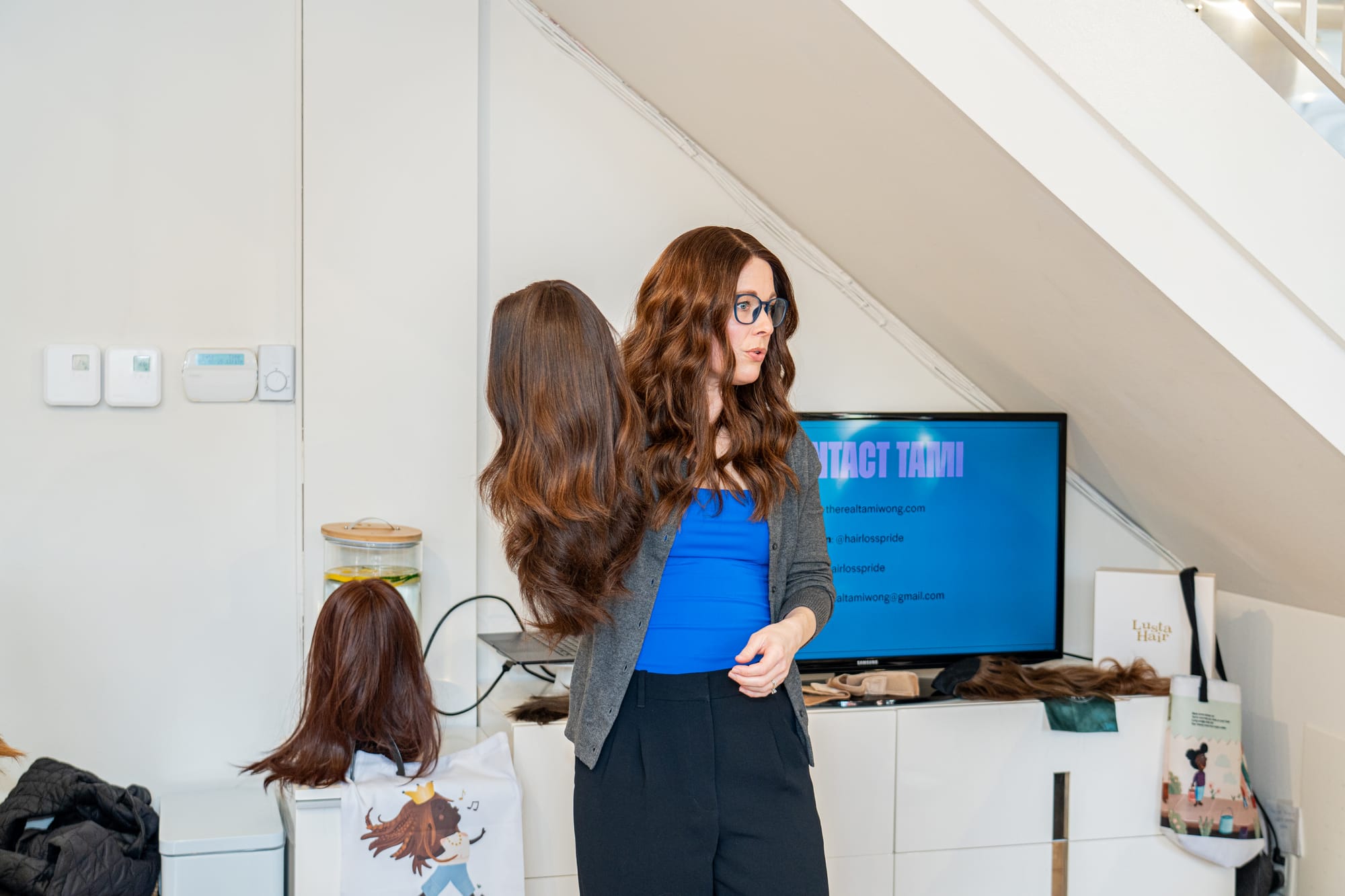
Hair loss sits at the intersection of medicine and identity. There are real physiological causes including autoimmune conditions, hormonal shifts, or medication side effects, and at the same time, there’s grief, shame, and loss of self.
My background allows me to bridge those worlds. I can talk about the science. I can explain treatment pathways, but I also deeply understand the emotional toll because I’ve lived it.
Advocacy, for me, isn’t just about visibility. It’s about education, informed choice, and creating spaces where women feel safe enough to stop hiding.
Hair loss is not just cosmetic. It impacts mental health, relationships, and confidence. My healthcare experience gave me the framework to approach it seriously, and my lived experience gave me the heart to approach it compassionately.
- What does confidence look like for someone navigating visible change in their appearance?
Confidence begins with recognition.
When hair loss happens, especially with autoimmune conditions or chemotherapy where change can be sudden, it can bulldoze your sense of identity. If you don’t recognize the person in the mirror, it’s incredibly hard to walk into the world feeling steady. How you feel about your appearance affects how you show up at work, in relationships, as a parent, and in everyday life.
The first step is compassion. Treat yourself the way you would treat your best friend in the same situation. Give yourself permission to grieve. Speak to yourself kindly. Allow time to adjust to what you see in the mirror.
From there, confidence becomes personal. For some women, that means shaving their head. For others, it’s cutting their hair short, wearing a scarf, choosing a wig, or using a topper. There is no universal solution. The right choice is the one that makes you feel most like yourself.
Confidence isn’t pretending nothing has changed. It’s learning how to stand in who you are even as you change.
- When women join your community, what is the first emotional barrier you help them dismantle?
The first barrier is isolation.
Almost every woman who joins believes she is the only one. She’s never met another woman with hair loss. She assumes this is rare and uniquely happening to her.
So the first step is normalizing how common female hair loss actually is. I share statistics. I share my story and the stories of other women. Almost immediately, you can see the shift. Shoulders drop. Breathing slows. There’s relief in realizing, “It’s not just me.”

The second barrier is feeling unattractive. Many women believe their hair loss has stolen their femininity. They worry their partners, or future partners, won’t find them beautiful.
We work on redefining beauty. On separating hair from worth. On understanding that femininity is not stored in follicles. That shift takes time, but I’ve watched women reclaim their confidence piece by piece, and it’s powerful.
- Representation is evolving in beauty. What does meaningful representation look like in the context of hair loss?
We’ve made progress in representation across many areas, including body diversity, gender expression, visible disabilities, and skin conditions like vitiligo. But women with hair loss are still largely invisible.
Occasionally, you’ll see a bald woman featured in a campaign. But women with partial or patchy hair loss are almost never shown. We’re absent from beauty campaigns, fashion editorials, social media, and brand websites.
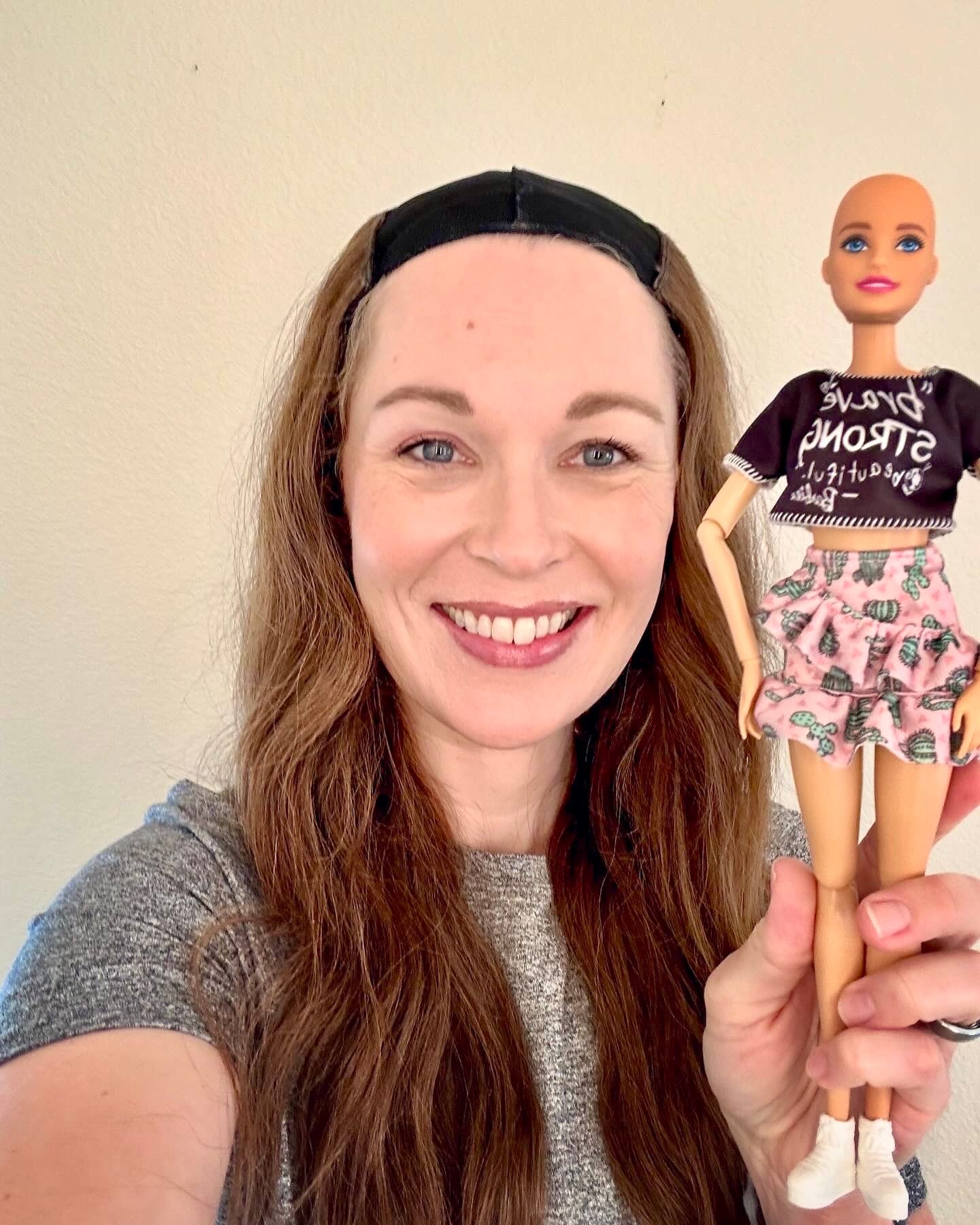
That absence sends a message: you don’t belong here.
Meaningful representation isn’t a one-off campaign or a trendy moment. It’s consistent inclusion. It’s showing women with hair loss, whether it’s full or partial, in everyday beauty spaces, not as a statement, but as part of the norm.
When women and girls see someone who looks like them reflected back in those spaces, it changes what they believe is possible. Representation isn’t cosmetic. It shapes identity.
- If a 15-year-old girl experiencing hair loss reads this interview, what would you want her to know?
You are not alone.
There are countless women in your city and around the world who understand exactly what you’re going through. It may not feel like it right now, but you are stronger than you think.
Your beauty is not defined by your hair, and this chapter of your life does not get to decide your future.
If you had told my 15-year-old self that one day I would speak publicly about my hair loss, show it online, and advocate for other women, she would never have believed you. But here I am.
It gets better. The world is changing, and there is space for you exactly as you are.